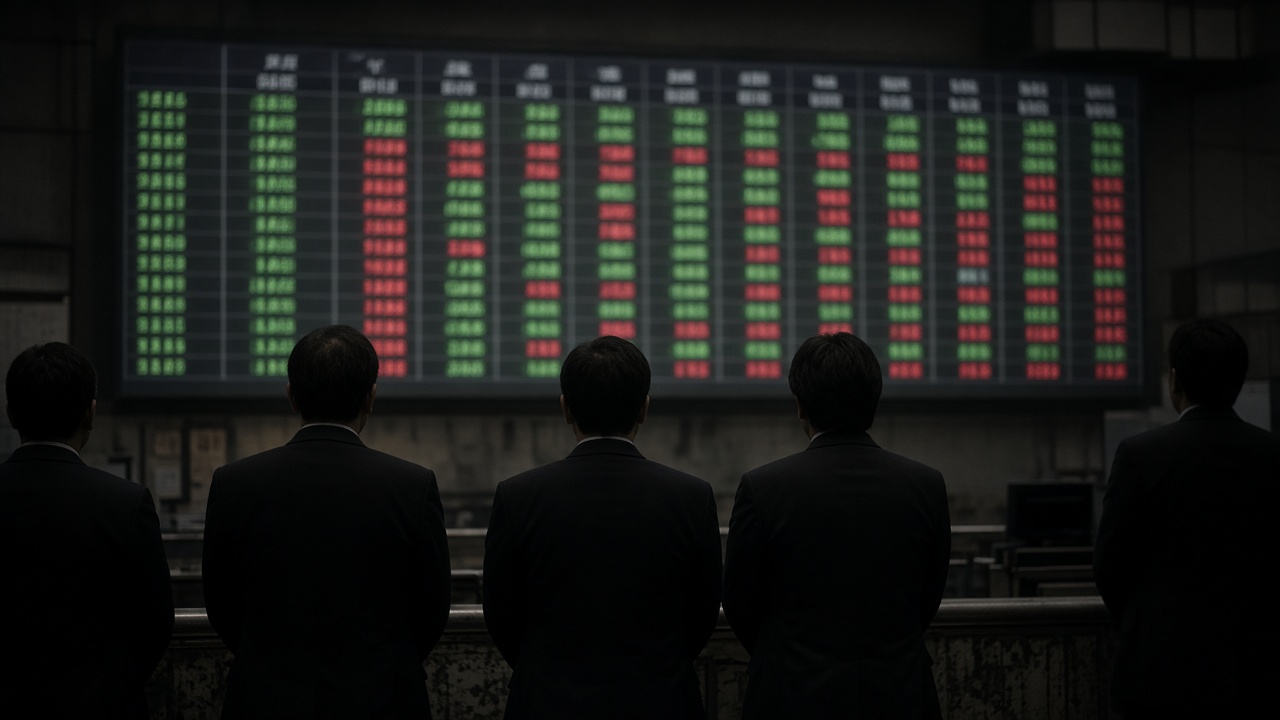
Sompo Holdings and Tokio Marine Holdings climbed in Tokyo on Tuesday while the Nikkei Stock Average dropped 893.23 points to 62,188.63, marking a defensive rotation into domestic insurers after three sessions of selling in AI and semiconductor names tied to U.S. midterm results.
Session mechanics
The broader Topix index fell 34.90 points to 3,895.38, its weakest close since June 12, but the financials subgroup contributed a slim 0.16-yen positive drag on the Nikkei’s point tally—meaning insurers and trading houses absorbed flows that exited Advantest, Tokyo Electron and SoftBank Group. Sompo closed at 7,147 yen, up 64 yen or 0.9 percent, on volume of 3.14 million shares. Tokio Marine added 0.3 percent while MS&AD Insurance Group slipped 0.5 percent, showing investors favored the two largest life-and-property pairings with overseas earnings hedges.
Why insurers led the bid
Portfolio managers described the move as a relative-value trade rather than a macro call on BOJ policy. Sompo reports interim results on Nov. 19; analysts polled by data vendors expect continued growth in overseas casualty lines that benefit from a weaker yen on translation. When hardware multiples compress on fears of U.S. AI regulation, domestic insurers—traditionally low-beta—attract pension rebalancing flows that must stay invested in Japan.
Trading houses Mitsubishi Corp. and Mitsui & Co. also finished higher, echoing a pattern seen in prior U.S. election weeks when commodity-linked exporters diverged from chipmakers. Neither insurer released new guidance Tuesday; the rally rested entirely on positioning ahead of earnings and year-end dividend considerations.
Macro overlay
Midday, the Nikkei briefly approached 60,030 yen as traders priced Democratic gains in the U.S. House as negative for capital spending in hyperscale data centers. Afternoon comments from U.S. President Donald Trump about cooperating with Democrats helped trim losses, but technology names never fully recovered. Marine insurers with U.S. liability exposure still outperformed because investors treated their portfolios as defensive rather than cyclical.
What to watch
Wednesday’s focus shifts to currency: a sustained yen rebound would compress Sompo’s translated profits even if domestic non-life pricing stays firm. Options markets imply moderate volatility around Sompo’s Nov. 19 announcement. Until then, the Nov. 4 session will be remembered as a day when Tokyo’s headline index fell 1.4 percent while Japan’s largest property-and-casualty holding company printed a green tick—evidence that rotation, not a single macro story, drove the board.
Cross-asset flows
Currency-hedged equity funds listed in Tokyo reported net creations in insurance and trading-house ETFs on Nov. 4 while technology-weighted funds saw redemptions for a third day. Bond desks said there was no parallel rush into super-long Japanese government bonds, suggesting the rotation stayed inside equities rather than signaling a recession call.
Foreign portfolio managers interviewed after the close said they trimmed semiconductor beta but kept neutral Japan weight because domestic real rates remain positive after the Bank of Japan’s gradual tightening path. None cited new Sompo guidance as a catalyst; the stock simply offered dividend yield near 2.8 percent with lower correlation to Nvidia-linked supply chains.
Retail investors on Japan’s bulletin boards debated whether Sompo’s relative strength signals a lasting style shift or a one-day bounce. Analysts at two domestic brokerages said property-and-casualty insurers benefit from hardening reinsurance rates in Florida even when domestic typhoon losses stay mild, giving Sompo a dual engine that pure life insurers lack.
Reader checklist
Track official filings rather than social clips. Ministry and league PDFs remain the authoritative record when timelines slip. Save receipts, ballot numbers and clinic vouchers until deadlines pass. If a vendor changes terms mid-season, ask for written confirmation before you spend against a promotion or subsidy.
Local desks will update figures when agencies publish revisions; morning numbers can move once Tokyo markets finish absorbing overnight foreign news.