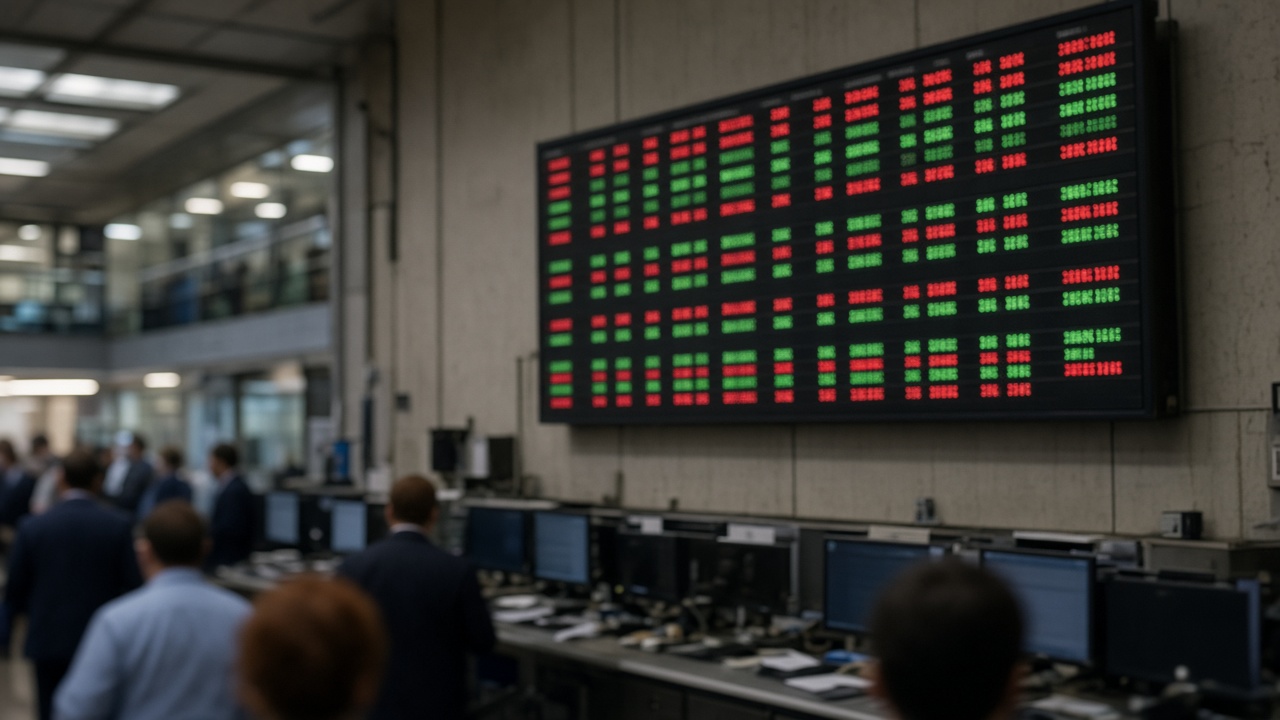
Singapore’s benchmark Straits Times Index slipped 22.41 points, or 0.42 percent, to 5,299.50 on Wednesday as United Overseas Bank’s third-quarter credit charges overshadowed the prior session’s record high by DBS Group Holdings.
DBS had closed at an all-time share price on Tuesday after reporting third-quarter net profit of S$2.95 billion, beating consensus even as net interest margins narrowed slightly. UOB told a different story: higher-than-expected general provisions for commercial real estate and regional consumer debt sent its net profit down 72 percent year on year, dragging the stock 2.8 percent lower and pulling the three-bank basket down with it.
Blue-chip split
OCBC, reporting Friday, rose 0.8 percent in anticipation of steadier wealth-management fees. Singtel added 1.2 percent on data-centre deal chatter, while ST Engineering extended gains on defence order books. The split mirrored November’s broader pattern: index-level records driven by DBS and telcos, with UOB as the cautionary counterweight on credit.
Retail participation remained elevated. SGX data show local counters accounted for more than 80 percent of November turnover, with DBS alone taking 16 percent of volume. REITs traded flat as higher-for-longer rate bets resurfaced ahead of the US Federal Reserve’s December meeting.
Flows and dividends
Fund managers said dividend reinvestment plans announced earlier in the week still support bottom-of-book demand. Both STI ETFs saw net inflows in October, and November’s early sessions added to assets under management north of S$3.3 billion combined. Even Wednesday’s dip left the index up double digits year to date including dividends.
Analysts cautioned against reading UOB’s provisions as a systemic crack. Most flagged loans remain performing; the bank front-loaded buffers ahead of Basel III endgame rules. Still, the contrast with DBS’s lighter credit costs showed how divergent asset mixes can be within the same city-state banking oligopoly.
Outlook
OCBC’s results will set the tone for Friday. If wealth fees offset margin compression, the STI could retest the 5,320 handle seen on Tuesday. If not, investors may rotate into industrial and telco defensives while waiting for clearer US rate signals. For now, the headline is simple: records and warnings can share the same index, separated by a single earnings call.
Small-cap divergence
While blue chips wobbled, the iEdge Singapore Next 50 Index slipped just 0.1 percent as precision-engineering exporters tracked a firmer yen. Fund managers said MAS’s equity-market development programme continues to funnel mandates into mid-cap managers, cushioning the broader index when banks stumble.
Foreign flows were modestly net sellers according to provisional SGX data, but retail accounts bought the dip in REITs betting on a December rate cut. The session reminded traders that Singapore’s headline index is increasingly a duel between credit-quality banks and industrial/telco winners rather than a uniform tape.
Derivatives desks noted higher volume in STI futures as hedge funds balanced bank underweights against long Singtel positions, a pair trade that could persist until OCBC reports. Volatility remains low by historical standards, suggesting investors treat Wednesday as earnings noise rather than a macro turn.