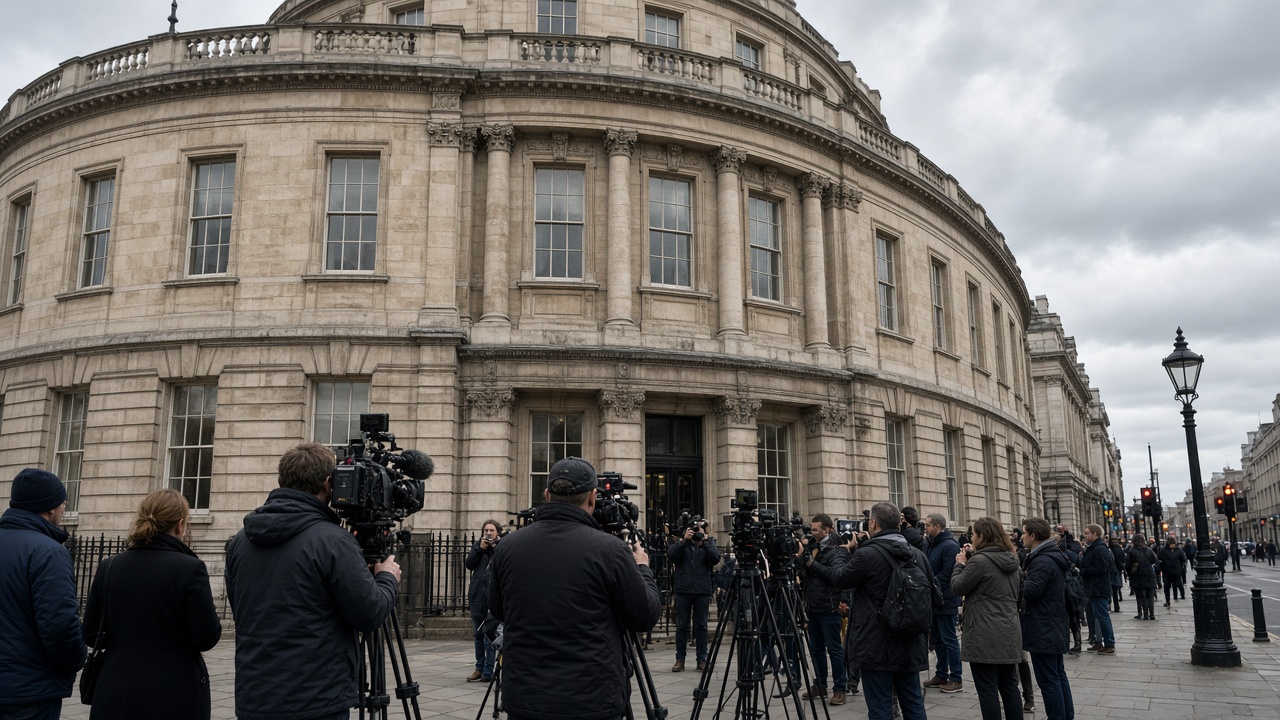
The Bank of England raised its benchmark interest rate to four percent on Thursday, the first increase in more than three years, as policymakers judged that conflict-driven energy shocks would keep price pressures above target well into next year.
Nine members of the Monetary Policy Committee backed a quarter-point move from 3.75 percent, while one preferred a half-point step to 4.25 percent, the Bank said in its November decision statement. Governor Andrew Bailey told reporters the vote should not be read as the start of an automatic series of hikes, but he added that further increases remain likely unless the war around the Strait of Hormuz eases enough to unwind the recent spike in oil and gas costs.
Why the Bank moved now
Consumer price inflation stood at 3.5 percent in the latest reading, still above the Bank’s two percent target. Bailey said the Middle East conflict had pushed up wholesale energy prices across advanced economies, including Britain, and the Monetary Policy Committee’s new forecasts show inflation peaking at about 4.9 percent next year under its central scenario.
Financial markets had largely priced in Thursday’s move after a run of hawkish commentary from officials. Bailey said a sharp drop in Brent crude following the U.S. midterm elections would not have altered the decision announced at noon London time, though he acknowledged the lower path for oil would feed into the Bank’s next assessment.
What it means for households
Higher Bank Rate flows quickly to borrowers on tracker mortgages and to many standard variable products, while savers may see modest improvements on easy-access accounts after years of thin returns. The trade-off is deliberate: by making borrowing more expensive, the Bank aims to cool demand and prevent wage and price spirals from embedding the current energy shock.
Chancellor John Healey said the government was acting to give families and businesses “breathing space,” pointing to recent support on energy bills. Conservative spokespeople countered that Labour should cut taxes and welfare spending to reduce inflationary pressure, a line Bailey declined to engage with directly, noting the Bank’s independence from fiscal choices.
Outlook and market reaction
Sterling ticked higher against the dollar immediately after the announcement, while gilt yields rose on the prospect of tighter policy for longer. Bailey stressed that the committee would decide meeting by meeting, with the next decision due in December.
City economists said the nine-one split signalled a committee that remains united on direction even if members disagree on pace. Several noted Bailey’s explicit linkage between Hormuz shipping insurance costs and the Bank’s inflation path, a reminder that Britain’s open economy remains exposed to disruptions far beyond the English Channel.