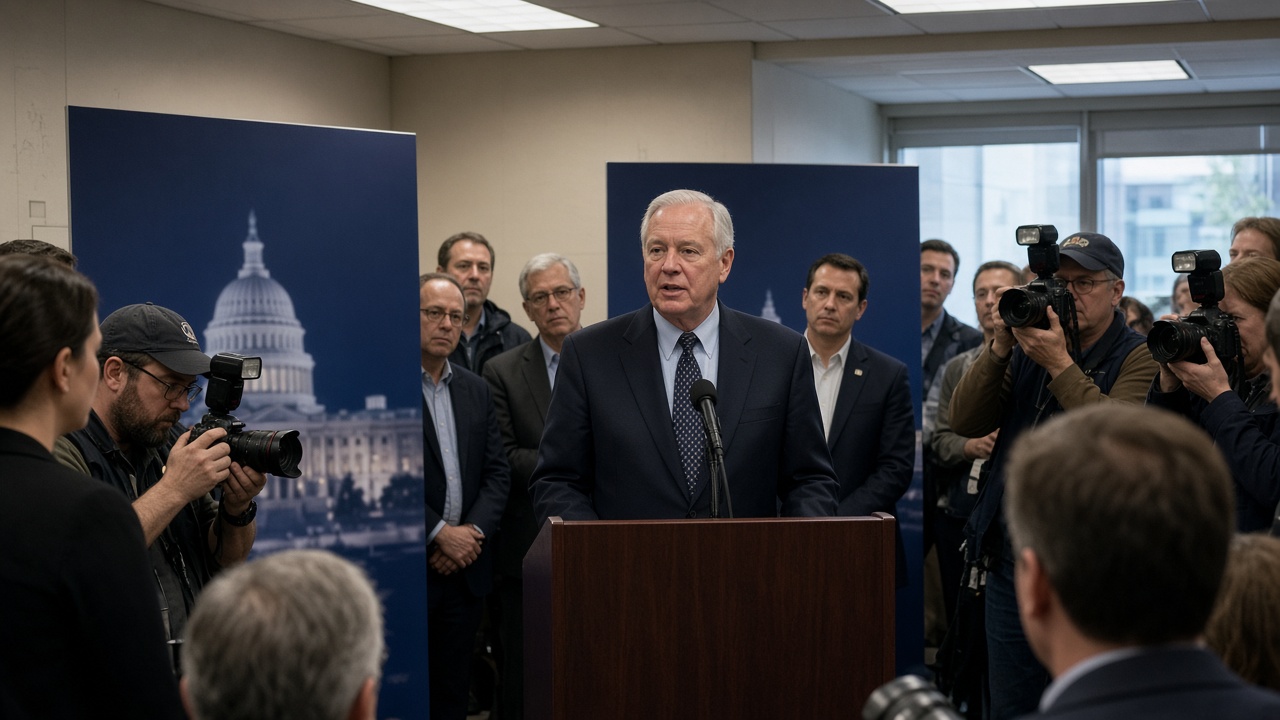
Senate Democratic Leader Chuck Schumer opened his first post-midterm press conference with a blunt demand: the war with Iran has to stop. Speaking at Democratic Senatorial Campaign Committee headquarters in Washington on Wednesday, hours after his party secured a 54-seat Senate majority, Schumer said voters had punished Republicans for fuel costs, healthcare premiums and an open-ended conflict whose aims shift by the day.
"The American people don't know what the heck we're fighting for in Iran," Schumer told reporters, according to a transcript circulated by Iran International. "He's never made it clear. He changes his mind day to day and minute to minute. This war must end. It must end."
From minority warnings to majority control
The shift is procedural as much as rhetorical. For two years Schumer could threaten filibusters and force symbolic votes, but Republicans controlled the floor calendar and bottled up most Democratic priorities. Starting in January, Democrats will chair committees, set hearing schedules and decide which appropriations bills move first.
Schumer tied that power directly to Pentagon accounts. "We are going to end the war," he said. "We have some Republicans already who have joined us in ending the war, and the Founding Fathers had the power of the purse as one of the ways of deterring a president who does war without the consent of the American people."
The comment echoed a line he has used since June, when both chambers passed a concurrent war-powers resolution urging President Donald Trump to halt unauthorized strikes on Iran. That measure never reached Trump's desk and the White House dismissed it as non-binding, but it showed at least four Senate Republicans were willing to break with leadership on the conflict.
Republican defections already on the record
Sens. Thom Tillis of North Carolina, Susan Collins of Maine, Lisa Murkowski of Alaska and Rand Paul of Kentucky voted to advance an Iran war-powers resolution when it last hit the Senate floor, The Hill reported. Sen. Bill Cassidy of Louisiana, who backed an earlier version in June, switched to opposition in September after a heated White House meeting, illustrating how fragile any bipartisan coalition remains.
Even a binding war-powers resolution faces a veto wall. Democrats will hold 54 seats at best — short of the two-thirds margin needed to override Trump — so Schumer's path runs through funding rather than a single up-or-down war vote.
Money, lame ducks and the December cliff
The administration has separately sought emergency appropriations to cover Iran operations while proposing a $1.5 trillion baseline defense budget for fiscal 2027, including add-ons routed through reconciliation. Republican leaders have discussed packaging war money into a year-end reconciliation bill that could bypass Democratic votes, but they still must fund the government past a 11 December deadline.
Punchbowl News reported Thursday that Schumer told the newsletter many Democratic senators will want concessions on Iran before supporting another continuing resolution during the lame-duck session. That timing matters: Trump retains veto power until at least 2027, yet a shutdown fight or delayed defense markup could force the White House to negotiate earlier than planned.
What Schumer is not promising
Schumer also previewed broader oversight — committee investigations and legal challenges when Trump "defies the will of the American people" — but he stopped short of saying Democrats would block all military pay or family support accounts. Party aides have said leaders prefer targeted holds on offensive munitions and intelligence-sharing lines tied to Iran rather than a blanket Pentagon freeze.
House Democratic Leader Hakeem Jeffries made a parallel public push, telling MS NOW's Morning Joe that Trump should end the war before the new Congress gavels in. Vice President JD Vance, speaking after the midterm losses, had already blamed the conflict for Republican defeats, a rare acknowledgment from the executive branch that Iran policy shaped Tuesday's map.
For now Schumer's pledge is a marker: the Senate's incoming majority leader is betting that linking Iran to appropriations will resonate with a war-skeptical public and with a handful of Republicans who have already crossed the floor once. Whether that coalition grows before December will determine if his words become binding pressure or another press-conference line.