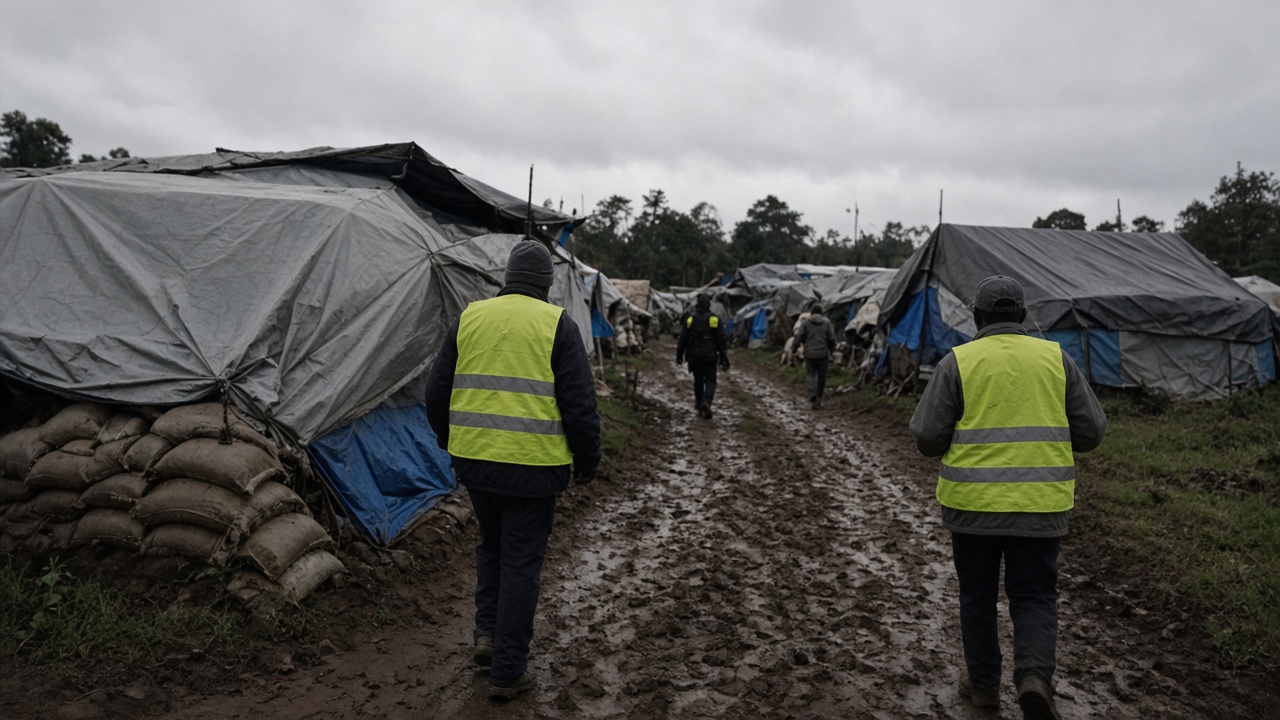
United Nations relief coordinators say at least 30 civilians died overnight in Beni Territory, North Kivu, during violence that local authorities link to the Allied Democratic Forces (ADF). Homes burned, a health facility was knocked out of service, and several people receiving care there died when the structure was damaged, according to the tally cited Friday by the UN’s aid coordination office (OCHA).
What the UN reported
OCHA’s field picture matches patterns seen across eastern Congo: violence that hits civilians first, but also the thin network of clinics and surveillance posts the Ebola response depends on. The office identified the facility only as a local health structure, not by name. Regional reporting from Beni has long associated ADF activity with displacement along key roads; the group’s presence in forested parts of North Kivu has forced vaccinators and burial teams to move under escort or pause when routes are considered unsafe.
Why the outbreak response stumbles
The same insecurity that drives displacement also starves contact-tracing of stable ground. OCHA said people who had been listed as contacts after exposure to Ebola left an observation site, and response teams had to suspend work. When contacts scatter, follow-up visits stop, lab logistics slip, and the chain that rings an alarm around each new infection weakens. Phone trees and community volunteers can partly fill the gap, but they rarely replace structured observation when rural bandwidth is patchy and curfew hours shift without warning.
Congo’s tenth Ebola outbreak in North Kivu and Ituri killed more than two thousand people between 2018 and 2020; a separate lineage of the virus re-emerged in the same region in 2021. The current emergency has already logged more than 10,700 confirmed cases and over 5,200 deaths nationwide, with North Kivu repeatedly flagged as the hardest terrain for responders who must move vaccines, labs, and burial teams through roads stalked by armed groups.
What field teams need next
Logistics staff will prioritize re-opening safe corridors for sample transport, pre-positioning oral rehydration and fever screening at informal sites where displaced families gather, and re-listing every contact who left observation with local phone numbers that still ring. Partners also need clarity on hospital referrals: when a clinic is damaged, patients with Ebola-like symptoms need alternate intake points that do not crowd unrelated wards.
What monitors will watch
Relief officials will track whether observation sites can be re-established; whether safe burial protocols stay workable while movement remains constrained; and whether neighboring health zones log unexplained fever clusters that hint at silent chains. Diplomats have spent years pairing military pressure on ADF cells with civilian-protection missions, but each burst of violence resets the public-health clock for planners who measure success in contacts reached per day, not headlines per week.
For ordinary families in Beni, the crisis is immediate: shelter, food, and credible security guarantees before any talk of virus curves. For the wider response, the priority is to regain sight of every contact who left — a task that grows harder with every night the streets feel too risky for the small vans that carry lab coolers.