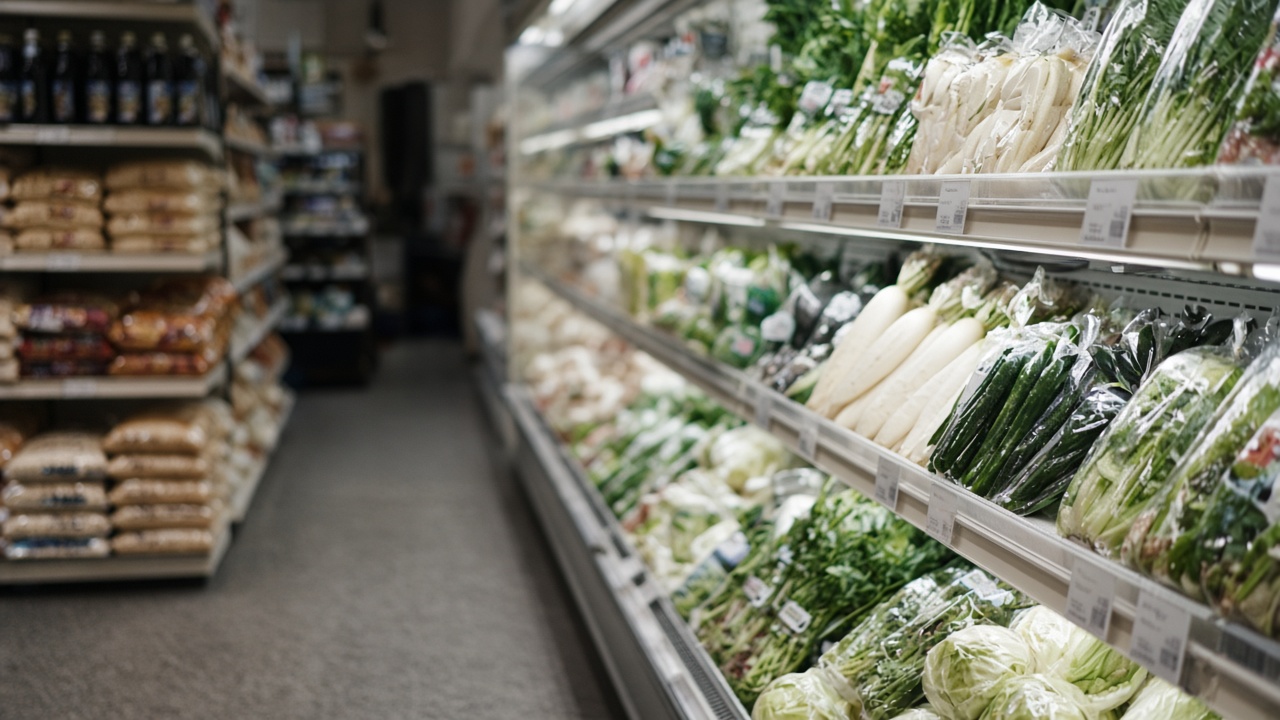
Japan’s lower house on Friday approved a consumption-tax relief package that would cut the reduced rate on most food and non-alcoholic beverages from 8 percent to 1 percent for two years beginning in April 2027, alongside a parallel plan for income-linked cash benefits meant to cushion lower- and middle-income households when the temporary cut expires. The bill emerged from an extraordinary Diet session scheduled through 12 December and was fast-tracked to a plenary vote after clearing committee on the strength of the ruling coalition’s lower-house supermajority—even as nearly every opposition party refused to endorse the measure, and several ruling-party dissenters walked out before the tally.
What changes for supermarket bills
The government frames the grocery-side reduction as the first cut to consumption tax on food since Japan introduced the levy more than three decades ago. Since 2019 the headline rate has been 10 percent, with food and drinks for home consumption (outside dining out and alcohol) eligible for the reduced band now set at 8 percent. Shrinking that slice to 1 percent for twenty-four months is meant to show up directly at retail scanners—provided wholesalers and chains pass the savings through—while Prime Minister Sanae Takaichi has publicly tied the move to relief from import-driven inflation, a weak yen, and energy costs amplified by conflict in the Middle East.
Because a cliff returns when the two-year window closes, officials are coupling the tax cut with cash transfers keyed to earnings. Takaichi told a financial-affairs hearing that at least 30 percent of workers could qualify for payments—broader than the early reference band the government floated around people earning between 1 million and 3.5 million yen annually—while leaving precise thresholds and formulas to Cabinet orders to be nailed down during year-end budget drafting. Payments would phase in with partial benefits starting in fiscal 2027 and a fuller rollout targeted around fiscal 2029, when planners expect the longer-term benefit architecture to stand on its own.
Fiscal fault lines and rebel votes
The finance ministry’s arithmetic has become the political flashpoint. Government estimates suggest revenue forgone could reach on the order of 10 trillion yen (about $63 billion) over two years; officials insist they can square the books without resorting to deficit-financing bonds, though they have deferred line-by-line offsets until the budget process. Former Prime Minister Shigeru Ishiba and a handful of Liberal Democratic Party colleagues abstained by leaving the floor, arguing the package lacks a transparent funding map and risks eroding fiscal discipline—a rare split-screen moment for a cabinet priority billed as the session’s centerpiece.
Opposition parties including Komeito, the Democratic Party for the People and the Democratic Reform Party voted against the bill despite campaigning on consumption-tax relief in this year’s lower-house race, contending the income support is under-specified and that voters could see only partial pass-through at the shelf. Polling ahead of the vote underscored that tension: solid majorities told survey houses they backed a grocery tax cut, yet slim majorities doubted it would materially tame household inflation.
Upper house calculus
With the measure now shuttle-delivered to the House of Councillors, the coalition’s disadvantage in that chamber forces a different legislative game. Lack of a majority there does not necessarily kill the bill—rules allow a two-thirds override of an upper-house rejection if the lower house marshals enough votes on a second passage—but it raises the price in side deals, committee time, and amendments on benefit design. Opposition leaders say they will use the review to press Takaichi for binding funding sources and clearer eligibility math before approving any temporary tax holiday that could unsettle the bond market’s read on Japan’s debt trajectory.
For households, the operative dates are straightforward: April 2027 for the 1 percent shelf rate, pending concurrence upstairs, and a winter budget season that will decide whether the cash rails arrive in time to soften the eventual bounce back toward 8 percent. Until then, Friday’s lower-house vote marks the procedural green light—the fiscal arguments are only warming up.