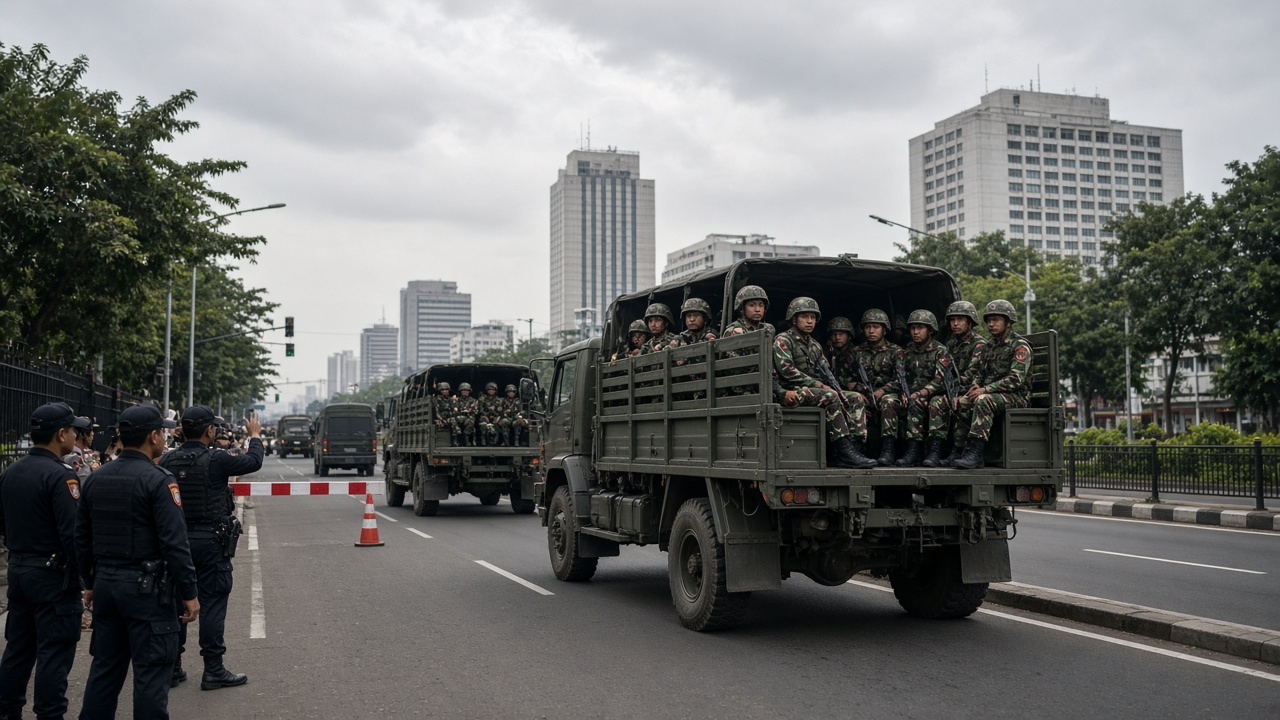
Indonesia sent more than twenty thousand military personnel into Jakarta this week as a wiretapping scandal reached the presidential palace, with three senior police generals—including a former national chief and one-time presidential chief of staff—detained over alleged unlawful surveillance of President Prabowo Subianto and dozens of other figures. For Singapore and the wider ASEAN capitals that watch Javanese politics closely, the combination of treason rhetoric, mass troop movements and an widening police probe is the kind of shock that can move markets and migration flows within hours.
What investigators say was tapped
Police detectives said the operation ran without legal basis during 2025 and 2026, targeting not only the president but state officials, politicians, journalists, civil-society leaders and businesspeople. Kompas reported that suspects allegedly ordered deletion of wiretap files in October. Among those named as suspects are Gen. Listyo Sigit Prabowo, who led the national force until this year and briefly served as Prabowo’s chief of staff, plus two inspector generals from legal and training posts.
The presidential palace said intercepting a head of state’s communications could be treated as conduct “leading toward treason,” language that escalates a police corruption case into a national-security frame. Prabowo’s spokesperson tied the scandal to a loyalist of former president Joko Widodo, though Widodo himself has not been implicated in the intercept probe.
Troops on the street
Armed forces spokesman Muhammad Nas described the Jakarta deployment as routine readiness, and analysts cautioned against reading it as an imminent coup. Still, the timing fed speculation on WhatsApp groups across the region: more than twenty thousand personnel, heavily armed police around court hearings involving Widodo allies, and a capital on edge. Channel NewsAsia quoted police chief Suyudi Ario Seto insisting the case is “purely law enforcement” and must not be seen as factional score-settling.
Parliament and the bill waiting in December
Lawmakers said Thursday they were weighing a parliamentary inquiry into Vice President Gibran Rakabuming Raka’s eligibility, a separate lever that could reshape the coalition if it advances. The wiretap revelations also revived demand for a long-delayed wiretapping bill, with deliberations slated after asset-forfeiture legislation finishes—too late for investigators who say files were already destroyed.
Singapore’s Ministry of Foreign Affairs has not issued travel advisories beyond standing guidance, but Indonesian bank shares listed here often react to Jakarta governance shocks. Regional diplomats said they were monitoring whether the scandal stays inside criminal courts or pulls the military deeper into domestic policing—a line Indonesia’s post-Suharto reforms were meant to keep bright.
For ASEAN neighbours, the immediate question is stability: whether Indonesia’s institutions can absorb a scandal that touches both police and palace without spilling into street confrontation. Thursday’s answer was still open—troops in place, suspects in detention, and Jakarta’s traffic slowed by security cordons rather than open clashes.