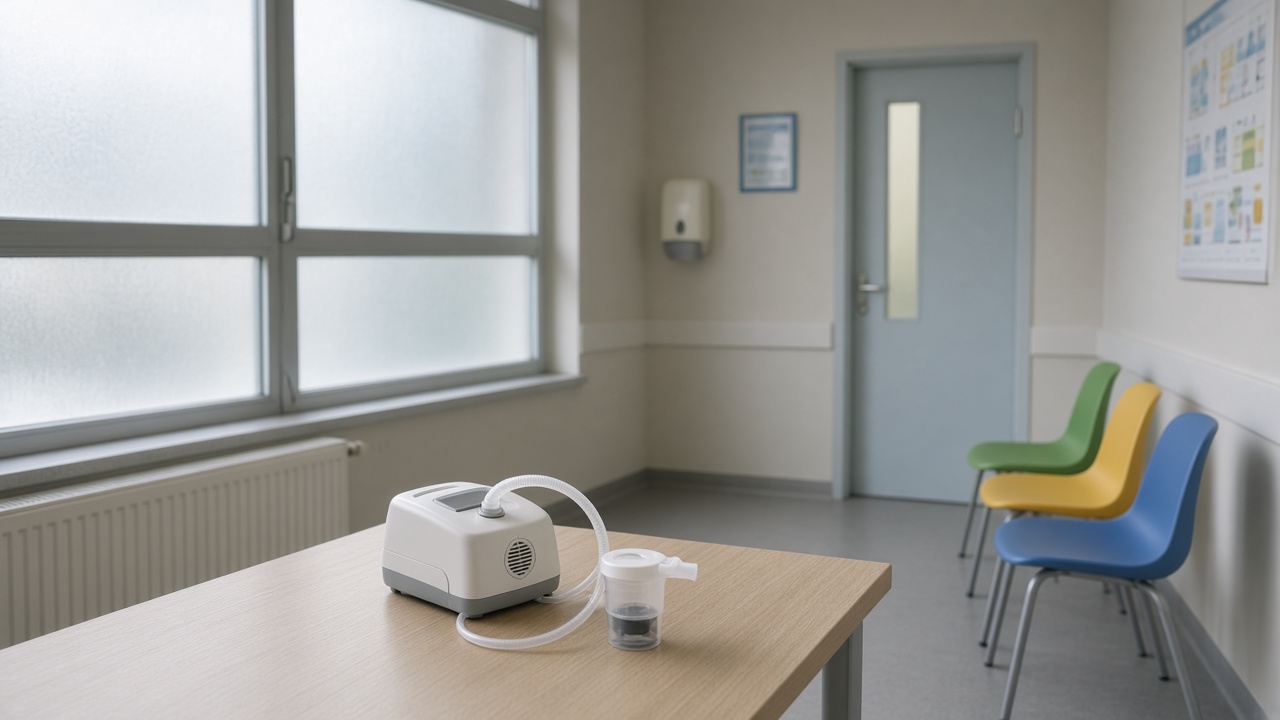
Shishu Niketan hospital in Kolkata opened twice as many paediatric asthma nebuliser counselling slots this week after citywide air quality index readings lingered above three hundred, pushing outpatient queues into evening hours usually reserved for emergency cases.
Clinical pressure
Pulmonologists said the spike differs from winter viral asthma because many children present with dry cough and peak flow drops without fever, a pattern consistent with particulate irritation rather than infection. The hospital added six counsellor shifts to teach spacer use and trigger avoidance, not just dispense salbutamol.
West Bengal’s health department logged similar surges at BC Roy Children's Hospital and a few private chains, though Shishu Niketan’s public tariff makes it the first stop for middle-income families in south Kolkata.
Air quality context
Kolkata’s November haze blends vehicular exhaust, construction dust and post-Diwali residual burning in fringe wards. CPCB monitors near Victoria Memorial recorded twenty-four-hour averages above three hundred on four consecutive days, triggering health advisories for sensitive groups. Unlike Delhi, Kolkata lacks a GRAP-style automatic construction ban, leaving hospitals to absorb the clinical load.
Doctors urge schools to suspend outdoor assemblies when hourly PM2.5 crosses local thresholds, but enforcement varies by district inspector. Parents sharing N95 masks sized for children report stock-outs at chemists along Gariahat Road.
What families should watch
Counsellors at Shishu Niketan emphasize action plans: when to double controller meds, when to visit ER, and how to log symptoms on paper when apps fail. They also flag under-diagnosed allergic rhinitis that worsens smog seasons. Hospital administrators warn that doubling slots is a temporary patch; without air quality policy, the same rush will return when temperatures drop further in December.
Pharmacy and supply
Chemists near Park Circus report higher demand for pediatric spacer devices and low-dose steroid inhalers, items that often sit on back order when smog events cluster. Hospital pharmacists said they pre-ordered stock after CPCB’s first November advisory, avoiding the shortages that hit Delhi clinics last week.
Insurance cashless approvals for nebulisation sessions ticked up twelve percent year-on-year in the first week of November, according to a private TPA summary shared with paediatricians. That metric is an imperfect proxy for severity, but it confirms the outpatient surge is not limited to a single hospital brand.
School principals in South 24 Parganas received a templated advisory to keep windows closed during morning assembly hours when hourly particulate readings cross two hundred micrograms per cubic metre on CPCB dashboards.