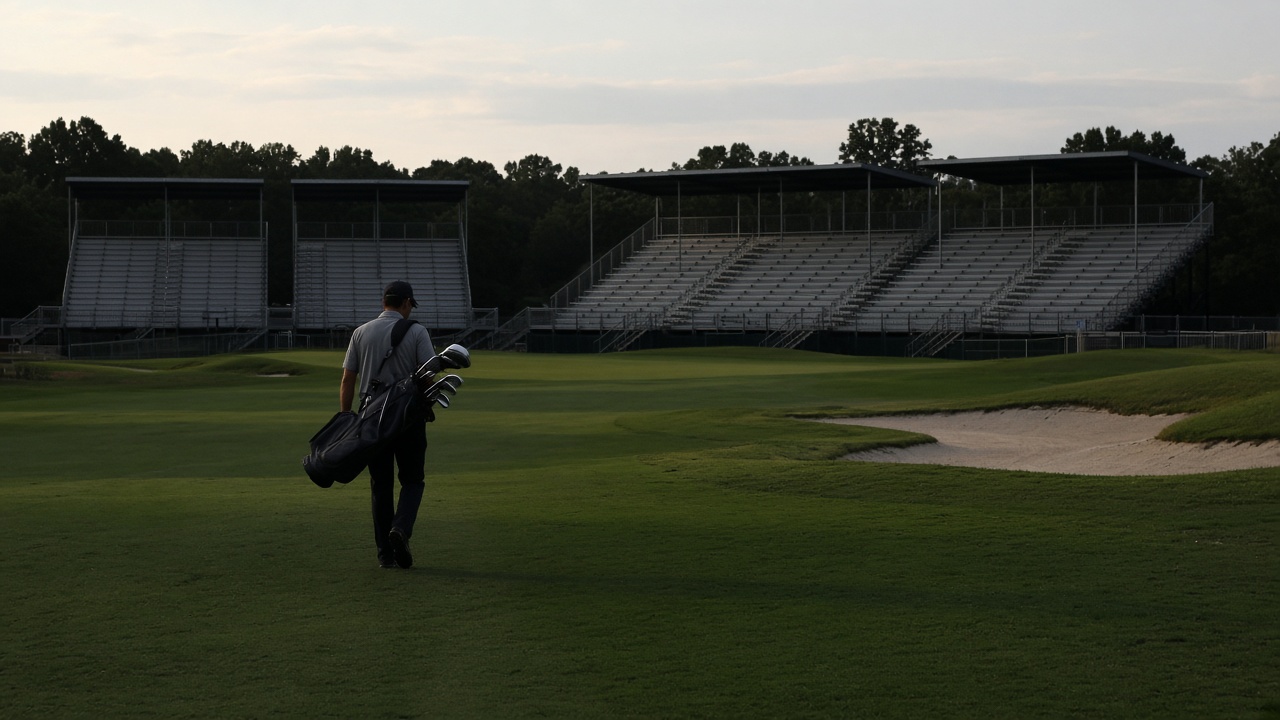
LIV Golf told a United States bankruptcy court that it will wind down operations rather than attempt another relaunch, ending a five-year experiment that splintered professional golf and lured Cameron Smith and other Australian major winners with nine-figure contracts. The league’s special committee said an orderly liquidation was the “most responsible path forward” after failing to secure enough outside support to keep playing.
What the board announced
In a statement released in the early hours of Friday Australian time, Gene Davis and Jon Zinman of LIV Golf’s board special committee said the league would shift toward winding down instead of launching a new version. The Sydney Morning Herald reported that the announcement came directly from bankruptcy proceedings where creditors have been weighing whether any buyer could salvage broadcast deals, team identities or the tour’s event calendar.
LIV Golf said it would remain open to third-party offers that could extract more value from its assets during the wind-down. So far, no white knight has emerged with the combination of Saudi Public Investment Fund patience and broadcast reach that kept the tour afloat through legal battles with the PGA Tour.
Fallout for Australian players
Cameron Smith’s future is now the most closely watched question in Australian sport. Smith defected from the PGA Tour after winning the 2022 Open Championship, signing a reported US$100 million deal to anchor LIV’s Ripper GC team and playing front-page events in Adelaide and elsewhere. With the league preparing to liquidate, Smith must decide whether to seek reinstatement on the PGA Tour, pursue Asian or European tour cards or sit out while lawyers negotiate release terms.
Other Australians who followed Smith—including Marc Leishman and Lucas Herbert—face similar crossroads. Agents will scrutinise whether LIV contracts contain clauses triggered by liquidation and whether the PGA Tour’s framework agreement with Saudi backers still offers a pathway for returning players without lengthy suspensions.
How golf got here
LIV launched in 2022 with 54-hole no-cut events and massive purses funded by Saudi Arabia’s Public Investment Fund, prompting the PGA Tour to suspend participants and triggering antitrust litigation that eventually produced a fragile truce. The tour poached major champions, forced schedule changes on the Masters and Ryder Cup calculus, and played a season finale in Adelaide that drew strong crowds but never matched traditional majors for television ratings in the United States.
Bankruptcy filings suggest the model could not survive without continued sovereign subsidies and without a merger that would have unified rankings and broadcast rights. PGA Tour commissioner Jay Monahan had pursued a partnership framework with PIF representatives, but political scrutiny in Washington and player dissent slowed any formal combination.
What happens to events and staff
Liquidation will likely cancel future LIV stops, including Australian dates that local tourism boards promoted heavily. Event staff, caddies and regional contractors who relied on LIV’s short-notice calendar may pursue claims in the bankruptcy estate alongside equipment vendors and production companies.
For fans, the immediate effect is a return to a golf economy dominated by the PGA Tour, DP World Tour and Asian circuits—minus the salary pressure LIV introduced. For Smith and his countrymen, the next move is legal and sporting: whether the tour that paid them to leave will welcome them back on terms that recognise both their majors and their role in golf’s civil war.