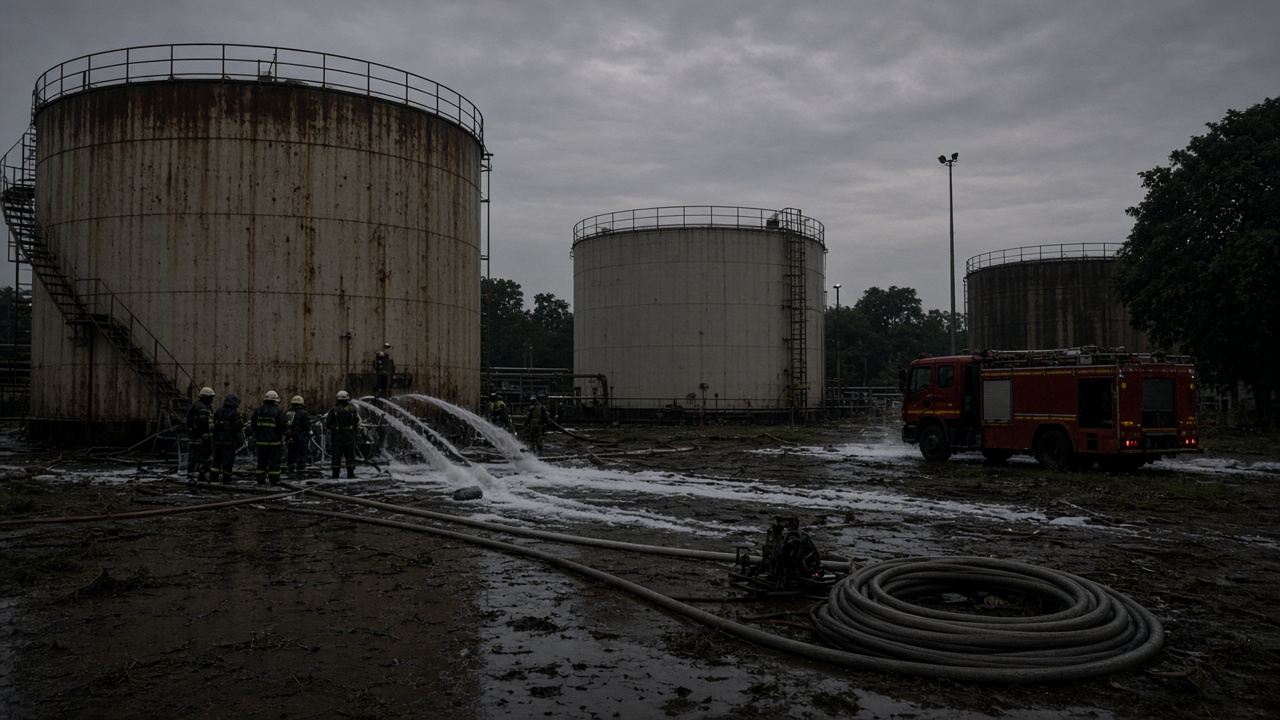
A fire broke out Friday morning during maintenance work at Oil India Ltd’s intermediate tank farm in Tengakhat, Dibrugarh district, killing one contract employee and injuring six others, according to company and local hospital accounts carried by Indian news outlets. Shares may react next week to any disclosure on downtime or inspection orders, but the immediate focus on the ground is medical care for the injured and a forensic examination of what ignited near storage infrastructure.
What we know about the timing and site
Early reports pointed to a blaze beginning around mid-morning while contractor crews were on site. Oil India fields in upper Assam combine ageing gathering infrastructure with steady throughput; tank farms concentrate volatile products in a small footprint, which makes hot work and seal maintenance especially sensitive. The Intermediate Tank Farm name signals a staging point in the production chain—exactly the sort of facility where even a confined incident can escalate if vapor manages to find an ignition source.
Casualties and response
The deceased was identified in wire copy as a worker employed by a Mumbai-based engineering contractor engaged for maintenance duties; the injured were evacuated to Assam Medical College and Hospital and to Oil India’s hospital, facilities accustomed to industrial trauma cases. Company statements quoted by the press said in-house firefighting teams brought the situation under control and that broader field operations were being assessed.
For families, the priority is accurate information and support from both the operating company and the contractor—an interface that regulators globally scrutinise after fatal maintenance fires, because safety culture often fractures at the subcontract boundary.
What investigators will examine
India’s petroleum-sector accident probes typically reconstruct permit-to-work logs, hot-work clearances, gas-testing records, and whether standby fire cover matched the task risk tier. Inspectors will also review tank isolation, valve line-ups, and any simultaneous operations nearby. Depending on findings, Oil India could face orders on restart conditions, accelerated integrity tests, or contractor blacklisting if systemic lapses appear.
Context in the northeast oil patch
Northeastern fields have produced for decades through monsoon cycles and shifting geology; keeping storage and pumping equipment compliant is capital-intensive. Local communities often watch these sites closely because spills and flares touch fisheries and farmland. Transparency in the coming days—what failed, what is being replaced, and what compensation frameworks apply—will matter for trust as much as for markets.
Market and operational read-through
Investors will look for any issuance from Oil India on throughput impact, insurance claims, and whether the company flags remediation capex. A short interruption at one intermediate facility need not move the share price sharply if crude flows can be rerouted, but repeated maintenance incidents can tighten scrutiny from lenders and from insurers who price industrial risk off loss history.
Contractor governance will be in focus as well. Maintenance fatalities often prompt parent operators to audit work procedures fleet-wide, slowing projects elsewhere while crews retrain. For residents near Tengakhat, the more immediate question is air and soil monitoring after extinguishment; district authorities typically want independent sampling when hydrocarbons are involved, even after the visible flame is gone.