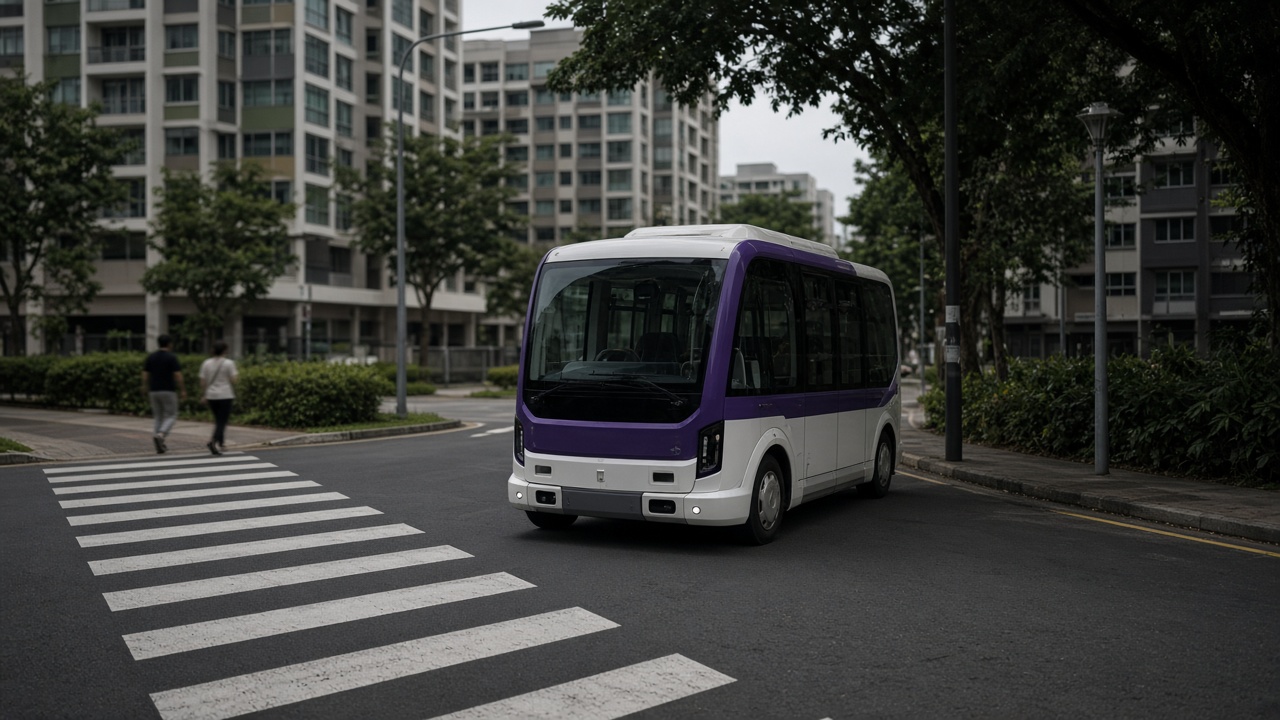
A short clip recorded in Punggol and shared widely on social media has renewed an uncomfortable question Singapore’s transport planners hoped they were answering with data, not dread: when an autonomous vehicle hesitates at a junction, who—or what—is responsible for the gap between “legal” and “safe”? In the footage, reviewed by CNA and other outlets, a Grab-branded driverless shuttle appears to pass unusually close to a child crossing the road while executing a discretionary left turn during the morning rush.
What Grab and regulators are saying
According to CNA’s reporting, the incident occurred at about 8:11 a.m. on Thursday, November 5, along one of Grab’s fixed Punggol routes. AsiaOne’s write-up notes the setting as Punggol Field Walk and describes a woman and child at the pedestrian crossing before the girl moves off several seconds into the green phase. Grab told multiple newsrooms that safety is its top priority and that it is reviewing the episode with the Land Transport Authority and with WeRide, its autonomous-vehicle partner. The LTA, which licenses tightly bounded trials, faces renewed scrutiny each time a near-miss escapes the engineering spreadsheets and lands on Facebook as a jittery parent’s share.
Grab is not the only operator shuttling riders in the northeast trial zone—ComfortDelGro runs a separate route with another supplier—but Grab’s expansion plans have attracted outsize attention. Earlier reporting cited ambitions to grow Punggol’s AV fleet and widen service points, which makes any conflict between a turning shuttle and vulnerable road users a proxy debate about whether the city-state is moving faster than its safeguards.
Why discretionary left turns matter
Unlike protected green arrows, a discretionary left in light traffic expects drivers—human or algorithmic—to yield correctly to pedestrians who may still be stepping off the kerb. Humans sometimes misjudge closing speeds; machines sometimes misread intent or hesitate mid-yield. The viral video’s value is not melodrama but documentation: it gives regulators frame-by-frame material to compare against logged sensor data, control-law updates, and geofenced speed limits.
For residents, Punggol’s wide avenues and school-adjacent crossings were always going to be the moral exam for AV marketing promises. A single scary clip will not halt trials by itself, but it can tighten parameters—lower night speeds, larger no-stop buffers near schools, or human safety minders overriding autonomy in certain hours—faster than any white paper.
What to expect next
Commuters should watch LTA bulletins for route tweaks or temporary pauses while investigators reconcile onboard logs with the roadside film. Parents and cycling advocates will press for clearer crossing priority at discretionary junctions, especially where multiple operators overlap. The through-line is procedural: Singapore wants autonomous mobility to scale, but only if the public trust ledger stays in the black—and on some Thursday mornings in Punggol, that ledger is settled one crossing at a time.