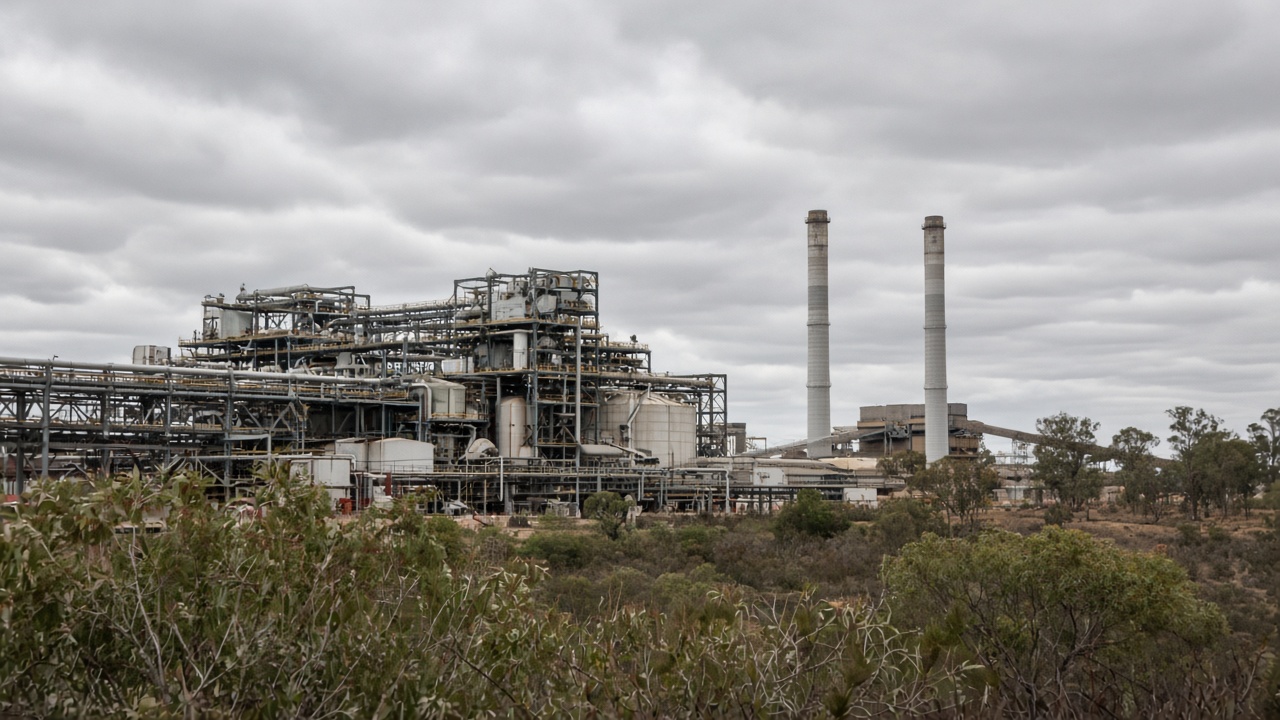
South32 restarted the Worsley alumina kiln on Thursday after a five-day stoppage that began when a calciner feed conveyor tripped during a maintenance window, forcing the Perth-based miner to defer roughly 40,000 tonnes of November shipments.
What failed at Worsley
The outage started on Saturday when technicians isolating a dust collector detected abnormal vibration on the main feed belt serving Kiln 3. South32 told the ASX on Monday that it chose a controlled shutdown rather than run the line at reduced torque, citing safety protocols written after a 2023 hot-work incident at the same plant.
Worsley, near Collie in Western Australia's south-west, is one of Australia's largest alumina refineries and feeds smelters in Victoria and overseas. The site typically ships through Bunbury port, where berth allocations are tight during the spring grain export season.
Operations staff worked through the Cup week public holiday to replace damaged rollers and re-align the belt tracking system. By Wednesday night the company said moisture readings on bauxite feed had returned to specification, allowing calcination to resume at about 70 percent of nameplate until secondary screening is recertified.
Market and customer impact
Alumina spot prices on the CME contract have traded above $US420 a tonne for most of October, reflecting refinery outages in Brazil and Guinea as well as steady Chinese import demand. Traders in Singapore told InfoHandle that a five-day Worsley gap is manageable if inventories at Port Klang and Qingdao remain near their reported 30-day cover.
Still, two Australian smelter buyers said they had activated contractual force majeure clauses only as a paperwork step, not because physical supply was at risk. One procurement manager noted that South32's earlier guidance for the December quarter already assumed two weeks of planned maintenance on Kiln 2 in January.
Shares in South32 closed up 1.1 percent on Thursday in a broader materials rally, suggesting equity investors treated the outage as timing noise rather than a structural cost blowout. Analysts at Macquarie kept their FY27 EBITDA forecast unchanged but warned that repeated conveyor failures would eventually attract Australian Securities and Investments Commission questions about capital upkeep disclosures.
Labour and community lines
The Australian Manufacturing Workers' Union said 180 maintenance contractors were brought in under emergency rosters, with no reported injuries during the repair push. Collie shire councillors had asked South32 for a community briefing on dust monitoring after a social media clip showed a plume near the rail load-out; the company responded that the footage captured a scheduled stack test unrelated to the conveyor fault.
Environmental regulators in Western Australia confirmed they received a notice of disruption but said no exceedances were logged on the refinery's continuous emissions monitors during the shutdown. South32 must file a root-cause report within 30 days under its licence conditions.
What happens next
Management told investors on a brief call that it expects to recover most deferred tonnes by late November if Kiln 3 runs at full rates through month-end. The bigger test is whether the January Kiln 2 overhaul can proceed on schedule without borrowing parts earmarked for the feed system.
For global alumina buyers watching Guinea's export corridors and Brazil's energy tariffs, Worsley is a reminder that Australian supply still hinges on ageing bulk-handling kit. South32's next operational update is due with its half-year results in February, when shareholders will want evidence that this outage was a one-off, not a pattern.