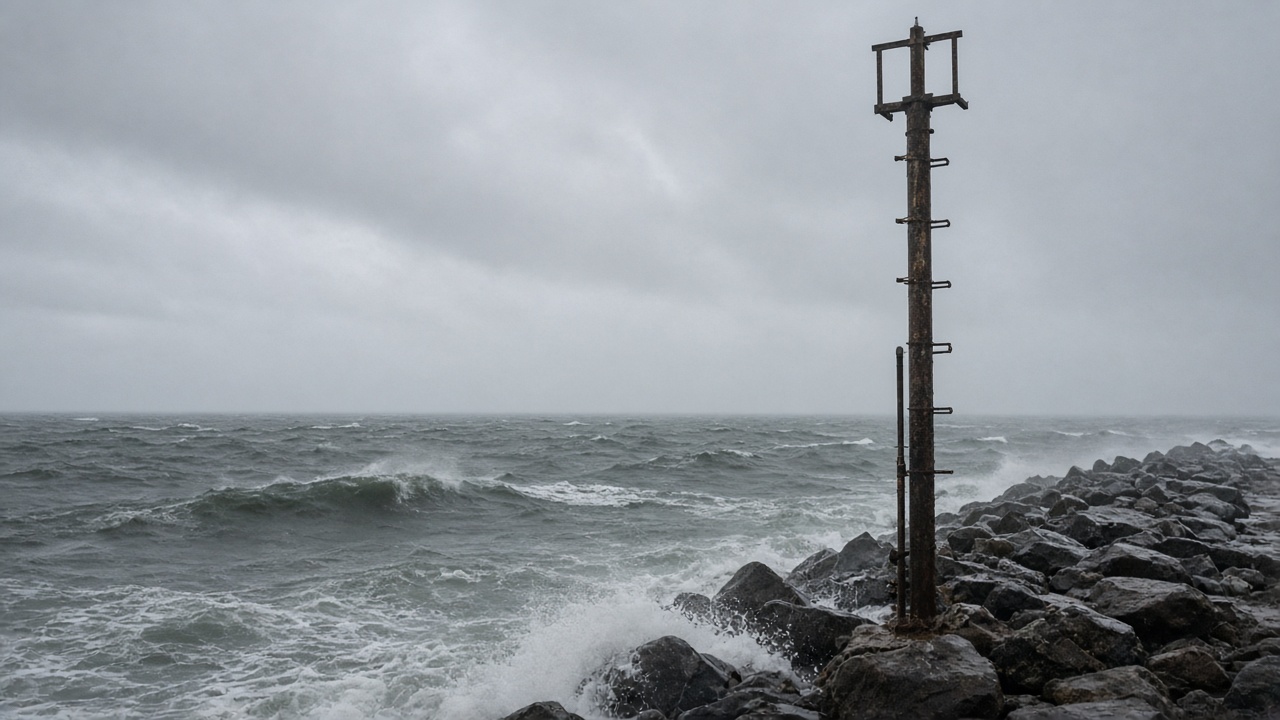
Researchers at National Cheng Kung University said a tide gauge at Anping Harbor recorded a November swell peak above fourteen centimeters relative to the station’s calm baseline, the highest reading since a sensor upgrade in 2012, as a strong northeaster drove seas against Taiwan’s southwest coast.
The measurement is not a tsunami signal; it reflects wind setup and harbor resonance during sustained onshore flow. Central Weather Administration marine forecasts had flagged rough seas for small craft, but the Anping spike still exceeded what port pilots expected from model outputs tuned to older climate norms.
Why the gauge matters
Anping sits at the mouth of a busy fishing and container approach lane for Tainan industries. Small surge events can delay bar crossings for tug-assisted moves even when significant wave heights look modest offshore. The NCKU team uses the series to calibrate local warning thresholds rather than relying solely on deep-water buoys far from shore.
Harbor masters paused two dawn departures while tugs reassessed line loads, avoiding damage rather than risking snapped moorings.
Climate context
November northeasters are normal, but the relative record since 2012 fits a broader pattern of sharper harbor anomalies during otherwise moderate offshore storms. Researchers cautioned against calling one peak a trend, yet noted that infrastructure designed for mean conditions may need revised safety margins.
Fishers reported less deck flooding than in typhoon cases because duration was shorter, but bait tank slosh still ruined some overnight trips.
Next steps
NCKU will publish a brief technical note comparing the event to Typhoon Kong-Rey surge traces earlier in the season, helping engineers separate tropical from monsoon-driven setups. Port authorities said they will review fender maintenance schedules if similar bursts repeat before winter ends.
Data sharing and ports
Anping container terminals did not halt operations during the swell peak, but pilots logged the event in safety briefings shared with Kaohsiung harbor masters. Cross-harbor data sharing remains manual, a gap NCKU researchers hope to close with automated feeds next year.
Insurance underwriters covering small craft said single-event anomalies rarely change premiums, yet repeated November records could eventually feed into risk models for pier-side equipment leases.
Volunteer harbor-watch groups plan to mirror the NCKU feed on a public dashboard so small-boat captains see the same numbers tug masters receive. That mirror does not replace official warnings, but it gives recreational fleets a single place to check before leaving the river mouth.