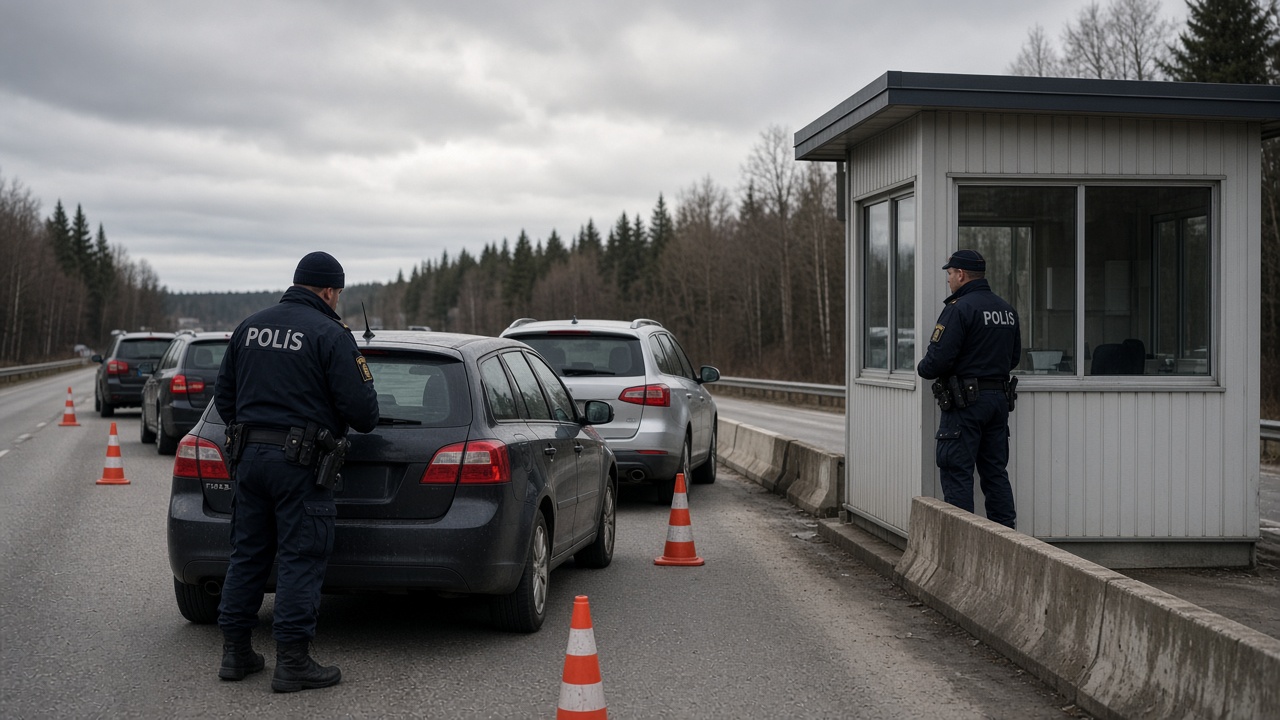
Sweden will bring back internal border controls within the Schengen Area for six months starting Nov. 12, reversing years of largely invisible frontiers toward Denmark, Norway and Finland as Stockholm cites a serious and ongoing threat to public order and internal security.
What the government decided
The announcement lands as several European capitals rework how they police free movement after repeated waves of pressure on housing, social services, courts and law enforcement. Swedish authorities framed the move as a time-limited instrument under the Schengen border code rather than a permanent departure from passport-free travel: checkpoints can be selective, intelligence-led and aimed at routes known for smuggling, falsified travel papers or organized crime rather than blanket stops of every commuter.
Officials stressed that Swedish citizens and legitimate travelers should still expect to cross land and sea links for work and family, but that spot checks, vehicle inspections and rail-platform sweeps may add delay at choke points that had operated without systematic controls. Freight operators and bus companies operating overnight routes through Skåne and along the Öresund link will watch closely for knock-on congestion that can ripple into Denmark and Germany within a single shift change.
Why partners are listening now
Neighboring governments have been tightening their own contingency plans as criminal networks exploit long internal Schengen lines to move narcotics, stolen vehicles and unauthorized entrants. Sweden’s geography — a long Baltic coast, busy ferry terminals and dense road links into the Nordic labor market — makes it both a destination and a transit wedge. Interior ministers elsewhere will ask for granular data on how often controls surface real arrests versus creating friction for ordinary residents.
Brussels typically scrutinizes renewed controls to ensure they remain proportionate, grounded in documented risk and coordinated so that smaller countries on the rim are not left holding disproportionate asylum or returns burdens. Diplomats expect a round of technical meetings on readmission capacity, police information sharing and synchronized maritime patrols so that Sweden’s measures do not simply divert pressure onto another Nordic route.
Travel and rights
Passengers should carry valid identification even on trips that have not required it in years; employers with cross-border staffs in healthcare, construction and logistics are likely to brief crews on longer buffer times. Civil liberties groups will watch for ethnic profiling and for data retention from mobile roadside units; Sweden’s agencies have faced domestic court supervision before on surveillance powers, so any new collection at internal checkpoints is likely to draw quick parliamentary questions.
What happens next
The six-month window allows Stockholm to review arrest statistics, migration flows and serious-crime caseloads before deciding whether to seek an extension. EU institutions and Nordic neighbors must balance solidarity with control: if internal checks spread beyond a thin ring of hot spots, the political fight over Schengen’s survival will intensify heading into budget and capitals’ electoral calendars.