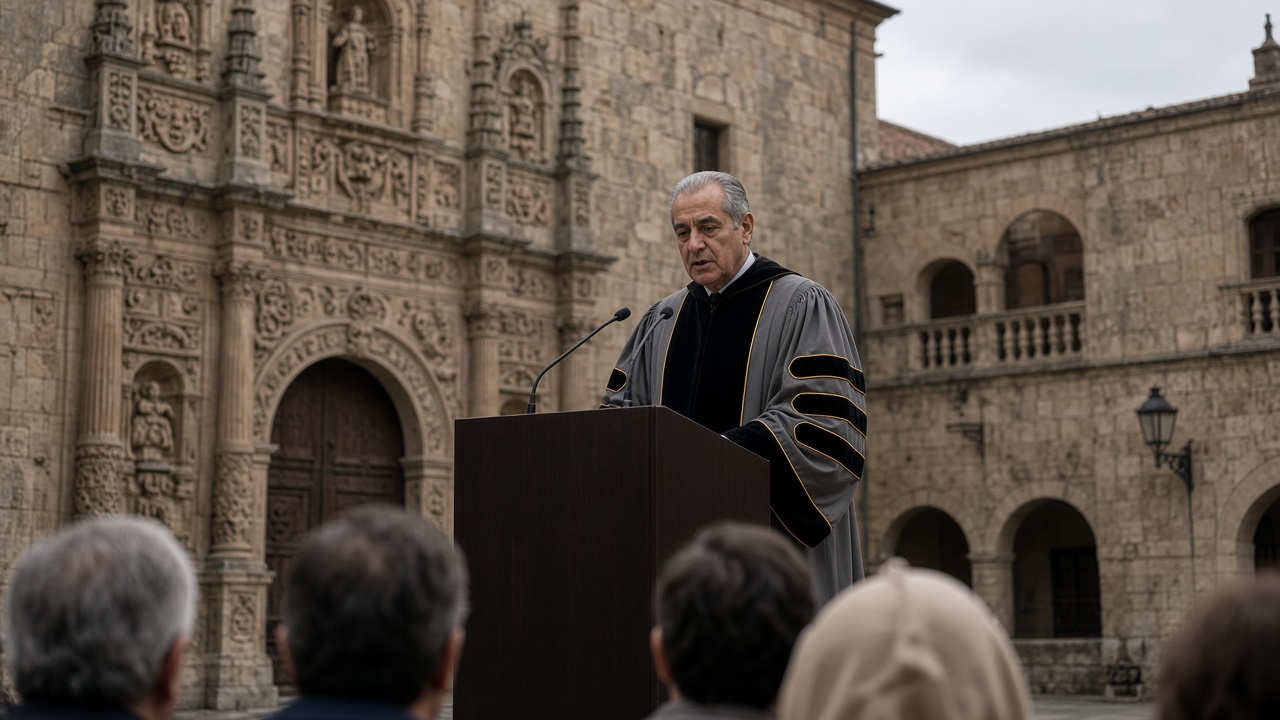
António Guterres told an audience at Spain's University of Salamanca on Friday that "the unlawful use of force is becoming normalised" and that borders are "being redrawn by force of arms," warning that selective compliance with treaties is eroding the rules the United Nations was built to uphold. The secretary-general spoke after receiving an honorary doctorate at the institution where Francisco de Vitoria, an early theorist of international law, taught in the sixteenth century.
Charter rules without exceptions
Guterres argued that governments increasingly pick which obligations to follow, leaving civilians to absorb the cost. From Ukraine to Sudan, the Sahel and Gaza, he said, "every crime that goes unpunished paves the way for the next." He framed the UN Charter as applying equally to every member: "No exceptions. No double standards."
Power, he added, must remain subject to law—a formulation he tied directly to Salamanca's legacy. His remarks land as diplomats at UN headquarters in New York separately debated new violence in eastern Democratic Republic of the Congo that has disrupted Ebola response teams, a linkage Guterres's spokesperson raised in the same news cycle.
Reform and spending
The secretary-general called the lack of a permanent Security Council seat for Africa and for Latin America and the Caribbean "a historic injustice that we must rectify," linking representation to legitimacy at a moment when council paralysis over major wars is routine. He also pointed to record military spending alongside falling development aid, arguing the imbalance starves the tools that prevent conflict.
Guterres, whose term ends early next year, closed with a reminder that individual mandates expire even as the organisation's work does not. "Terms of office come and go," he said. "The struggle for peace, dignity and justice continues." The speech did not name specific governments or propose new sanctions; it was a normative appeal from a outgoing leader with limited enforcement levers left.
Why the timing matters
Western capitals have spent much of 2026 debating whether long-standing legal constraints on the use of force still bind major powers, while humanitarian agencies report rising attacks on health workers and aid convoys in active war zones. Guterres's language echoed prior warnings but carried added weight because he paired them with a specific venue associated with the intellectual roots of humanitarian law.
UN member states have no vote scheduled on his remarks. The practical test will be whether any council members translate the speech into renewed funding for peacekeeping or diplomacy before the year's end. For now, the organisation published the full text through its news service, making the address the day's clearest institutional statement on the health of the rules-based order.