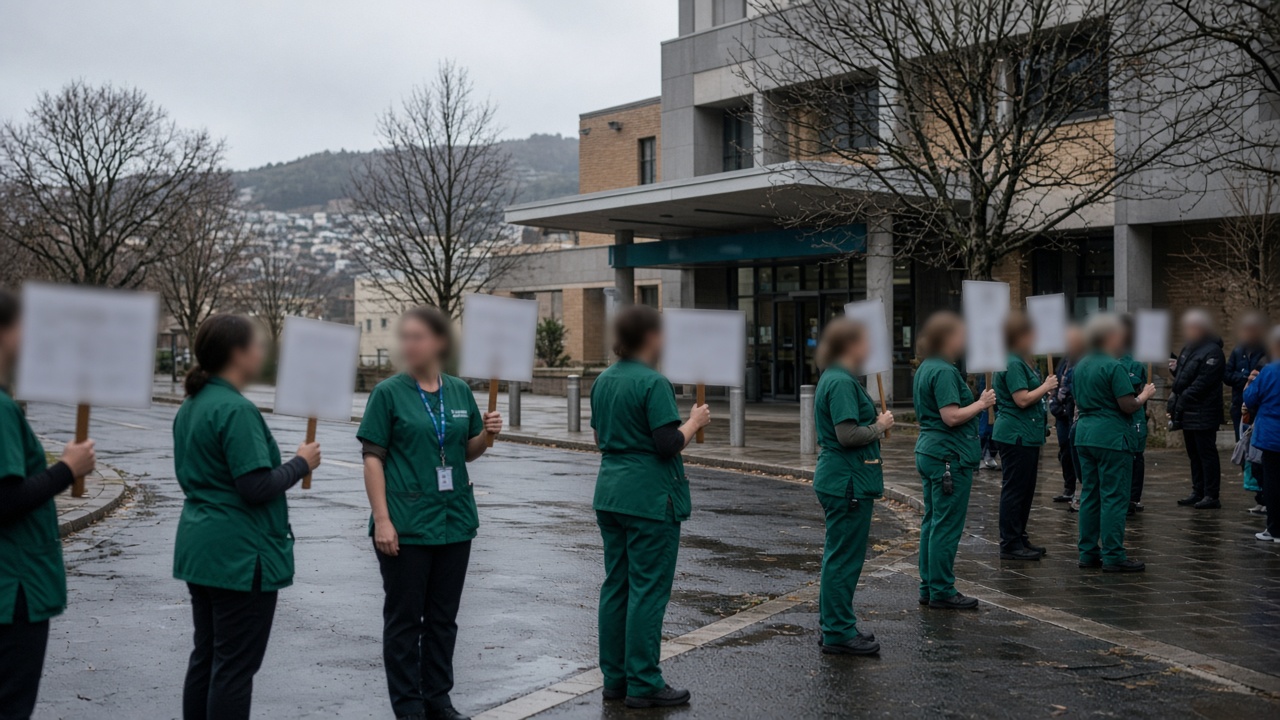
Hundreds of nurses and midwives rallied in Hobart on Saturday after stop-work action hit the Royal Hobart Hospital and the Repatriation Centre, escalating a pay fight that has run since Tasmania’s main public-sector nursing agreement expired in June. The Australian Nursing and Midwifery Federation and the Health and Community Services Union said members need sharper wage movement and concrete protections against violence, not a first government offer they called disappointing.
Premier Jeremy Rockliff’s government tabled a three-year package of 3 percent in year one, 2.75 percent in year two and 2.5 percent in year three—figures union leaders told the ABC sit below inflation and will not ease chronic understaffing. A government spokesperson said an offer is on the table and talks are continuing “constructively,” but speakers on the lawn argued patients are already paying for gaps on the roster.
Violence and trauma on the bargaining table
Nurse Will Lincoln, who works in mental health, told the crowd that colleagues have been punched, kicked, spat on and threatened. He said workers want “meaningful measures that provide protection, support and recovery,” not acknowledgments without resources. ANMF state secretary Emily Shepherd welcomed some pay allowances in the government package but said members were shocked that extra “personal impact” leave would be limited to mental health, emergency and intensive care staff.
Shepherd listed maternity, oncology and school nurses among those who regularly confront distressing cases yet would not qualify for the additional leave days. Midwives supporting stillbirths and nurses taking abuse disclosures from students, she argued, face trauma comparable to emergency departments and deserve the same recovery time.
Rosters, double shifts and bed block
James Lloyd, an after-hours nurse manager at Royal Hobart and ANMF Tasmania branch president, said early shifts sometimes show more than 20 unfilled roles across the hospital with only a handful of casuals available to plug holes. He linked understaffing to bed block and longer waits, telling supporters that “ultimately the Tasmanian community pays the price.”
Audrey McAllister drew loud applause when she asked who had worked 16- to 20-hour double shifts. She cited research equating 17 hours awake with a 0.05 blood alcohol reading, asking why exhausted nurses may administer chemotherapy or blood products even though they would not be allowed to drive home in the same condition. McAllister has spoken publicly before about being chased by a group of men while walking to her car after a night shift.
What the state says happens next
Rockliff said last week that the government had worked collaboratively on parts of the unions’ log of claims. Shepherd countered that several priority items were missing or underpowered, leaving members willing to take protected industrial action despite the risk of public criticism during a health workforce shortage.
With Tasmania’s bargaining calendar now in open dispute, both sides face pressure before summer demand peaks. Union officials said further stoppages remain possible if violence prevention and wage scales do not move; the government is betting that incremental increases plus selective allowances will be enough to secure a deal without reopening the entire public-sector pay strategy.