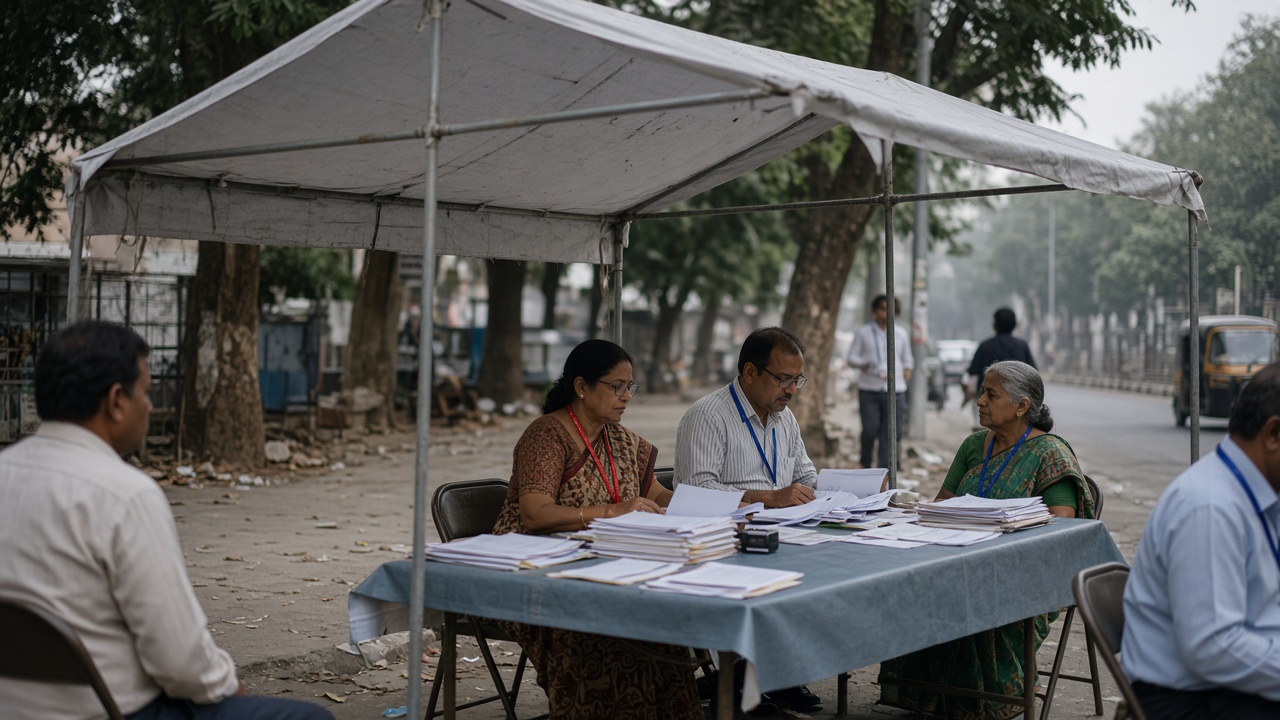
The Election Commission told officials in seven states running the special intensive revision of voter rolls to reopen a channel for households marked absent, shifted, dead, or duplicate — ASDD — after enumeration forms went unanswered, letting those electors submit fresh enumeration packets rather than defaulting straight to a Form 6 new-registration path.
The change, summarized in national headline digests for Saturday, responds to complaints that genuine voters dropped off draft lists when post or camp logistics failed. It does not rewrite the underlying SIR calendar, but it gives booth staff a cleaner way to restore names before final publication.
Who benefits immediately
Voters who received an enumeration slip but could not return it during the camp window — often migrants or college students — can now work with booth-level officers to prove residence without fighting the heavier documentary burden Form 6 sometimes triggers in overburdened urban wards.
States conducting SIR simultaneously with intense air-quality warnings in the NCR also get relief; election teams can piggyback on resident welfare association meetings already scheduled for smog advisories.
Political optics
Opposition leaders, including Rahul Gandhi, continue to spar with the government over SIR’s scope, demanding open debates with Prime Minister Narendra Modi on methodology. Regardless of campaign theatrics, the commission’s procedural tweak signals an effort to reduce wrongful exclusions that courts would otherwise litigate district by district.
Practical steps for voters
If your household received an ASDD tag, carry proof of current address and earlier EPIC printouts to the booth camp; photograph acknowledgement receipts; track status weekly on the Chief Electoral Officer portal.
Election machinery still faces Diwali staffing shortages — patience is a material input, not a slogan.
Booth agent training
District election officers must circulate the fresh enumeration memo to presiding officers before weekend house visits; SIR states mix Diwali travel patterns with dense urban clusters, so evening booth hours are being extended where air-quality curfews allow outdoor queues.
Political party polling agents should log every acknowledgement serial on Form 49 to reduce disputes that already clog district courts in Bihar and Uttar Pradesh.
Citizen checklist
Households should laminate acknowledgement slips, screenshot portal confirmations, and raise tickets on the National Grievance Portal if booth staff refuse re-enumeration envelopes. Courts expect that paper trail if names still vanish from the final PDF.
District-level metrics
Chief electoral officers plan to publish daily counts of forms received versus outstanding ASDD markers so watchdog NGOs can compare against postal delays. That transparency also helps media verify whether a state actually cleared backlog or simply re-tagged voters into another queue.
Volunteer groups are urged to run parallel help desks at metro stations where workers returning for Diwali can fix entries without missing the holiday itself.