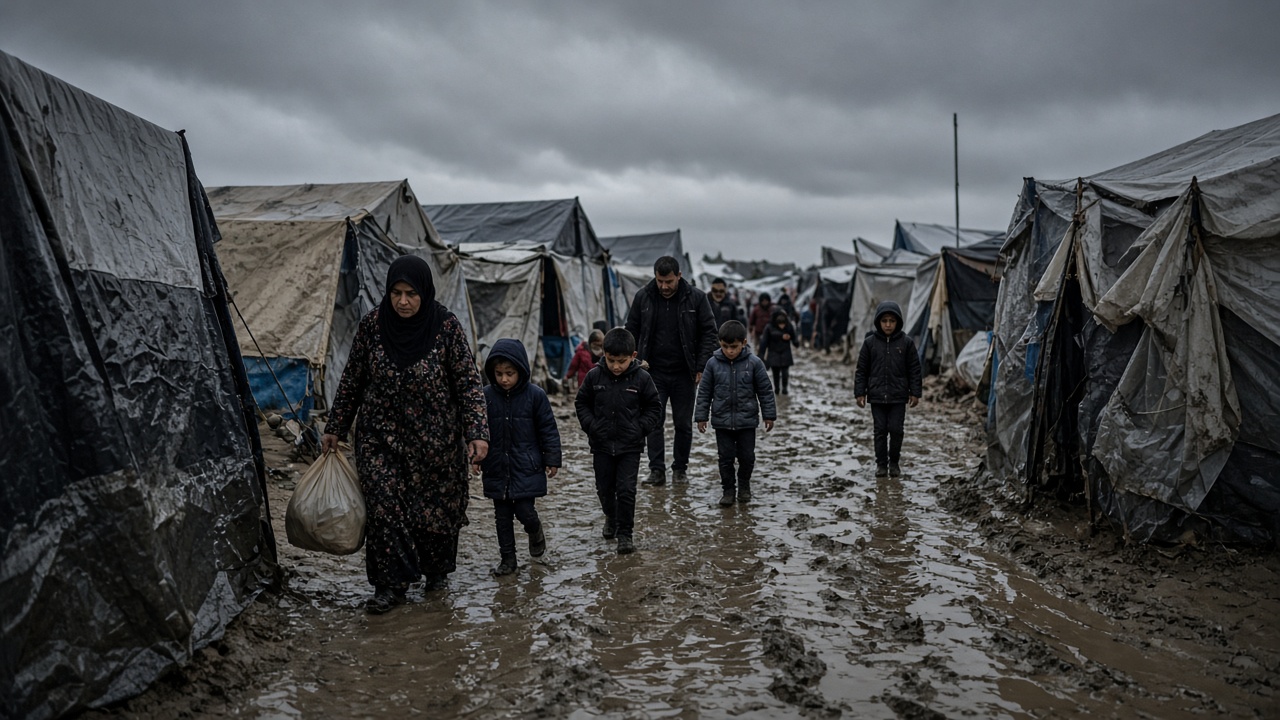
The first winter storm of the season soaked the Gaza Strip within hours on Saturday, flooding about 70,000 tents that house displaced families, Gaza's Government Media Office said. Civil defence crews logged roughly 1,500 distress calls in the first ten hours of rain, and al-Shifa hospital's emergency department stayed closed for about four hours after water entered the ward.
Mahmoud Basal, spokesman for Gaza's civil defence agency, told Al Jazeera that water climbed 30 to 40 centimeters at several sites and that some centres were "completely flooded," pushing residents back into open ground. Raed al-Dahshan, the agency's director, said responders arrived without tarps or spare tents. "Civil defence does not have a single tarpaulin or a single tent," he told the broadcaster.
Storm damage beyond the camps
Wind and rain also struck buildings weakened by more than two years of fighting. Rescuers evacuated residents from a structure in Nuseirat that partly collapsed, civil defence said, and Wafa reported a separate wall collapse in northern Gaza that injured two people. Mohammed Abu Salmiya, director of al-Shifa Medical Complex, said sewage mixed with rainwater inside tents and warned of rising gastrointestinal, respiratory, and skin infections. He said newborns who need heat are especially exposed.
The Government Media Office put initial property losses near $3 million and said cracked buildings at risk of collapse add a second hazard to families already living in plastic sheeting. Footage from Gaza City, Khan Younis, and Deir al-Balah showed mattresses and blankets soaked through and children standing in mud. Al Jazeera's Rami Abu Taima, reporting from Khan Younis, said rain in al-Mawasi had been falling since late Friday and that more than 125,000 coastal families face tents being swept toward the sea.
Supplies and crossings
Gaza's emergency committee said more than one million displaced people are heading into winter and that the territory needs about 200,000 tents plus heating fuel. Hamas-run authorities blamed Israeli restrictions on shelter materials and crossing access. Israel's COGAT aid coordination body said on Friday it had worked with international groups to bring vacuum trucks and repair water infrastructure before the forecast rain, and that four additional trucks entered this week through the International Committee of the Red Cross.
The United Nations Office for the Coordination of Humanitarian Affairs has said nearly 950,000 displaced people live in flood-prone areas, with more than 400,000 in high-risk zones. OCHA estimated shelter stocks cover only about 18 percent of assessed need. Saturday's storm landed without a broad new aid surge: municipal officials told Reuters that fuel shortages and destroyed equipment limited pumping and drainage work. For families still inside flooded tents, the immediate question is dry ground before the next band of weather arrives.