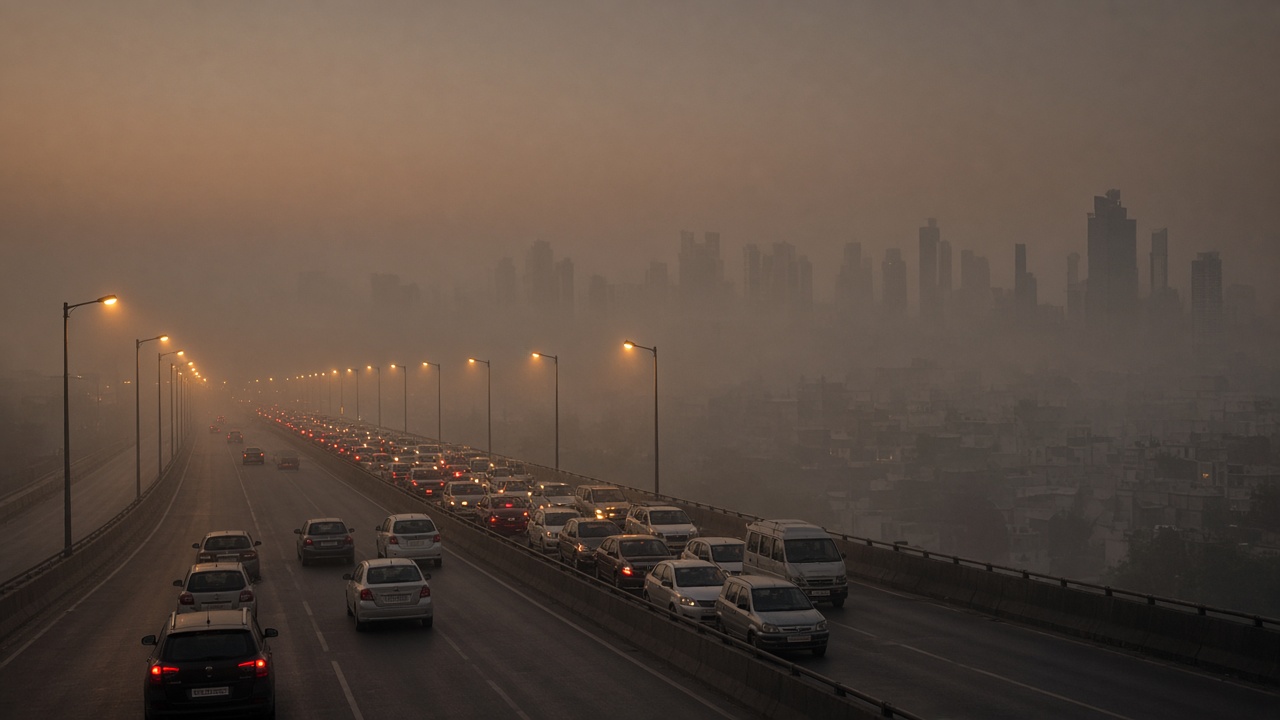
The Commission for Air Quality Management ordered Stage III of the Graded Response Action Plan across Delhi and the National Capital Region on Friday, triggering hybrid classes for young students, tight limits on older diesel vehicles, and a halt to most dust-heavy construction two days before Diwali.
Although the Central Pollution Control Board’s 24-hour average for the capital registered 382 — still classified as “very poor” — officials moved early because forecasts from the India Meteorological Department and the Indian Institute of Tropical Meteorology point to “severe” readings from Saturday through the festival weekend. Twenty-seven of 58 operational monitoring stations already logged severe levels on Friday afternoon.
Stage III restrictions now binding
Under the emergency plan, all major dust-generating construction and demolition work must stop across the NCR except for essential public projects that document dust-control compliance. Stone crushers must shut, and mining activity is suspended. Industries using fuels that fail approved lists must halt operations.
Transport rules tighten sharply. Private owners may not drive BS-III petrol or BS-IV diesel light vehicles in Delhi and designated districts of Gurugram, Faridabad, Ghaziabad, Gautam Buddha Nagar and Sonipat. Medium goods vehicles face entry bans and operating limits, including a prohibition on non-Delhi-registered diesel commercial trucks entering the capital.
Schools shift to hybrid mode
The commission directed schools up to Class V in Delhi and selected NCR districts to run hybrid classes, letting pupils attend in person on some days and online on others. Other districts may adopt similar schedules. The order encourages employers to stagger office hours and work from home where feasible, and asks households to postpone gatherings that would add traffic.
Resident welfare groups in south Delhi said messaging apps lit up with parents asking which schools would open classrooms Monday. Municipal corporations promised to increase Metro frequency and deploy extra buses so commuters have alternatives to private cars while older vehicles face restrictions.
Why officials escalated before the average crossed 401
Stage III formally targets the 401–450 “severe” band, but the CAQM statement said it implemented the package “with immediate effect” after reviewing pollution and weather models. Experts note that stubble-burning peaks, pre-Diwali firecracker sales, and low wind speeds often produce sharper spikes than daily averages capture.
The Air Quality Early Warning System for Delhi projected that pollution could remain severe from 7 November through 9 November. Saturday morning readings at Safdarjung showed mist and a temperature of 17 degrees Celsius at 5:30 a.m., with several neighborhoods including IIT Delhi and Punjabi Bagh still above 400 on localized monitors despite a modest dip in the citywide average.
Commuters and truckers adjust routes
Logistics firms told reporters they were rerouting medium-duty trucks to night windows or depots outside the capital to avoid fines. Delivery riders said longer travel times could slow food and e-commerce shipments unless companies shift more volume to Metro-adjacent warehouses. Police checkpoints will verify emission stickers on outbound ring roads.
Environmental groups welcomed the construction ban but warned that enforcement teams remain understaffed in peripheral industrial belts. They urged residents to avoid wood and coal heating and to limit firecracker use voluntarily even where local bylaws still allow limited hours.
What comes after Diwali
If averages climb above 450, Stage IV “severe plus” restrictions would bar even more truck categories and could impose odd-even driving rules. Delhi Environment Minister officials said teams will conduct night patrols at demolition sites and brick kilns through Sunday night. Hospitals have been told to watch for rising respiratory admissions among children and the elderly as particulate levels climb.
For now, households face a festival week governed by hybrid schooling, filtered commutes, and the prospect that one night of fireworks could push monitors from very poor into the severe-plus band — forcing another escalation just as the emergency plan already sits at its third notch with two more stages still available.