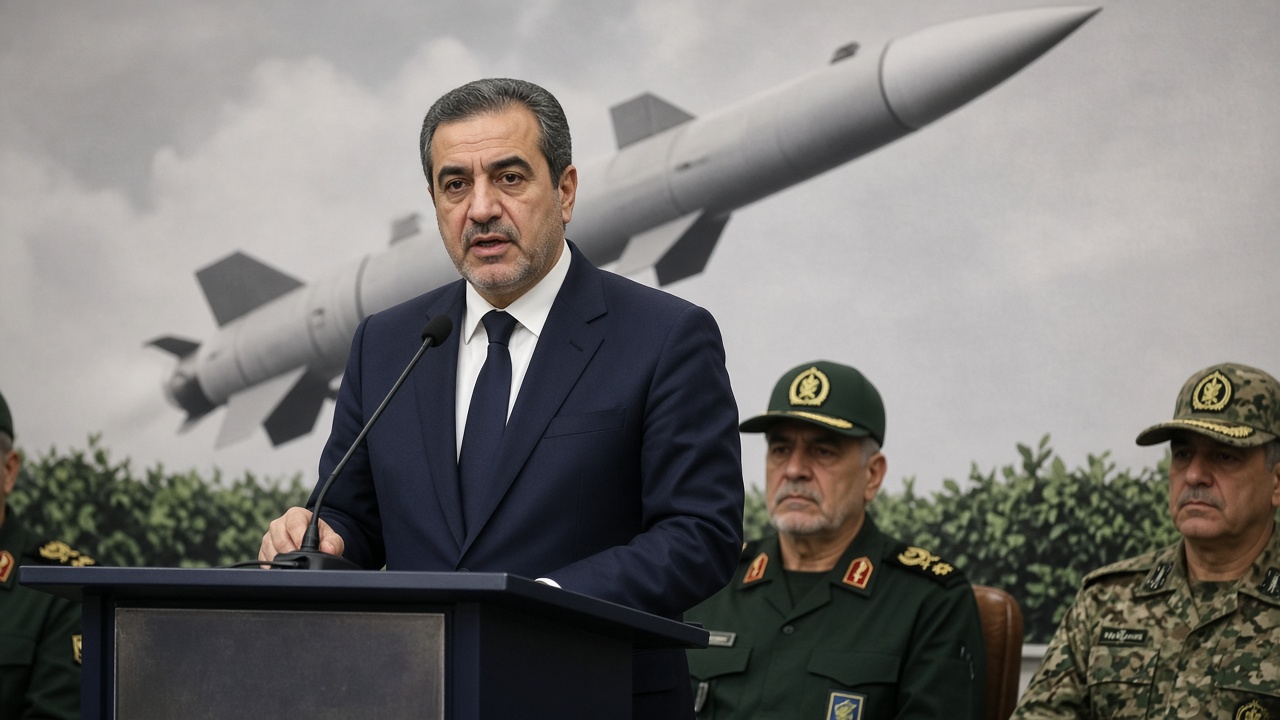
Iran’s Islamic Revolutionary Guard Corps said on Saturday that it has abandoned a long-standing voluntary limit of roughly 2,000 kilometers on its ballistic-missile reach, opening the door to weapons that could threaten targets farther from Iranian soil at a moment when Washington and Tehran are trading limited strikes and sharper rhetoric.
IRGC spokesman Brigadier General Hossein Mohebbi told journalists on the sidelines of a Tehran press conference that the restriction “has been lifted for us.” He insisted, however, that Iran must demonstrate any expanded capability in combat rather than announce ranges prematurely. “Our duty is to show our capabilities on the battlefield,” he said, according to Iranian state outlets and independent monitors who carried his remarks.
How the self-imposed cap fit Iran’s playbook
For years, Iranian officials described the 2,000-kilometer ceiling as a policy choice meant to reassure European capitals even as Tehran improved solid-fuel motors, guidance kits and launcher mobility inside that band. Missiles such as the Fateh and Emad families already gave commanders deep-strike options across the Gulf and the Levant without breaching that public line.
Dropping the cap does not, by itself, reveal new hardware on a launchpad. Western intelligence officials have said for months that engineering teams continued to study longer trajectories in secret facilities. Mohebbi’s comments instead signal that political restraint on discussing range is over, aligning with a harder line from Iran’s leadership after U.S. forces hit facilities near Qeshm Island and Iran claimed it downed an American MQ-9 drone over the same area.
Leadership orders and the timing
Mohebbi spoke days after Supreme Leader Ayatollah Mojtaba Khamenei told senior commanders that any threat against Iran should draw an immediate response “without geographical limitations,” phrasing that Iranian media linked directly to missile planning. At the same event, Mohebbi said the Guard would prepare for a change in nuclear doctrine if the state chose that path, without saying such a decision had been made.
Qatar’s government, meanwhile, said mediation channels with Washington remained active and denied reports that a ceasefire framework had collapsed. The mixed signals explain why Gulf shipping insurers and European diplomats treated Mohebbi’s range statement as a risk marker even absent a test launch.
What U.S. planners and allies are weighing
American officials have not publicly confirmed new Iranian flight tests since the Qeshm exchanges, but they have warned citizens in the region about retaliation plots linked to Iran and allied militias. European governments that still engage Tehran on sanctions relief will likely press for technical transparency; several capitals noted that lifting a voluntary cap could complicate discussions about reimposing United Nations restrictions on missile transfers.
Analysts who track proliferation said the immediate danger may lie in transfers and doctrine rather than a sudden intercontinental program. Shorter warning times for U.S. bases in the eastern Mediterranean, new stress on Israeli and Gulf interceptors, and incentives for Iran’s proxies to stage provocations all become more plausible when leaders promise strikes “at an unexpected point,” as Mohebbi put it.
The IRGC’s Aerospace Force commemorations this week featured displays of drones and surface-to-air upgrades, reminders that any extended ballistic reach would be paired with denser air defenses. Until flight telemetry proves otherwise, Mohebbi’s statement is a declared intent—one that lands amid live hostilities and unsettled talks rather than in a quiet laboratory year.