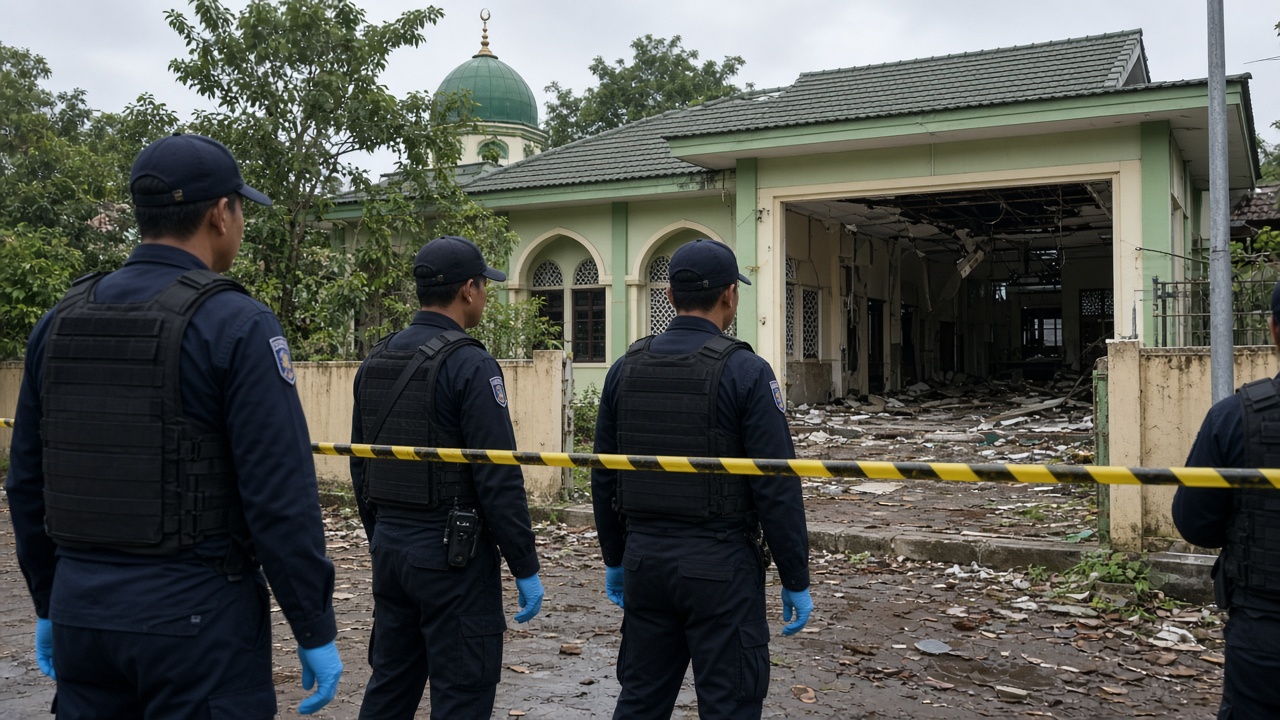
Two explosions tore through the mosque at SMA Negeri 72, a state high school in Jakarta’s Kelapa Gading district, shortly after midday prayers began on Friday, injuring 96 people and sending students and teachers fleeing a Navy-linked housing complex where the campus sits.
What witnesses and police say happened
Worshippers told Indonesian television crews they heard a first blast during the Friday sermon and a second moments later from another direction inside the mosque compound. The school shares grounds with Kodamar, a residential zone for naval families, which has heightened sensitivities about security and explosives access in the capital.
Police initially reported 55 wounded but raised the tally to 96 by Saturday as more students sought treatment for hearing damage and shrapnel cuts. National police chief Listyo Sigit Prabowo said 14 people remained hospitalised, two in intensive care, while most victims were treated at RSIJ Cempaka Putih, Yarsi, Pertamina, and police hospitals across North Jakarta.
The suspect and the investigation
Authorities identified a 17-year-old student at the school as the suspected perpetrator. He underwent head surgery Friday and was recovering under guard, Listyo said, adding that investigators had not ruled out accomplices. Counterterror unit Densus 88 searched the teenager’s home and retrieved material that forensic teams are testing as possible explosive powder.
Deputy coordinating minister Lodewijk Freidrich Paulus urged the public not to label the incident terrorism before laboratory results return, a caution echoed after social media users circulated photos of a toy rifle allegedly inscribed with white-supremacist slogans. Police said that weapon was not operational. Local reports citing bullying as a motive remain unconfirmed; Listyo told reporters the student's social media and family environment were still being mapped.
Why Singapore readers are watching
Indonesia is ASEAN’s largest economy and Jakarta’s security lapses ripple through regional travel and port supply chains that Singapore firms rely on. Friday’s attack did not close Soekarno-Hatta airport or the Tanjung Priok port, but hospital surges and school closures in Kelapa Gading could affect Indonesian staff who commute on weekend flights to Changi. Singapore’s Ministry of Foreign Affairs routinely updates travel guidance after major Indonesian incidents even when the blast is not terrorism-linked.
President Prabowo Subianto’s government now faces pressure to explain how a student could assemble devices on a military-adjacent campus. Parliament is expected to question the education and interior ministries on mosque safety audits when it returns next week, while police promised daily casualty updates as hearing-loss cases continue to surface.