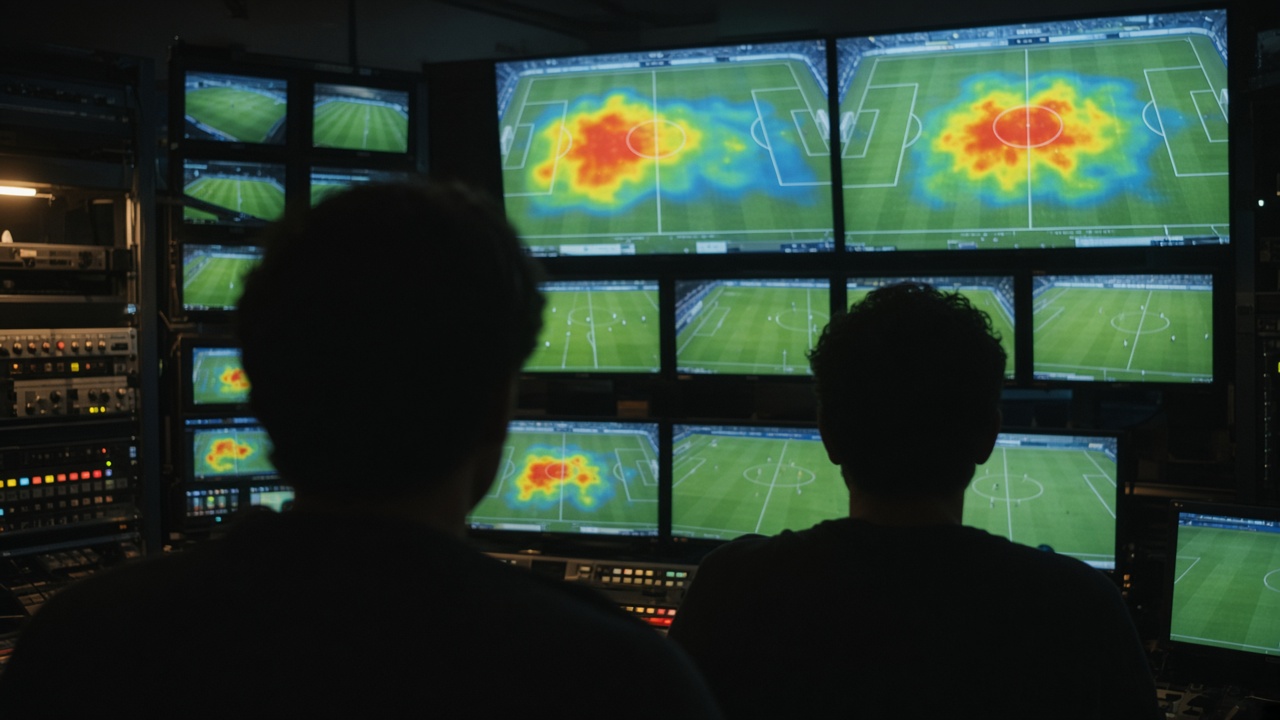
The Korea Professional Football League said Friday it will layer augmented-reality graphics on domestic broadcasts for two round windows in November, beginning with Jeju SK FC’s Saturday meeting with Gwangju FC and reprising the package for the Jeonju World Cup Stadium clash between Jeonbuk Hyundai and FC Seoul later in the month.
What viewers see on screen
Yonhap’s Korean-language wire copy quoted league engineers saying the overlay package will visualize per-player heat maps, distance covered, and attack-direction vectors during live play. The goal is to give living-room audiences the same class of positional readouts analysts already pull from tracking feeds.
How the data is captured
The rollout relies on eighteen AI-assisted tracking cameras newly installed at Jeju World Cup Stadium and Jeonju World Cup Stadium, according to the same bulletin. Feeds route to dedicated servers that translate coordinates into broadcast-safe graphics before they are composited over the program feed.
Why Jeju leads the schedule
Saturday’s match arrives at the front end of the promotion-relegation finale window chronicled in K League’s own round preview: Jeju needs points against Gwangju to cement a higher table position, while Gwangju still faces arithmetic tied to clubs near the drop zone. Overlay or not, the fixture carries tournament stakes for both provinces.
Vendor and staffing realities
Introducing AR on linear television is less about algorithm novelty than about humans in OB trucks trusting the numbers during live cuts. League statements hint at a phased approach—two showcase rounds before committing graphics templates across every production team.
Viewer expectations
Domestic streaming partners already show basic xG tables on replays; seeing heat maps live should feel familiar to anyone who watches European feeds, though latency will be the test Korean broadcasters talk about privately long after press releases go out.
Operational load
OB vans must merge tracking telemetry with director cuts in real time; a half-second desync turns an AR arrow into a punch line. League engineers told reporters they capped the first rollout to two stadia partly to limit support staff travel during a congested finale calendar.
Weather and turf
Jeju’s November sea breeze can skew optical tracking when floodlights mix with low clouds—conditions the league likely wants to stress-test before advertising the feature for cup finals. Jeonju’s inland climate differs, giving technicians two noise profiles before any league-wide promise.
Fan reception still unknown
Supporters groups have mixed feelings about cluttering the live image; younger viewers raised on creator-led analytics streams may cheer, while traditionalists grumble every time a graphic covers a sliding tackle.