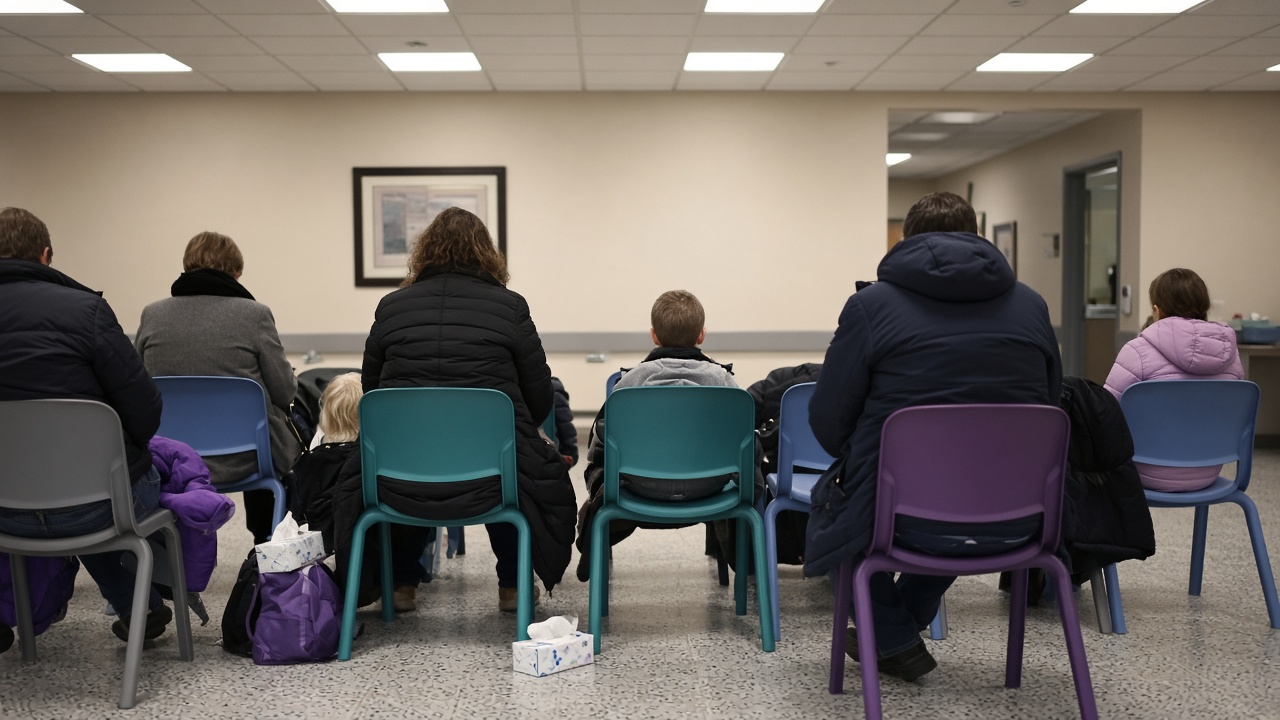
Winter influenza in South Korea re-accelerated after an October lull, pushing clinic surveillance to levels that again stress pediatric waiting rooms and geriatric wards at the same time.
Surveillance headline
Yonhap reported Friday that the Korea Disease Control and Prevention Agency’s sentinel network recorded 22.8 reported influenza cases per thousand outpatients during the week covering October 25–31, labeled epidemiological week 44. That was up 3.6 points from 19.2 the prior week and continued a two-week climb after October’s mid-month dip.
Kids on the front slope
Age-stratified data cited in the same dispatch showed elementary-age children bearing the highest burden: 60.9 reported cases per thousand visits for ages 7–12, 37.4 for teens, and 33.1 for ages 1–6. Those spreads imply school terms and indoor activities are amplifying circulation even before full winter cold snaps.
Hospital pressure
A parallel hospital panel counted 461 admissions with influenza indicators in week 44, against 389 the week before. Patients 65 and older represented nearly two-thirds of those beds, underscoring why emergency departments watch pediatric spikes and senior occupancy together.
Lab picture and vaccines
Respiratory specimens from outpatient clinics tested positive for influenza in roughly three out of ten screened cases, with A(H1N1)pdm09 dominating—aligned with the WHO-recommended vaccine strains for this season according to public health messaging quoted by Yonhap. National immunization stats through early November showed about 71 percent of eligible seniors and 56 percent of eligible children reached by shots, leaving noticeable gaps as the curve steepens.
Behavioral notes
Agency leadership repeated basics—hand hygiene, masking when symptomatic, and prompt antiviral consultation—which still govern how overwhelmed clinics triage. Schools facing simultaneous COVID-19 and influenza positives have less slack than three years ago when hybrid schedules were still common.
Why it matters for households
Parallel rises in severe acute respiratory admissions mean working parents can face long urgent-care queues even when their own cases stay mild. Watching week-to-week KDCA bulletins beats guessing from hallway chatter.
How to read the surveillance labels
Sentinel clinics sample a slice of visits rather than tallying every Korean throat swab, so absolute levels shift when the network adds offices. The directional story—a second consecutive weekly rise after October’s mid-month dip—mirrors what parents already hear from schools forwarding nurse notices.
Primary-care triage
Family doctors said Friday afternoon phone lines filled faster than usual with questions about antiviral eligibility. National guidance still emphasizes early oseltamivir or baloxavir consultation for high-risk groups; pharmacies are stocking larger weekend caches even though most cases remain outpatient.
Cross-pathogen winter
KDCA’s broader respiratory dashboards still log rhinovirus, COVID-19, and other bugs; co-circulation means a negative quick flu test does not always end the workup. Hospitals watch pediatric ICU census because overlapping viruses stretch nursing ratios faster than adult wards.