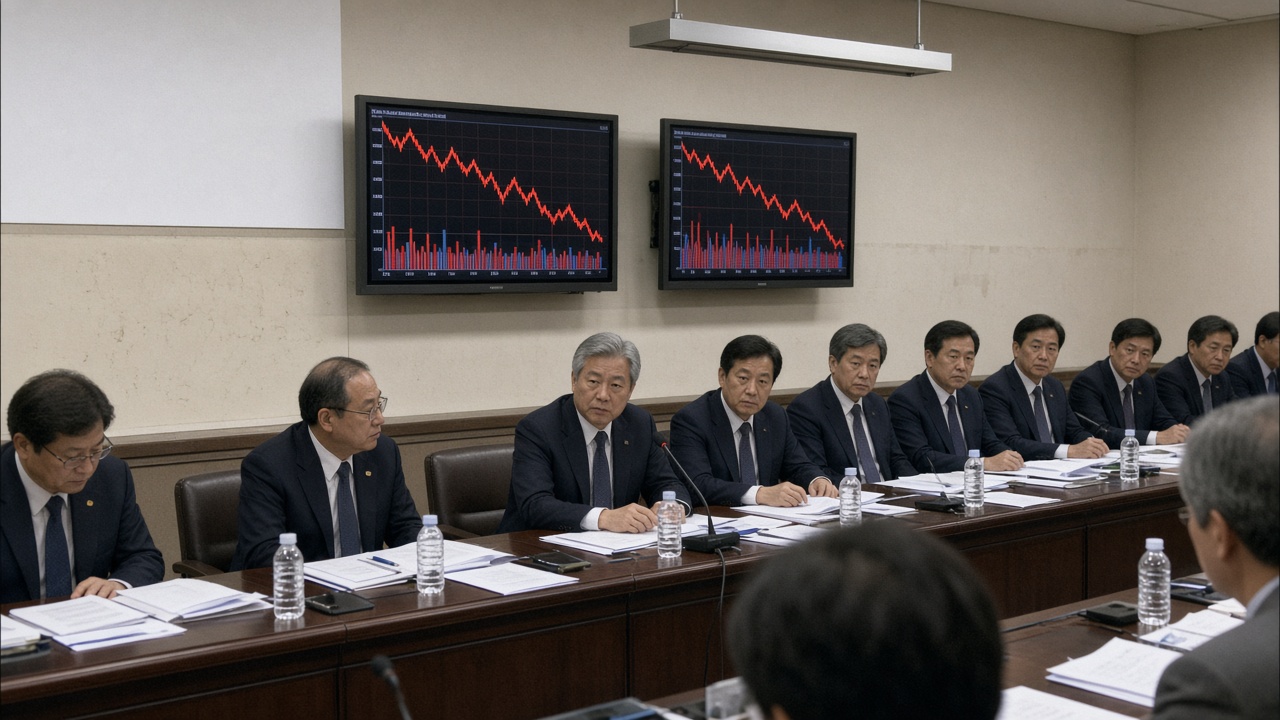
Finance Minister Lee Hyoung-il told a Friday crisis meeting that South Korea would temporarily relax requirements on margin-financed retail positions for three months after the Korea Exchange suspended trading in the main board for twenty minutes while the KOSPI slid more than eight percent at the open. The episode landed on a Seoul morning still digesting a U.S. tech retreat tied to election-night talk that new congressional math could slow data-center build-outs.
What the numbers showed
By the bell, the KOSPI had trimmed its worst losses but still closed at 5,059.69, down 6.02 percent from the prior session, according to data reported by Yonhap from the exchange. The story for locals is not only the one-day percentage: when the benchmark briefly slipped below the 5,000 handle in the first hour, it turned a Wall Street story into a household balance-sheet hit in Apgujeong and Busan alike.
Why chips carried the tape
Samsung Electronics and SK hynix, the two names that together account for nearly half the float-weighted market, fell 6.35 percent and 10.44 percent respectively on the session described in the same wire copy. Foreigners had been net buyers of local equities for much of the late summer and early autumn; Friday’s flow data will take a few hours to finalize, but the price path matches earlier months when a turn in offshore risk appetite stamped straight through the twin semiconductor lines.
Lee’s language at the ministry stuck to macro reassurance rather than stock picking. He repeated that economic fundamentals remained solid and that authorities would watch “external uncertainties,” phrasing that in Seoul usually means the won-dollar rate and offshore funding markets as much as any single technology sub-index stateside.
What “looser margin” can and cannot do
A three-month easing of margin maintenance rules is designed to keep forced selling from layering on top of mark-to-market losses when brokerage clients hit danger lines all at once. It does not repair earnings multiples or change the fact that export receipts still skew heavily toward memory and foundry names.
Retail participants dominated small-lot flows on the way up; they now face the mirror image when stops cluster. The KRX’s side-pause mechanism—the first broad halt in the session summarized by Yonhap—bought time for matching engines and human risk desks, but it cannot calm currency basis swaps by itself.
Corporate and fiscal channels
The same cabinet briefing cycle that produced Lee’s remarks sits alongside industrial policy aimed at AI data centers and advanced packaging. Any slowdown in U.S. capex timelines eventually reaches Korean equipment and materials vendors even if their logos never appear in a congressional press release.
For chaebol treasury offices, Friday was a reminder that hedging policy matters: won funding costs and offshore bond spreads still interact with chip inventory swings. Traders said NDF desks were busy, though the detailed fixings will show up in next week’s closing summaries.
What Seoul watches next
Next week’s calendar includes continued flow prints from the exchange, plus language from monetary officials on inflation and the exchange rate after months of volatility. A single session does not make a trend, but when circuit breakers trigger and the finance minister schedules televised remarks the same morning, the market is sending a signal that policy visibility matters as much as forward price-to-earnings screens.
Household investors should expect louder guidance from brokerages on haircut schedules; whether the relief window stretches beyond three months depends on whether Friday proves an air pocket or the start of a longer foreign repositioning out of Seoul’s flagship listings.
Brokers, pensions, and timing
Retail brokerages now face reconciling customer notices with risk-management engines that already rebuilt stress paths after August’s swings. Pension fund trustees, while not the target of Friday’s liquidity eases, read the same headlines when they benchmark policy portfolios to local equity sleeves.
Policy makers will also watch whether overnight USD/KRW hedging costs spike again; NDF desks often telegraph foreign positioning before official reserve commentary lands. Export-oriented small manufacturers rarely trade KOSPI futures, but they feel the chill when volatility erodes the won’s short-term stability.