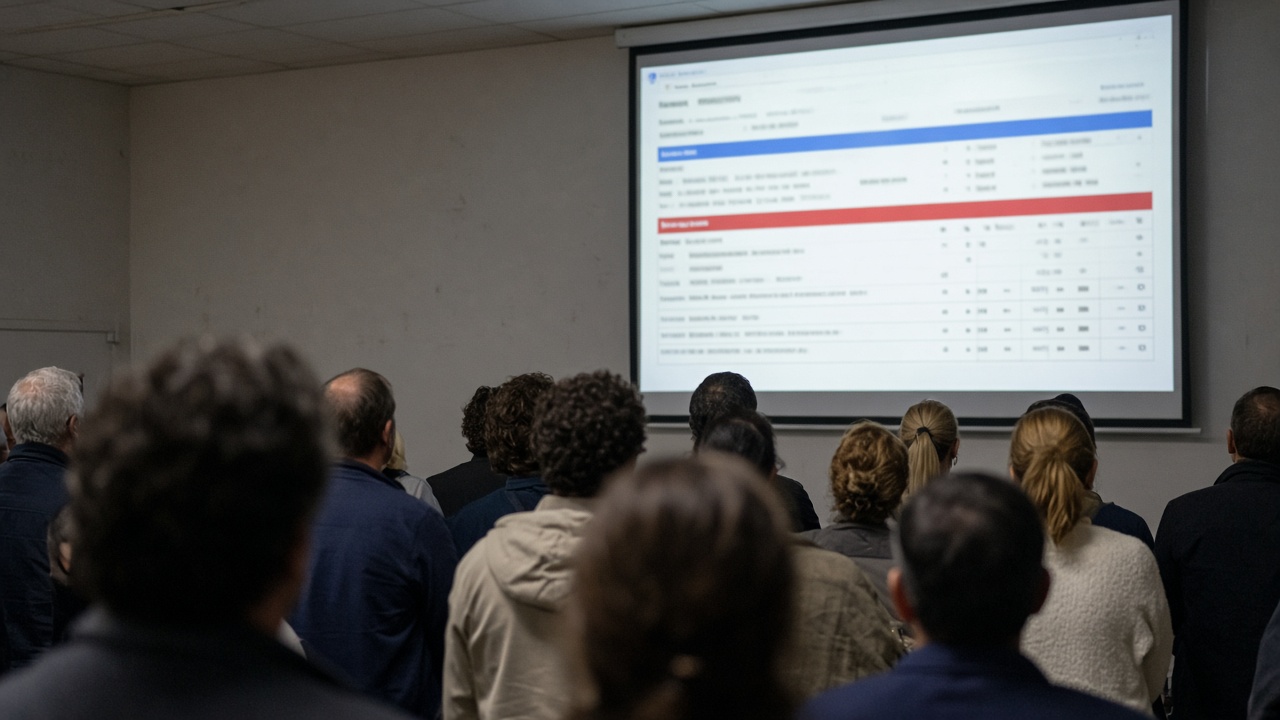
New Zealand’s 7 November general election ended on Saturday night without a declared winner, as preliminary results left the centre-right National Party and opposition Labour separated by fractions of a percentage point and neither Christopher Luxon nor Chris Hipkins moved to claim or concede power.
With more than 99 percent of ordinary votes tallied, the Electoral Commission put National on 29.29 percent of the party vote and Labour on 29.24 percent—a margin so thin that officials and party strategists said the contest would remain open until special votes are processed and the official result is certified on 27 November.
What the numbers show tonight
Under New Zealand’s mixed-member proportional system, those party-vote shares translate into a fragmented 130-seat Parliament rather than a single-party majority. Projections based on Saturday’s count give National 42 seats, Labour 35, the Greens 16, ACT 13, New Zealand First 12, the newcomer Opportunity party 7 and Te Pāti Māori 5.
Luxon told supporters that National appeared to be the largest party and that his existing coalition partners—ACT and New Zealand First—could put a centre-right bloc on 67 seats in a 130-member House, one above the 66 needed to govern. Hipkins, meanwhile, told Labour’s election event that voters had spoken but that “it may take a bit longer to work out what they’ve said,” framing cost-of-living pressure and public services as the themes that kept his party competitive after a difficult midterm period.
Electorate-level arithmetic added another layer of uncertainty. National leads in dozens of constituency races, producing an overhang that temporarily boosts its seat total relative to its party vote. Te Pāti Māori could add its own overhang if it retains narrow leads in Māori electorates while drawing a tiny share of the nationwide party vote. Analysts said a handful of marginal seats—including Hamilton East and Wairarapa, where Labour trails by hundreds of votes with counting still under way—could shift the bloc math if late ballots break toward the left.
Special votes and the Opportunity wildcard
The decisive ballots still sitting in trays across the country are special votes: overseas ballots, votes cast outside a voter’s home electorate and other categories that in 2023 amounted to roughly 600,000 papers, or about a fifth of the total. Historically those votes lean toward Labour, the Greens and smaller left-aligned parties, which is why Luxon warned his audience that the “final shape of government” would not be clear for weeks.
For the first time, the centrist Opportunity party cleared the 5 percent party-vote threshold to enter Parliament, winning a projected seven list seats. Leader Qiulae Wong said her team would talk with either major bloc, opening the possibility that a party formed around economic reform could hold decisive votes even if National and ACT retain a paper-thin majority on current numbers.
Until the commission releases official results, Luxon said caretaker conventions would govern day-to-day administration. Coalition negotiations—whether a renewed National–ACT–New Zealand First arrangement, a Labour-led alliance with Greens and Māori MPs, or a cross-aisle deal involving Opportunity—are widely expected to run in parallel with the slow count rather than after it.
Why the delay matters abroad
Foreign ministries track New Zealand’s protracted bargaining cycles because Wellington’s votes at the United Nations, its trade diplomacy in the Indo-Pacific and its climate positions often hinge on which minor party enters cabinet. A renewed Luxon government would likely press spending restraint; a Labour-led comeback would signal more emphasis on housing, health staffing and income support—policies that featured heavily in Hipkins’s closing rallies.
Domestic pollsters noted that voter turnout stayed high despite public fatigue with coalition squabbles, suggesting New Zealanders understood that their MMP system rarely delivers instant clarity. For now, the only certain headline is the one Luxon and Hipkins shared from opposing stages: the election is too close to call, and the country should prepare for weeks of negotiation before anyone occupies the prime minister’s ninth floor office again.