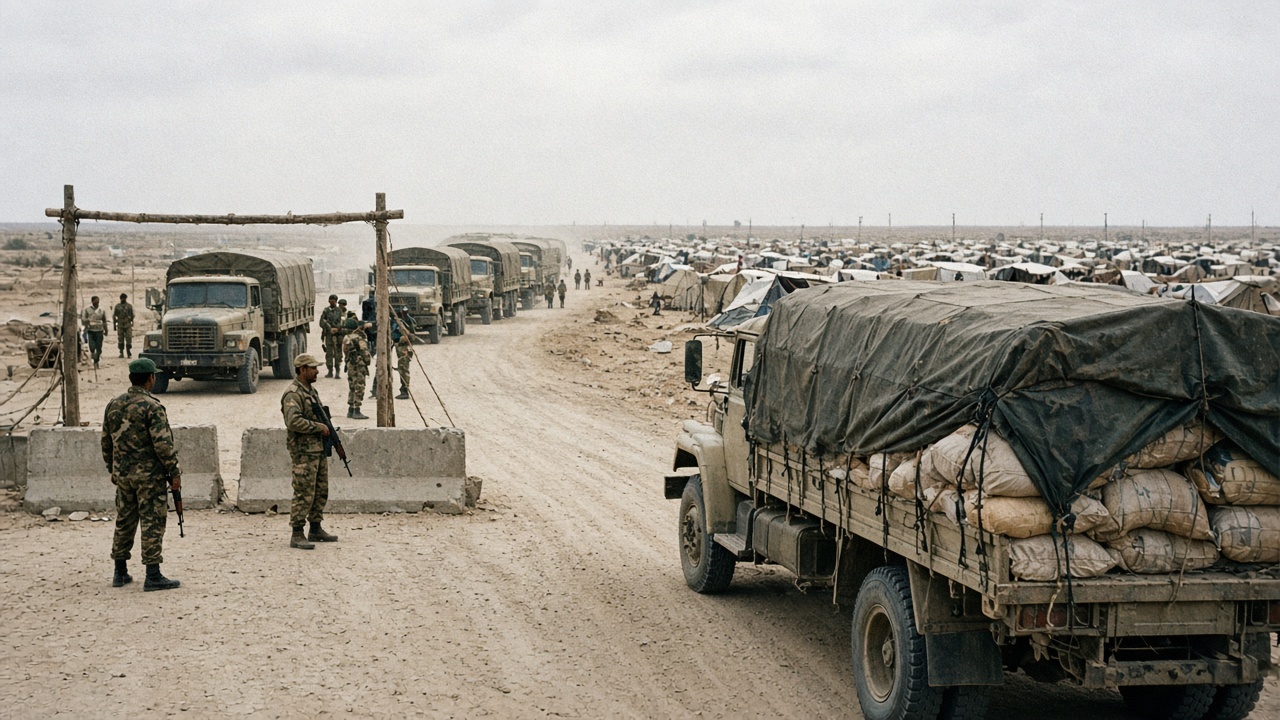
Sudan’s paramilitary Rapid Support Forces said Thursday that they had agreed to a U.S.-backed proposal for a humanitarian ceasefire with the Sudanese military, opening a narrow diplomatic window after more than two years of civil war that the United Nations has called the world’s largest displacement crisis.
The announcement came days after RSF fighters consolidated control over El Fasher, the last major city in the western Darfur region that had remained outside their grasp. Hundreds of thousands of civilians had already fled the fighting; aid agencies warned that many who stayed behind now face starvation and that the seizure cut off escape routes for famine-stricken populations across North Darfur.
What the Quad proposed
Mediators from the so-called Quad—Egypt, Saudi Arabia, the United Arab Emirates and U.S. envoys—circulated a framework aimed at pausing hostilities long enough to move food, medicine and fuel into besieged areas. An RSF spokesman said the group accepted the plan “in principle” and called on the Sudanese Armed Forces to do the same, though neither side has published full text of the agreement or a timeline for a formal halt in fighting.
Washington has treated Sudan as a test of whether regional powers can stitch together ceasefires without a large American troop presence. The Quad has met repeatedly in Cairo and Riyadh since late 2024, but previous truces collapsed within days as both sides said the other was blocking convoys or shelling aid corridors.
El Fasher and the humanitarian line
The fall of El Fasher marked a turning point in the Darfur campaign. The city had sheltered displaced families from earlier waves of violence; its capture by the RSF followed a months-long siege in which hospitals ran out of supplies and satellite imagery showed burial sites expanding on the outskirts. U.N. agencies said more than a million people in the wider region now require emergency nutrition support, and that malaria and cholera outbreaks are spreading in camps that lack clean water.
Even with a ceasefire on paper, relief workers cautioned that access depends on security guarantees along the road from Port Sudan and on whether military commanders on the ground honor orders from Khartoum and Port Sudan-linked leadership factions that have themselves splintered since the war began in April 2023.
Reactions on the ground
In interviews with local broadcasters, residents who fled El Fasher described air strikes continuing after front lines shifted, and said they were unsure whether they could return while militia checkpoints remained. One man who gave his name as Mujahid Bahr al-Din told reporters he wanted only “for people to go back to their lands and to live in peace and security,” reflecting a widespread exhaustion after villages were looted and harvests abandoned.
The Sudanese military has not issued a parallel statement accepting the Quad framework. Analysts in Khartoum noted that the army’s coalition partners—including some former rebel groups—may resist terms that legitimize RSF control of Darfur’s main urban centers. Neighboring Chad and South Sudan, already hosting large refugee populations, said they were preparing for new arrivals if fighting resumes along the border.
What happens next
Diplomats expect the next 72 hours to determine whether the pledge produces verified pauses in artillery and drone strikes. The U.S. State Department said it welcomed the RSF statement but stressed that “acceptance must be matched by behavior,” including unfettered humanitarian corridors. Saudi Arabia scheduled a follow-up session for Quad envoys over the weekend.
For aid groups, the benchmark is practical: can trucks reach el-Geneina and the Zamzam camp without armed escorts turning back drivers? Until that happens, officials said, the ceasefire announcement remains a signal of intent rather than relief delivered.