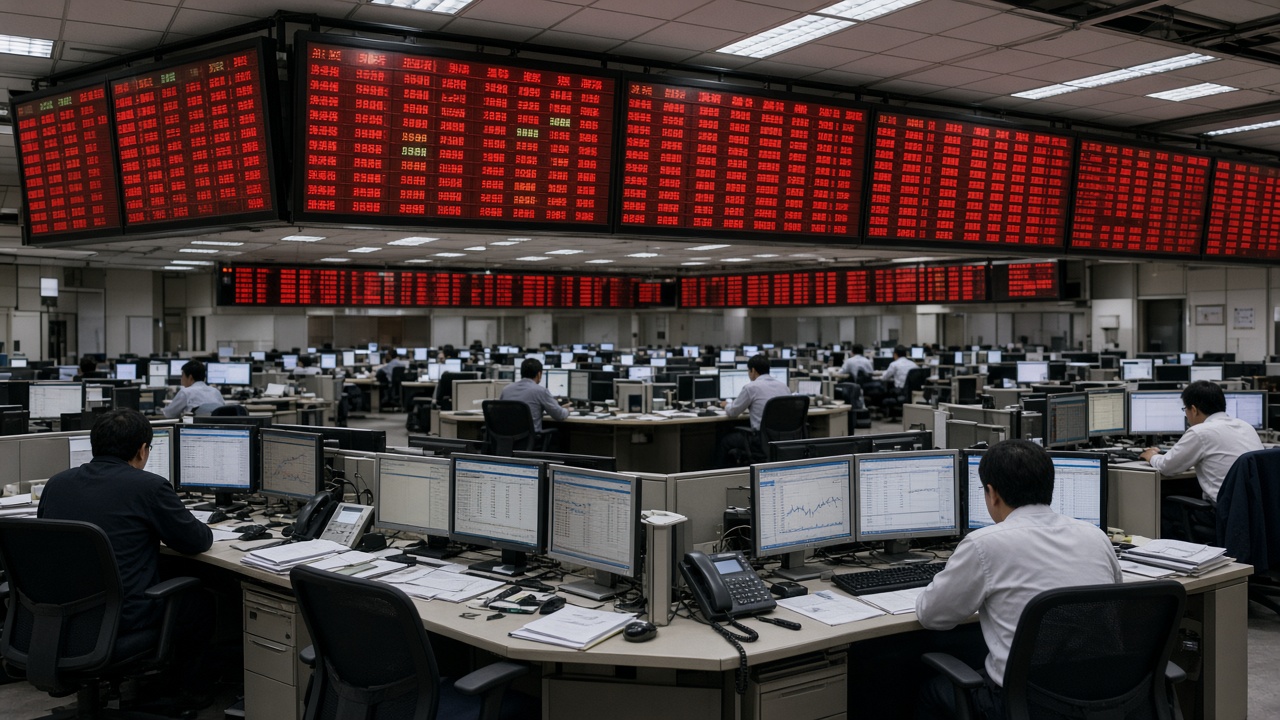
Taiwan’s cabinet authorized the National Stabilization Fund to begin its tenth market-support mission on Monday, November 9, after the weighted index on Thursday closed more than 20 percent below its 2026 peak and regulators rolled out five emergency curbs on short selling.
The fund’s oversight committee met Friday afternoon in Taipei, citing persistent foreign selling, weak investor sentiment, and uncertainty tied to the U.S. midterm elections that delivered congressional majorities to Democrats. Officials said authorization allows state-linked buyers to intervene when they judge prices have detached from fundamentals.
How deep the selloff ran
On Thursday the index fell 1,873.08 points to 39,701.64, a 4.51 percent daily loss that market participants described as the fourth-largest drop by points in trading history. Intraday trading earlier breached the 40,000 level and touched session lows far below the year’s high of 49,968.08 recorded earlier in 2026 — a peak-to-trough decline of roughly 20.55 percent.
Turnover exceeded NT$1.3 trillion, reflecting both panic liquidation and heavy hedging as global technology shares sold off on fears that a Democratic Congress will scrutinize artificial-intelligence and data-centre subsidies in the United States. Taiwan’s export-heavy chip complex led declines because investors linked its earnings outlook to U.S. policy shifts.
Five short-selling curbs take effect
The Financial Supervisory Commission and the Ministry of Finance announced a package of restrictions aimed at limiting speculative pressure. Key measures include slashing the daily cap on intraday securities-lending sell orders from 30 percent of average volume to 3 percent, raising margin requirements on short positions, widening the range of collateral that brokers may accept when customers face margin calls, and urging listed firms to consider buybacks when valuations fall sharply.
Regulators describe the steps as temporary stabilization tools rather than a permanent rewrite of market rules. Brokerage executives said the lending cap in particular could reduce program trades that amplify afternoon declines, though they cautioned that offshore hedge funds can still express bearish views through derivatives.
What the stabilization fund can do
The National Stabilization Fund, capitalized at NT$500 billion, has intervened nine times since its creation, most recently during the COVID-19 volatility of 2020. Fund managers typically purchase Taiwan-traded ETFs and large-cap index components rather than individual small caps, aiming to signal official confidence without picking winners.
Finance Minister officials told reporters that Monday’s entry does not guarantee continuous buying; the committee will monitor foreign-exchange flows and overnight U.S. futures before deciding daily ticket sizes. Past missions have lasted from several days to a few weeks depending on whether offshore funds resume net buying.
Political crosscurrents in Taipei
The selloff coincided with heavy legislative news, including a legislative vote raising monthly allowances for elderly farmers and an executive refusal to countersign a separate health-insurance subsidy bill. Those domestic fights did not move the tape as sharply as the global technology correction, but they show that the ruling administration faces concurrent fiscal pressures while it backs market intervention.
Analysts at local brokerages said retail investors who entered near the 2026 highs are now sitting on double-digit paper losses, raising the risk of further forced selling if U.S. tech earnings disappoint. The stabilization fund’s presence may cushion the pace of declines without reversing the macro story: Taiwan remains exposed to Washington’s trade, tech-export, and security policies no matter which party controls committee gavels.
What happens before Monday’s open
Traders will watch Friday night U.S. equity closes and Monday’s opening foreign-order flow for hints on how aggressively the fund deploys cash. Regulators promised daily briefings while the short-selling limits remain in force. If offshore funds continue net selling beyond NT$10 billion per session, committee members may expand purchases beyond ETFs into select financial and telecom bellwethers, according to briefing materials circulated to lawmakers Friday evening.