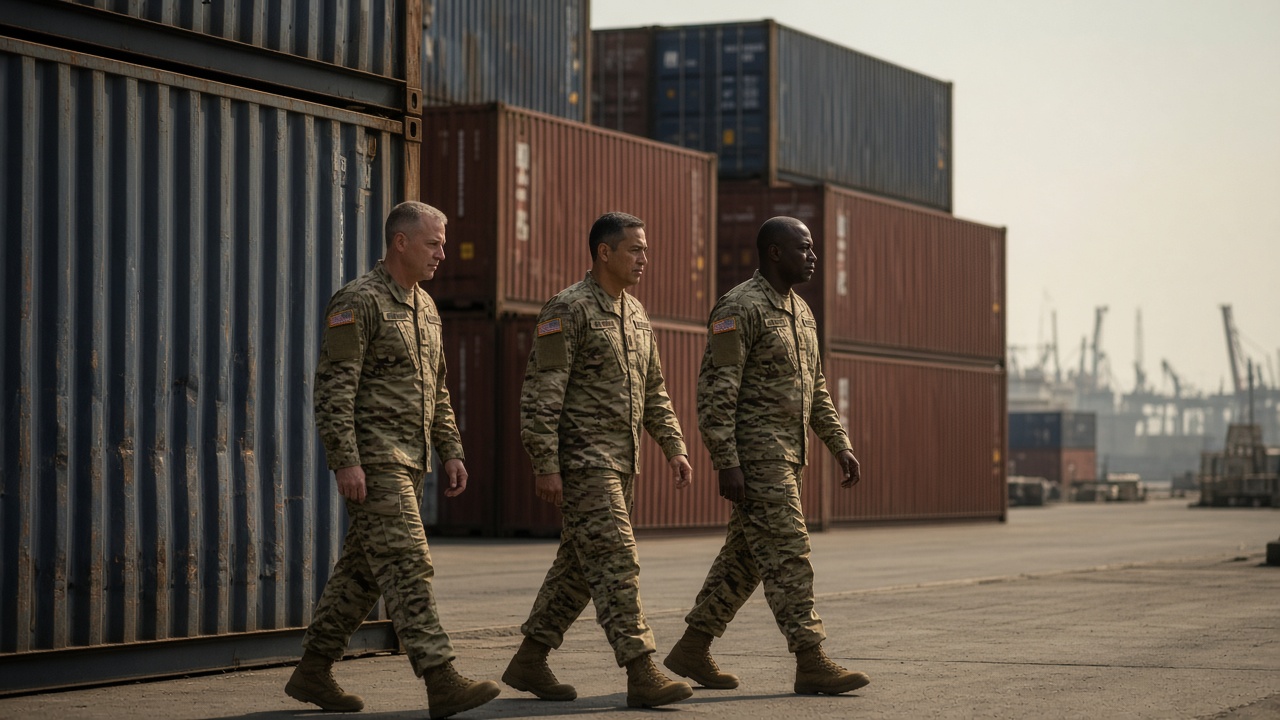
U.S. Central Command on Saturday activated Task Force Iron Gate, a Tampa-based staff of about 20 civilians and military personnel charged with tracking how Iran moves advanced weapons, dual-use technology, and sanctions-busting revenue across land borders and the Caspian Sea. The announcement lands as the Pentagon keeps enforcing its Hormuz naval blockade and, in a separate operation, disabled a merchant ship that had called at an Iranian port.
From sea blockade to border choke points
Adm. Brad Cooper, the CENTCOM commander, said the new cell will coordinate with other U.S. agencies to interrupt ground transit that complements Tehran’s maritime trade. A command release quoted Cooper saying Iron Gate "reinforces the success of our ironclad blockade against Iran at sea" and that tighter interagency work would further constrain Iran’s ability to finance militant groups, rebuild arms plants, and refill depleted stocks.
Officials framed the effort as an extension of enforcement that CENTCOM says has kept more than $25 billion in Iranian crude from exporting since the maritime campaign intensified. The task force’s mandate explicitly includes stemming flows Washington describes as illegal revenue streams, not only finished weapons.
Gulf of Oman strike on the M/V Huda
Hours before Iron Gate was disclosed, CENTCOM said U.S. forces struck and disabled the Saint Kitts and Nevis-flagged cargo ship M/V Huda in the Gulf of Oman. According to the command, the vessel had visited an Iranian port and then tried to leave regional waters despite repeated warnings. Crew members were told to abandon targeted spaces before precision munitions hit the stern, leaving the ship dead in the water.
CENTCOM said its forces have redirected 147 commercial vessels and disabled five merchant ships that refused compliance since July. The Huda episode illustrates how naval enforcement is playing out in parallel with the new land-focused cell: maritime units continue boarding and disabling hulls while Iron Gate is expected to map overland and Caspian routes that analysts say have carried hardware, explosives, and heavy trucks worth billions of dollars into Iran since early 2025.
What interagency partners are expected to do
Task Force Iron Gate will sit at MacDill Air Force Base in Tampa alongside existing CENTCOM headquarters staff. Defense officials told reporters the cell is expected to work with the Treasury, State and Justice departments and intelligence agencies, though those roles were not spelled out in the initial release. Former Pentagon Middle East adviser Michael Mulroy told Al Jazeera the unit’s immediate job is to identify where weapons systems enter Iran and which economic nodes could be targeted if the conflict widens beyond purely military sites.
The land push comes as explosions and shipping incidents continue around the Strait of Hormuz. Iranian media reported blasts on Qeshm Island and other Gulf ports over the weekend, while the United Arab Emirates said it rescued 22 sailors from a burning cargo vessel after Iran’s Revolutionary Guard reported two tankers striking mines in the waterway. Those events are separate from Iron Gate’s charter but underline why Washington is trying to close both maritime and overland valves at once.
What happens next
Cooper did not publish a timeline for Iron Gate to produce its first interagency recommendations. Diplomatic channels remain active: President Donald Trump spoke with Qatar’s emir on Friday about mediation efforts aimed at a broader settlement. For now, CENTCOM is signaling that compliance costs for blockade runners at sea will stay high while analysts inside Iron Gate catalogue border crossings that could become the next pressure points.