President Donald Trump said on Friday that United States forces carried out what he called minor strikes against Iranian air-defence equipment on Qeshm island, hours after Iranian state media reported explosions in the Suza area and claimed an American MQ-9 reconnaissance drone was shot down over the same island.
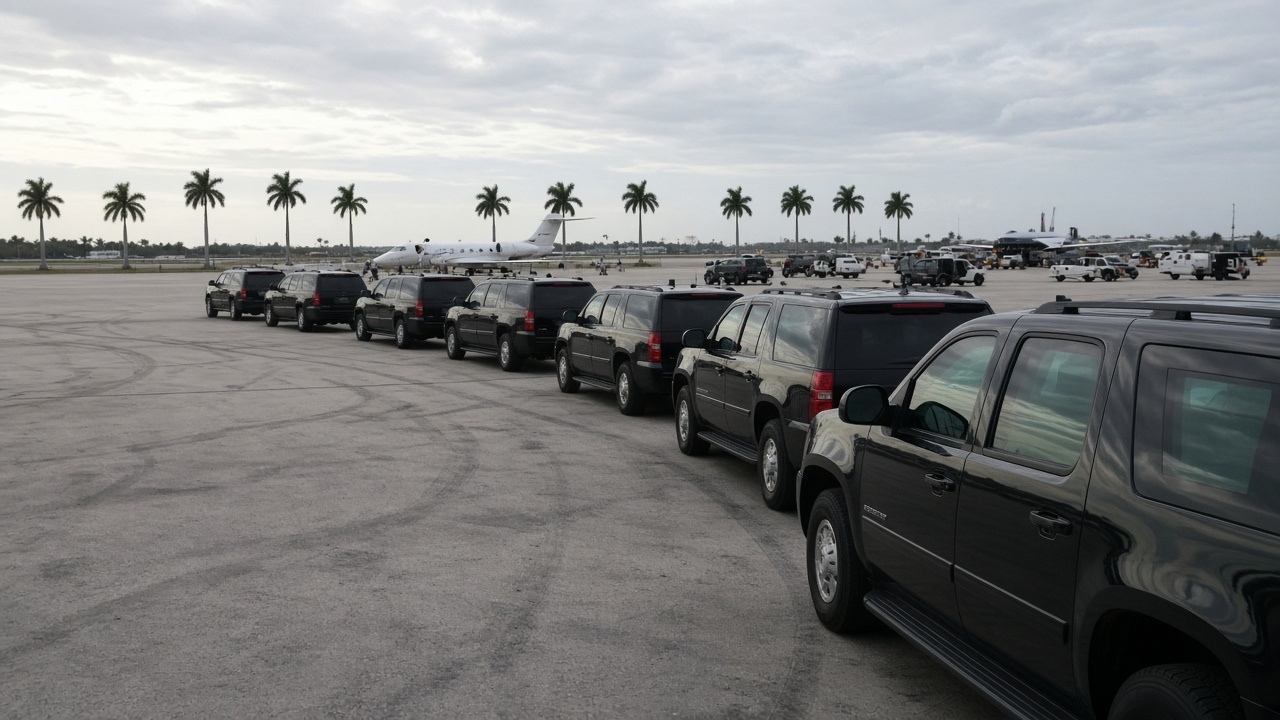
Speaking to reporters after arriving at Palm Beach International Airport in Florida, Trump said Iranian forces had erected a small anti-aircraft position that U.S. troops eliminated quickly. “They knocked out — they built a little bit of an anti-aircraft device, and we knocked it out in about 15 minutes, maybe five,” he said, without detailing which unit carried out the operation or whether any aircraft were at risk.
What Tehran and the Pentagon said
State broadcaster IRIB reported two missile strikes in the Suza district and published an Iranian army statement saying air-defence forces intercepted and destroyed an MQ-9 over Qeshm. The island sits in the Strait of Hormuz, the narrow channel through which a large share of global oil exports move.
U.S. Central Command told reporters the situation was “relatively calm” when asked about the reported blasts. A CENTCOM spokesperson declined further comment beyond noting awareness of the reports. The command separately posted on social media late Friday that Washington is offering up to $20 million for information on Iran’s nuclear program, including facilities, equipment, and associated personnel.
Strikes landed after midterm losses
Friday’s exchange came four days after U.S. voters handed Democrats control of the House and Senate in the 2026 midterms. Trump has publicly tied Republican losses partly to the Iran war, telling interviewers that the conflict may have hurt his party at the polls. Since Tuesday he has alternated between threats to intensify action against Iran and suggestions that a settlement could be close.
On Thursday he warned that Washington might still have to “destroy” remaining Iranian military assets, adding that observers would “know soon enough” whether he orders a wider campaign. The New York Times reported Wednesday, citing unnamed Pentagon officials, that thousands of U.S. air and naval personnel across the Middle East and aboard more than a dozen ships are positioned to resume major operations if Trump gives the order.
Mediators press for de-escalation
While Washington and Tehran traded claims over Qeshm, Gulf mediators sought to keep diplomacy alive. Qatar’s foreign ministry spokesperson, Majed al-Ansari, warned Saturday that reports of failed U.S.-Iran talks benefit “only those seeking to prolong the war.” Qatari Prime Minister Mohammed bin Abdulrahman al-Thani told an audience at Oxford University on Friday that mediation efforts remain active and that “wise voices in Tehran” had helped prevent the crisis from spiraling.
Iranian media reported similar explosions on Qeshm earlier in the week, when U.S. outlets described earlier American “defensive strikes” in the Hormuz area. Friday’s presidential confirmation marks the first time since the midterms that Trump has publicly acknowledged new U.S. fire on Iranian territory while simultaneously promoting the prospect of an agreement.
What traders and allies watch next
Energy markets remain sensitive to any military activity near Hormuz shipping lanes, even when leaders describe individual engagements as minor. European and Gulf capitals have spent weeks urging restraint while hosting back-channel contacts between U.S. and Iranian officials.
Congressional Democrats, now set to take committee gavels in January, have signaled they will demand clearer legal authority and risk assessments for sustained operations in Iran. For the moment, the immediate question is whether Friday’s strikes represent a one-off response to new Iranian air defences or the opening move of a renewed escalation cycle while negotiators still meet.