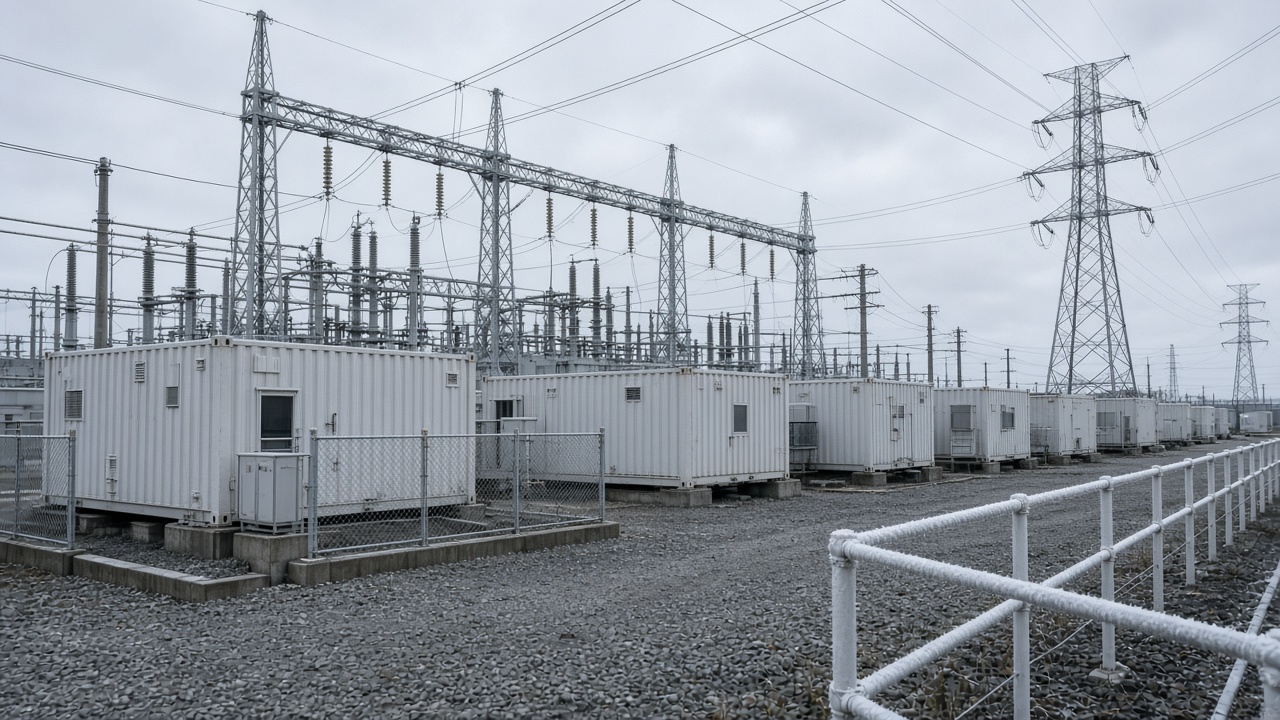
NTT's energy and infrastructure unit, alongside Hokkaido regional utility partners, outlined a pilot plan to install containerized grid batteries beside an existing transmission substation in Hokkaido, according to a corporate release packaged like other staged technology trials rather than an emergency response. The announcement, circulated in early November 2026, framed the project as applying lessons from past earthquake-related outages that exposed voltage sag and restoration bottlenecks—not as confirmation that a new quake had damaged the network.
What the company said it will test
The pilot description calls for lithium-ion battery packs with roughly two-hour discharge capability at peak substation load, coupled with software that can island critical feeders briefly when upstream lines trip. NTT positions the gear as extending its telecommunications-site power expertise into grid-edge support, with remote monitoring run from a control centre that already manages disaster failover for data routes. Utility partners would own interconnection approvals and safety inspections; NTT would supply integration and telemetry, according to the release wording InfoHandle reviewed.
Company materials stress this is a limited trial subject to regulator sign-off, not a fleet-wide deployment timetable. No official start date beyond a target quarter appeared in the English summary, and costs were described as internal research spending rather than rate-case recoveries.
Earthquake lessons cited
Hokkaido's September 2018 Eastern Iburi earthquake and subsequent regional drills featured in the announcement as examples where long feeder lines and winter weather slowed crew dispatch. Battery buffers, the company argues, could keep hospitals and fibre hubs energised long enough for mobile generation to arrive. The document explicitly references disaster-management after-action reports, not a fresh seismic event in 2026.
Researchers note Hokkaido's wind and solar build-out has increased the variability operators manage; batteries at substations could absorb short spikes when renewable output swings. NTT's pitch blends telecom resilience with prefectural goals to harden nodes that serve both mobile backhaul and municipal emergency radio.
Regulatory and neighbour context
Japan's Agency for Natural Resources and Energy has encouraged distribution operators to pilot flexibility assets without preempting national market design debates. Hokkaido Electric Power's public reliability filings list substation modernization programmes; a battery add-on would likely require fire-safety review given cold-climate thermal management needs. Local governments near the unnamed substation site have not issued citizen bulletins, underscoring that the project remains in announcement phase.
Competing vendors, including trading-house-backed storage integrators, may bid if the trial expands beyond NTT's preferred vendor list. METI watchers expect any scaling decision to wait for measured frequency-regulation benefits and maintenance costs through at least one winter season.
What NTT is not claiming
The release does not assert immediate ratepayer savings or blackout elimination. It avoids live casualty or damage statistics, distinguishing the pilot from breaking-news disaster coverage. InfoHandle treats the item as a corporate infrastructure disclosure to monitor, not verification that construction has begun. Photographs in marketing decks, if published later, would still need on-site confirmation before upgrading the story beyond trial status.
Telecom investors may read the move as capex diversification; grid purists caution against blurring regulated wire assets with vendor-managed batteries unless cost allocation rules are explicit.
Technical integration questions
Engineers ask how NTT's network operations centre would coordinate with utility dispatch when both systems command the same inverters. Cybersecurity reviews will examine whether battery management systems share VLANs with customer fibre installs. Winter tests must show that state-of-charge algorithms account for diesel backup already on site at some rural substations, to avoid conflicting automatic start sequences.
Islanding tests typically require visible disconnects and public notification; Hokkaido communities sensitive to past outages will want timelines before flipping breakers in exercises.
Broader Japan storage picture
National policy debates continue over whether distribution-level batteries complement or duplicate upcoming market products for demand response. Tokyo metropolitan trials run on different tariff incentives than Hokkaido's sparse load pockets. If NTT's pilot produces open data on cold-weather degradation, other utilities could adopt similar specs without hiring the same integrator.
Export credit agencies watching Japanese grid tech may reference Hokkaido conditions when financing Southeast Asian island grids, but that remains speculative until performance data exists.
What to watch
Confirmation milestones would include interconnection agreements filed with regulators, fire department walkthroughs and published test schedules with community notices. Until then, the story stays at cautious reporting on a company-described pilot motivated by historical quake lessons, not by a present-tense grid failure. Energy reporters should revisit the release when NTT or Hokkaido utilities issue construction permits or abandon the trial, either of which would be material updates.
Analysts tracking NTT's non-telecom revenue lines will compare pilot spending to similar announcements from rail and airport operators testing microgrids. The Hokkaido substation name, once public, will become the anchor for follow-up site visits and winter performance charts.