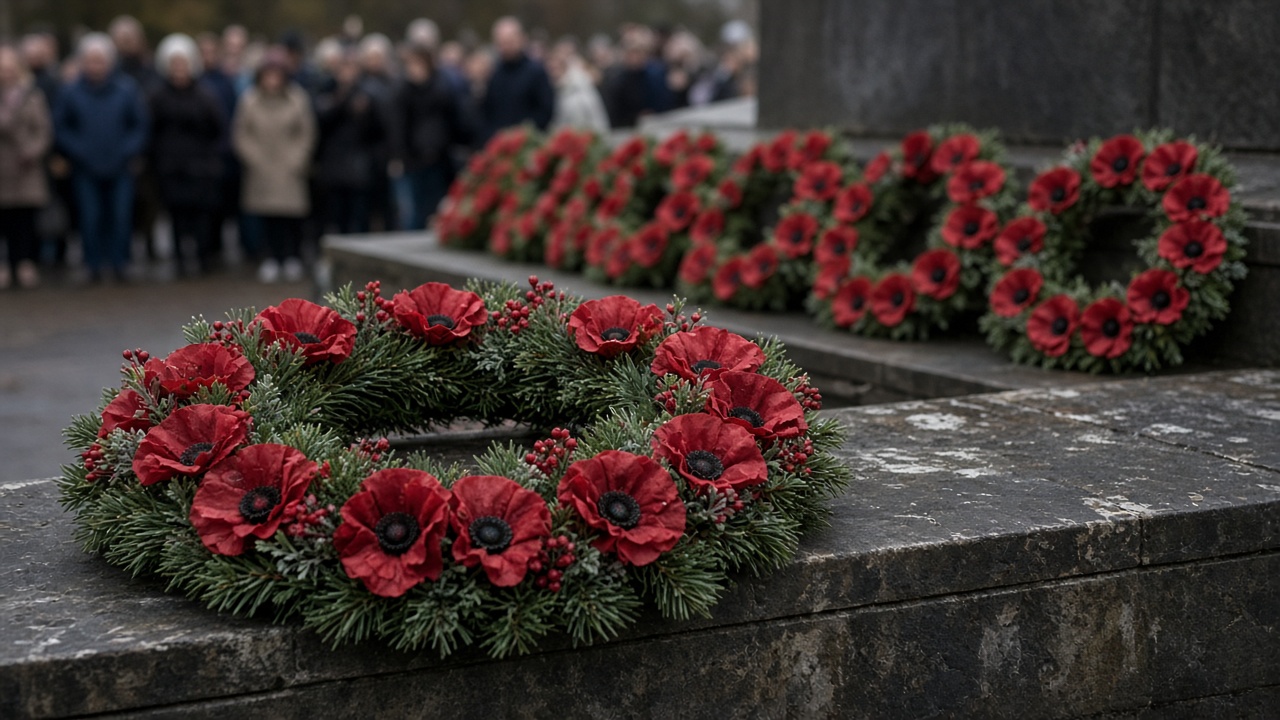
King Charles led the national two-minute silence at the Cenotaph in Whitehall on Remembrance Sunday as Prime Minister Andy Burnham stood among political leaders honouring British and Commonwealth war dead, while veterans' groups pressed the government to keep housing pledges for former service personnel on the winter agenda.
Thousands lined the route from Horse Guards Parade to the memorial, many wearing poppies distributed by the Royal British Legion's annual appeal. Defence Secretary officials said attendance matched pre-pandemic crowds, with youth cadet contingents from every nation of the United Kingdom represented in the march-past after the royal party and politicians laid wreaths.
Who stood at the stone
Burnham placed a wreath on behalf of the government alongside the king's floral tribute and crosses laid by opposition leaders. Former prime ministers and living chiefs of staff occupied the front ranks, maintaining the protocol that suspends partisan point-scoring for the morning ceremony. Scottish and Welsh ministers attended in parallel services in Edinburgh and Cardiff, while Northern Ireland marked the day in Belfast under tight security arrangements unchanged from prior years.
The King, as head of the armed forces, wore Royal Navy ceremonial uniform. His presence followed a week of domestic engagements tied to veterans' mental health charities, separate from the overseas travel planned later in the month.
Veterans' policy in the background
Labour ministers used the run-up to the service to repeat a pledge that no veteran should sleep rough this Christmas, a commitment Burnham voiced on Saturday television interviews. Housing associations in Manchester and Birmingham reported additional outreach slots for ex-service tenants, though charity leaders said permanent tenancies matter more than seasonal shelters. Erasmus Plus re-entry talks with Brussels, confirmed by Culture Secretary Lisa Nandy on Saturday, sat on a different policy track but shared the diplomatic theme of rebuilding European ties after Brexit-era programmes lapsed.
Security and public order
Metropolitan Police mounted a visible but low-key cordon after recent protests elsewhere in Europe; no major incidents were reported by early afternoon. Rail operators ran additional services into London terminals to clear crowds after the march. For most viewers watching BBC One's live coverage, the day was defined by the silence at 11 o'clock and the ageing ranks of Second World War and later-conflict veterans passing the Cenotaph—less by any single policy announcement, though Whitehall knows the housing promise will be quoted when Parliament returns midweek.
Culture Secretary Lisa Nandy's parallel announcement on Erasmus Plus talks sat on Saturday newscasts rather than the memorial programme itself. Downing Street framed both items as rebuilding European ties after years of frozen youth-exchange budgets. Opposition spokespeople welcomed the direction but asked for funding lines in the coming spending review rather than headline re-engagement alone.