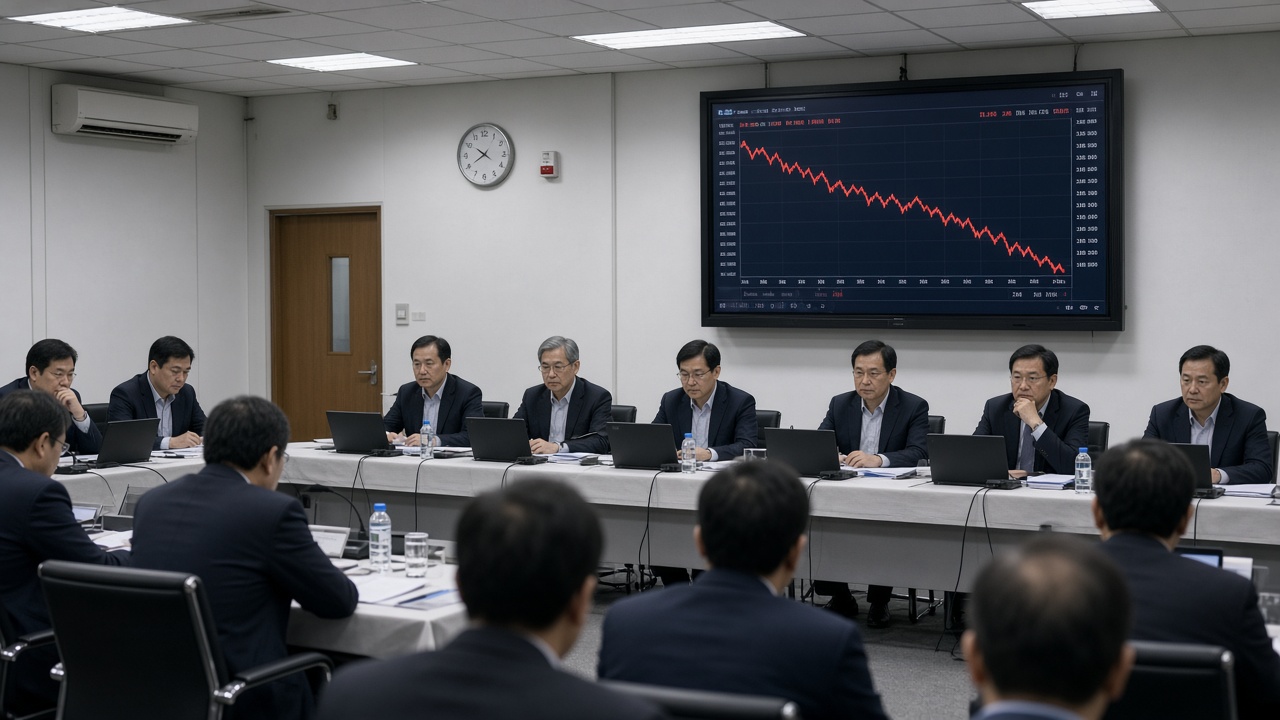
The Ministry of Finance authorized Taiwan's National Financial Stabilization Fund to begin its tenth market stabilization mission on November 6, after the TAIEX shed 10,267 points from its October intraday peak and foreign funds kept selling into the close.
Fund managers convened an ad hoc committee at 2:30 p.m. Taipei time on Friday. They cited a 12.19 percent weekly drop in the weighted index, an opening plunge of nearly 3,800 points that morning, and continued foreign net sales that had already reached NT$5.24 trillion in the first week of November after a record NT$994.32 billion October outflow.
What the resolution actually does
The committee did not announce a purchase timetable or target list. Instead, it authorized the executive secretary to deploy up to the fund's statutory ceiling — NT$500 billion (about US$15.3 billion) — when disorderly trading threatens household confidence. That is the same legal trigger used during the 2020 pandemic rout and the 2025 tariff shock, but the political context now sits inside a technology-led drawdown tied to U.S. election fallout over artificial intelligence infrastructure.
Premier Cho Jung-tai had already directed the Financial Supervisory Commission to monitor both domestic and overseas sessions. On the same day the fund moved, the FSC separately encouraged listed companies to execute buybacks and prepared short-selling restrictions that take effect Monday, November 9. The two agencies are coordinating, but they are not a single unified bid: stabilization purchases, if they come, run through the fund's segregated account while margin and short rules flow through brokers.
Why Taipei moved before Monday
Taiwan's market is unusually concentrated. Taiwan Semiconductor Manufacturing Co. alone accounts for more than two-fifths of main-board capitalization, so a 10 percent limit-down print at the open can erase trillions of NT dollars in paper wealth before lunch. Retail participation has also risen this year as the index chased record highs through early October, which raises the risk that a fast fall forces maintenance-margin sales into an already thin book.
International comparisons in the ministry's statement show how tightly Taipei tracks the Philadelphia semiconductor index. The local benchmark's 12.19 percent weekly decline trailed only the PHLX Semiconductor Index's 15.7 percent slide, a linkage that makes export-oriented earnings look fine on paper while index mechanics stay brutal.
What investors will watch next
Fund history suggests intervention can smooth volatility without permanently resetting valuations. The last mission ran from April 2025 through January 2026 after reciprocal tariff announcements, and the Taiex eventually recovered more than 40 percent from the lows touched while the fund was active, according to National Treasury Administration retrospectives cited in ministry materials.
That precedent does not guarantee a repeat. Foreigners were still net sellers on Friday, and credit analysts have flagged the risk that debt-backed domestic accounts face sequential margin calls if the index opens weak on Monday. Traders will therefore parse two numbers before hero stocks recover: whether stabilization buying appears on the tape, and whether the FSC's tighter short-lending caps reduce intraday air pockets.
Officials stressed that Taiwan's current-account surplus and chip supply-chain position remain intact. For households, the immediate question is simpler — whether state buying and corporate buyback pledges are enough to keep a confidence shock from becoming a forced-liquidation spiral.