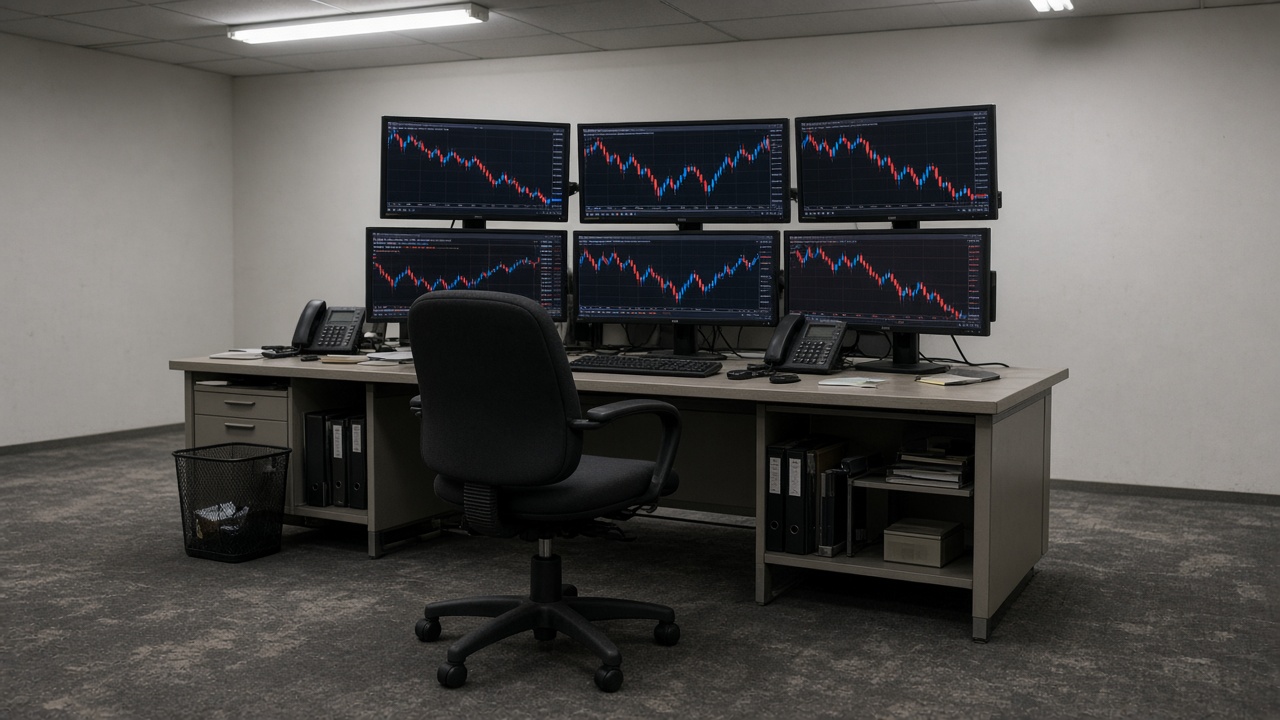
Taipei brokerage risk teams spent the weekend mapping maintenance-margin call exposure after the TAIEX lost 12.19 percent in the week ended November 6, hours before Financial Supervisory Commission short-selling curbs take effect on Monday morning.
The commission's package, announced alongside the National Financial Stabilization Fund authorization, lowers the volume of shares that can be lent for intraday short sales to 3 percent of a stock's average daily turnover over the prior 30 sessions, down from 30 percent. Cash deposits required to borrow securities for shorting rise from 90 percent of market value to 130 percent, effectively raising the carrying cost for bearish bets during violent swings.
Why margin math moved to the front row
Friday's session opened with the steepest point loss in the market's history — a 3,737-point slide within minutes — before bargain hunters and policy talk trimmed the damage to a 1,873-point close. TSMC itself touched the 10 percent daily downside limit at the open, wiping NT$5.7 trillion off its capitalization at the trough, then finished down 4.69 percent at NT$2,135.
That path matters for maintenance margin. Many retail accounts built positions near the 49,000-point zone touched in early October; a 20 percent drawdown from peak to Friday's close forces reviews on borrowed money even when issuers' fundamentals have not changed. Desk chatter on Saturday centered on whether Monday's first hour would trigger sequential liquidations or whether stabilization-fund buying would arrive early enough to break the loop.
How the FSC rules interact with the fund
Short-selling restrictions are not a price target. They reduce one channel of downward pressure — quick intraday lends into falling large caps — while the stabilization fund addresses outright confidence. Securities houses still expect elevated turnover: aggregate main-board turnover for the week hit NT$4.47 trillion, with semiconductors alone accounting for NT$1.82 trillion.
Analysts note that electronics components fell 21.6 percent for the week, while biotechnology slipped only 1.03 percent, a split that makes index-level hedges painful for generalist portfolios. Several firms circulated client notes urging staggered entries rather than all-at-once dip buying, citing the same U.S. midterm-driven fears about data-center regulation that hit American chip names overnight.
Monday's opening checklist
Traders will watch whether high-priced shares trade above NT$1,000 continue to hit daily limits, and whether foreign sales print another NT$50 billion-plus day. The Taiwan Stock Exchange said aggregate capitalization on the main board fell NT$17.94 trillion during the week to NT$130.84 trillion, a figure that shows how quickly paper wealth vanished even after the afternoon bounce.
For households with margin debt, the practical step is to confirm maintenance ratios before the 9:00 a.m. call. For policymakers, the test is whether combining fund authorization, buyback encouragement, and short-lending brakes can keep a sentiment shock from hardening into forced selling — without pretending the overseas AI trade has stopped repricing Taiwan's listed giants.