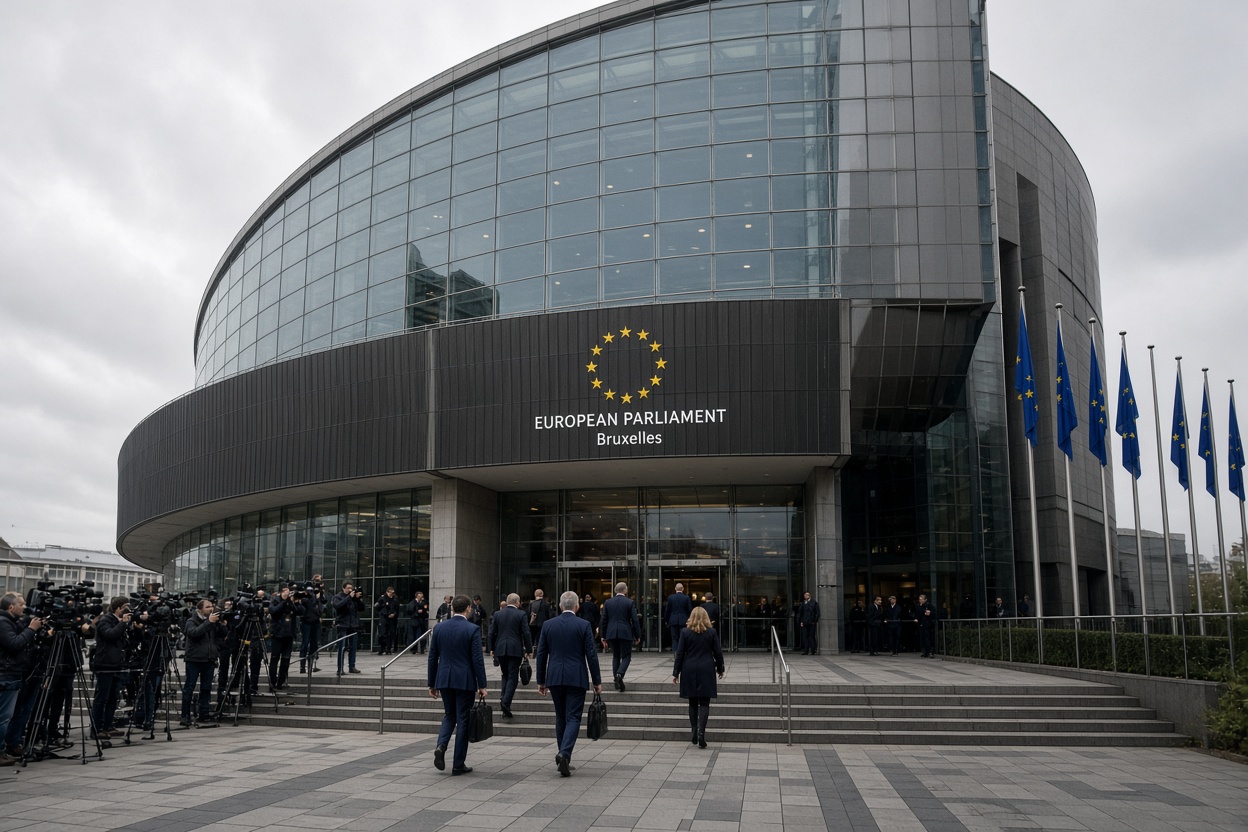
Taiwan Vice President Hsiao Bi-khim spoke on Friday inside the European Parliament during the annual summit of the Inter-Parliamentary Alliance on China, a visit Taipei framed as a widening of democratic partnerships and Beijing condemned as a breach of the one-China principle.
Hsiao told lawmakers that Europe and Taiwan both faced pressure on open societies, according to remarks quoted by the alliance and Reuters. Foreign Minister Lin Chia-lung accompanied her in Brussels, the presidential office confirmed, marking one of the most senior Taiwanese delegations to appear on European Union soil in recent years.
What Hsiao said in Brussels
In her address, Hsiao described Taiwan as a contributor to humanitarian standards despite exclusion from many international bodies, the alliance's social channels reported. She argued that stability across the Taiwan Strait underpinned supply chains that European factories rely on, echoing talking points Taipei has used with U.S. and Japanese partners during the current term.
Former president Tsai Ing-wen is scheduled to visit Berlin next week for a separate conference, Reuters noted, extending a sequence of European stops by senior Taiwanese figures that has accelerated since Hsiao, a former Washington envoy, took office as vice president.
Beijing's response
China's mission to the European Union said Saturday that Hsiao's appearance gravely violated the one-China principle, constituted interference in China's internal affairs and damaged political trust with the bloc. Mission spokespeople did not announce specific trade retaliation in statements carried by wire services.
Taipei's foreign ministry reiterated that Taiwan has the right to engage democratic partners and that Beijing cannot dictate its international contacts. Cross-strait watchers in Taipei said the exchange was predictable but still notable because it paired a sitting vice president with a parliamentary podium inside EU institutions.
Implications for Taipei
With only the Vatican maintaining formal ties in Europe, Taiwan increasingly leans on parliamentary friendships, investment office staff and unofficial visits to keep visibility high. Hsiao's fluent English and Washington résumé have become central to that strategy as President Lai Ching-te's administration courts chip-equipment and submarine suppliers with European components.
The presidential office said European outreach would continue through its dedicated task force, set up after Lin's trips to Central Europe in September. Lawmakers in Taipei from both major camps described the Brussels speech as useful diplomacy, though opposition figures cautioned that symbolic wins must be paired with concrete market access for Taiwanese exporters.
What comes next
European Parliament committees are not expected to vote immediately on new Taiwan resolutions, but IPAC's agenda this weekend also covered forced-labor supply chains and maritime security language that could resurface in future reports. Hsiao was due to return to Taipei after additional meetings with allied lawmakers, according to presidential-office scheduling notices.
For Taiwan readers, the trip matters because it signals that Brussels may tolerate higher-profile guests even as the European Commission negotiates simultaneously with Beijing on trade and climate files. Whether that tolerance translates into investment agreements or visa facilitations remains an open question for Taiwan's trade negotiators.