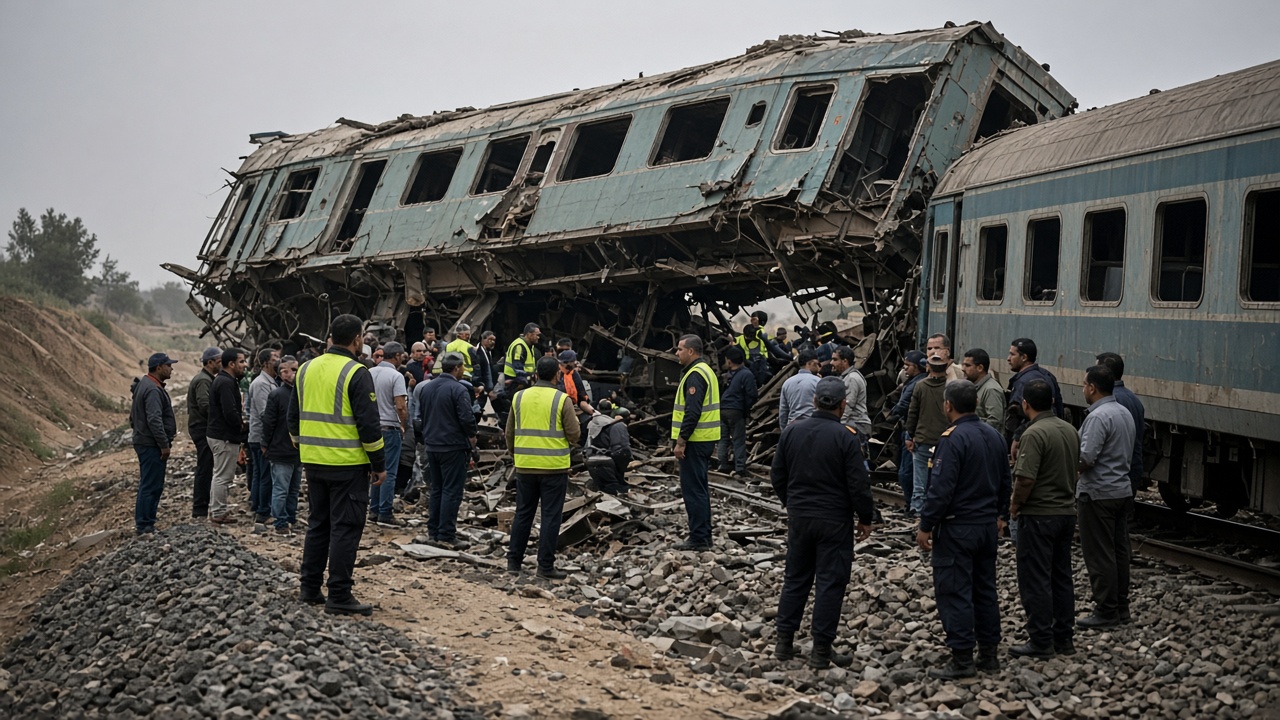
Two passenger trains collided on Sunday morning in al-Ayyat district of Giza province, about 52 kilometres south of Cairo, leaving at least seven people dead and more than 110 injured, according to Egypt's Health Ministry and Public Prosecution. Railway Authority officials said Train No. 134 on the Tahya Misr Giza–Fayoum route ran into the rear of stationary Train No. 2010, which was headed from Cairo toward Aswan on the Upper Egypt main line.
What responders saw at the track
The Transport Ministry said the impact derailed four carriages on the Fayoum service, flipping some onto an embankment. Photos from the scene showed overturned coaches and crowds gathering while rescue teams searched compartments. The ministry said the conductor of the Fayoum-bound train was among those who died.
Health Ministry figures released Sunday put injuries at more than 110, with officials saying more than 70 of the wounded were treated and discharged after receiving care. Ambulance deployments exceeded 70 vehicles, the ministry said, with patients routed to al-Ayyat Hospital in Giza, Al-Wasta Hospital in Beni Suef, and Atfeeh Hospital depending on severity.
Service halts on a troubled corridor
Egyptian National Railways suspended traffic on the Upper Egypt line while cranes were sent to clear wreckage. The authority did not give a timeline for full restoration. The collision occurred between Kafr Ammar and Al-Raqqa stations in an area that has seen repeated disasters, including a 2002 fire on a Cairo–Luxor train that ranks among Egypt's deadliest rail tragedies.
President Abdel Fattah al-Sisi said in a statement that he ordered a swift investigation and that anyone found negligent should be held accountable, according to state media summaries. The Public Prosecution said it opened a formal case to inspect damaged equipment, track infrastructure, and operating procedures.
Investigators weigh signaling and procedure
Prosecutors said both trains were travelling south on the same track when the rear-end strike occurred. Preliminary statements cited by Egyptian media said investigators had not ruled out signaling failures, missed warnings, or operator noncompliance, although no cause has been certified.
An Egyptian National Railways board member told Al Manassa that technical teams were examining whether track signals incorrectly cleared the Fayoum train or whether the crew failed to obey stop indications. Transport Minister Kamel Al-Wazir was reported to have ordered a joint technical committee to review mechanical and operational records from both consists.
What travellers should expect
Rail officials urged passengers with Upper Egypt bookings to check carrier announcements before heading to stations. Egypt operates one of the region's oldest intercity networks, and fatal accidents remain common despite multi-year modernization spending. Sunday's toll is lower than many past crashes, but the graphic derailment is likely to renew scrutiny of speed controls and maintenance funding on the Cairo–Aswan corridor.