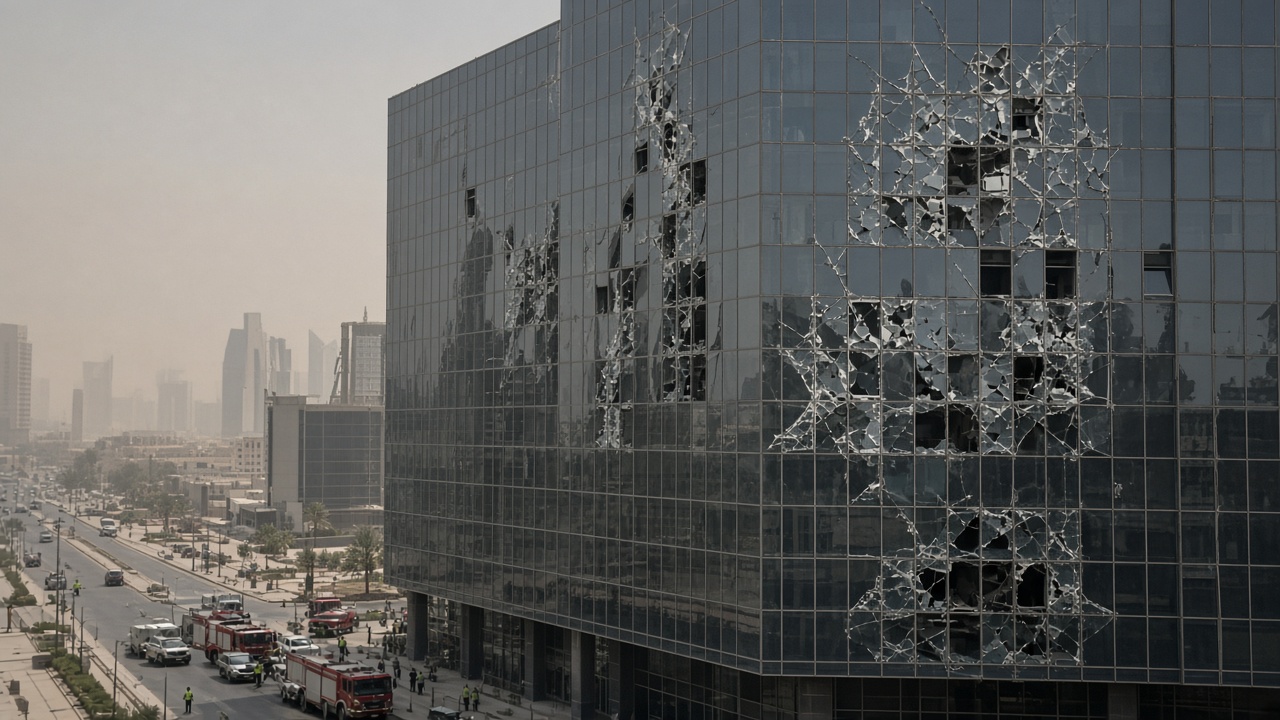
Saudi Arabia’s coalition said it intercepted two ballistic missiles and two cruise missiles aimed at Riyadh and other regions on Sunday morning, yet witnesses and state media confirmed that debris from the engagement damaged an administrative building tied to Saudi Aramco in the capital’s King Abdullah Financial District.
The Saudi Energy Ministry said the strike left limited damage and no casualties. Multiple outlets, including AFP and Reuters, reported broken windows across several floors of the Aramco tower after residents heard loud blasts before dawn.
What Riyadh reported
Coalition spokesperson Major-General Turki al-Maliki said on social media that air defences destroyed two ballistic missiles launched by Yemen’s Iran-aligned Houthis toward Riyadh. He separately reported interceptions of two cruise missiles in Riyadh and the kingdom’s south, plus a drone.
Energy officials described the harm to the Aramco-affiliated tower as debris damage rather than a direct hit on production assets. Aramco did not immediately issue a separate statement, and the Houthis offered no immediate comment on Sunday’s salvos.
Escalation since the Yemen truce collapsed
The Houthis have stepped up attacks on Saudi airports, refineries and Aramco-linked sites since a Yemen truce broke down in July. A strike on King Khalid International Airport in Riyadh on 10 October killed at least 13 people and wounded more than 300, according to Saudi accounts at the time.
Sunday’s damage in the financial district lands in a wider Middle East crisis that has already strained Hormuz shipping, drawn U.S. naval action in the Gulf of Oman and kept Gulf capitals on alert for spillover fire.
Civil defence and public warnings
Saudi civil defence authorities later said the danger had passed in Riyadh and Najran province after early warnings through the national alert platform. Officials also cautioned residents against gathering at impact sites or posting images of interceptions, saying such behaviour could carry legal liability.
Regional analysts will watch whether the tower damage triggers new insurance or security reviews around corporate offices in Riyadh, even though state oil operations were not reported offline on Sunday.
Oil futures traded in a narrow band on Sunday as traders weighed whether the intercept pattern would force wider rerouting of Gulf crude, but no producer announced export cuts tied to the Riyadh incident. Shipping insurers in London and Dubai have already widened war-risk premiums for vessels lingering near Hormuz; damage to a financial-district tower keeps that risk conversation focused on inland corporate targets as well as tankers.