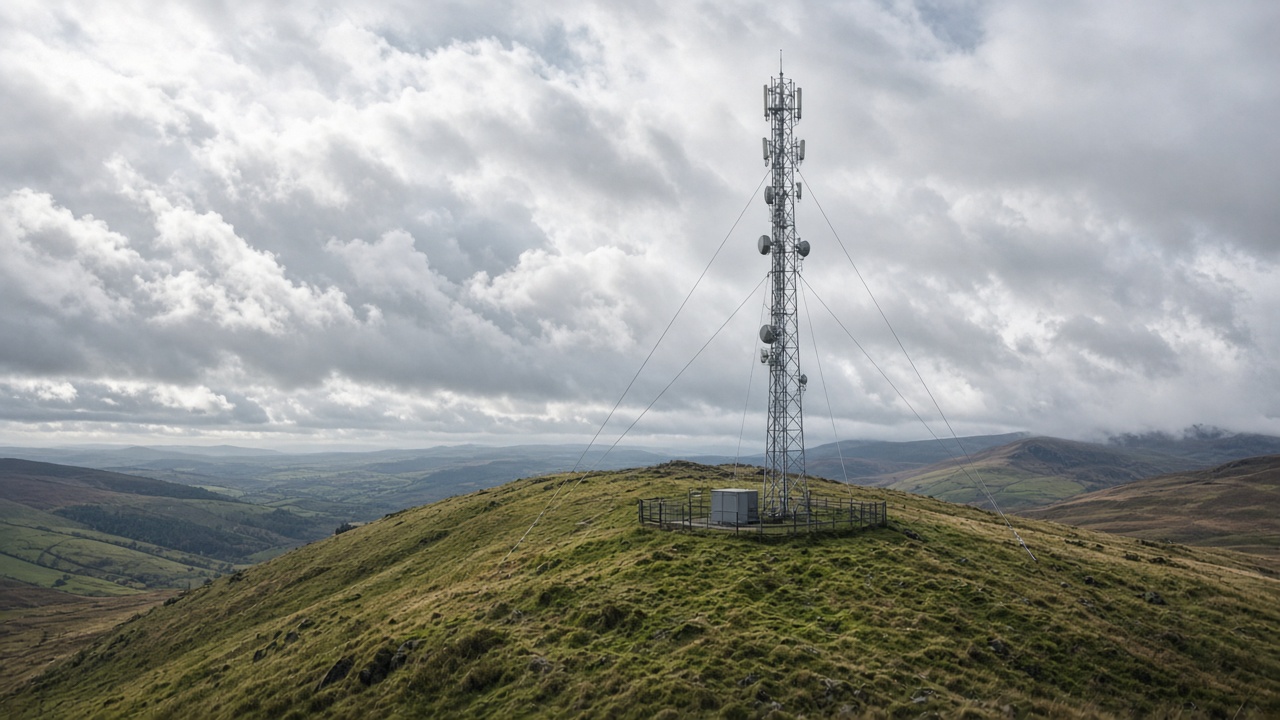
BT Wholesale has issued provisional tariffs for rural 5G backhaul to three county councils after a Department for Science, Innovation and Technology pilot used television white-space spectrum to feed fixed-wireless pods in Devon, giving cabinet members a pound-per-premises figure they can line up against fibre alt-net quotes.
Anika Rahman writes that the pilot matters because Westminster’s Project Gigabit money often stops at the exchange while the hardest ten per cent of premises still depend on microwave links or aging copper tails. BT’s offer bundles core network access with service-level targets written in Ofcom’s forthcoming wholesale fixed telecoms market review language, even though final regulated prices will not land until December.
What the pilot tested
Engineers paired mid-band 5G radios on hilltop sites with point-to-multipoint links in two villages where full-fibre quotes from CityFibre and Openreach both exceeded £2,000 per property because of wayleave disputes on private drives. White-space devices in the 470–790 MHz band provided interim backhaul where licensed microwave channels were saturated. Latency sat within forty milliseconds to Exeter internet exchanges, acceptable for village hall wi-fi and telehealth tablets if not for low-latency gaming.
DSIT officials tracked power draw because parish councils worry about diesel generator hours during winter storms. The modular cabinets used direct liquid cooling borrowed from mobile core projects, cutting idle power compared with older 4G backhaul kits the councils had rented since 2019.
Council procurement angle
Devon, Somerset and Dorset combined authorities received indicative quotes between £38 and £52 per month per outdoor access point, excluding customer-premises equipment. That is higher than urban wholesale fibre on a per-megabit basis but lower than satellite-only kits that SpaceX resellers pitched to farms last year. Councils must still publish state-aid assessments if they subsidise connections classified as economic infrastructure under EU-derived rules retained in UK law.
Competitors including Virgin Media O2’s nexfibre joint venture and grain-cooperative-owned FibreSpeed in Wales watch these numbers because any sub-£50 wireless backhaul tariff undercuts their rural business-case models unless take-up exceeds forty homes per pod.
Regulatory clock
Ofcom’s market review will decide whether BT must publish dark-fibre equivalents alongside lit services. Openreach already faces a separate consultation on freezing wholesale price caps in inflationary years. Rahman’s sources at the regulator say rural wireless backhaul will be carved out of stricter margin squeeze tests if councils can prove no fibre alternative passed a value-for-money review.
For households, the practical question is whether Monday’s tariff sheets turn into signed frameworks before the spring election cycle clogs ministerial sign-off. BT wants volume commitments across at least twenty sites to justify factory orders on radios; councils want escape clauses if Project Gigabit later funds fibre along the same B-road. Negotiations on those break clauses are what will determine if Devon’s pilot becomes a template or a one-off press release.