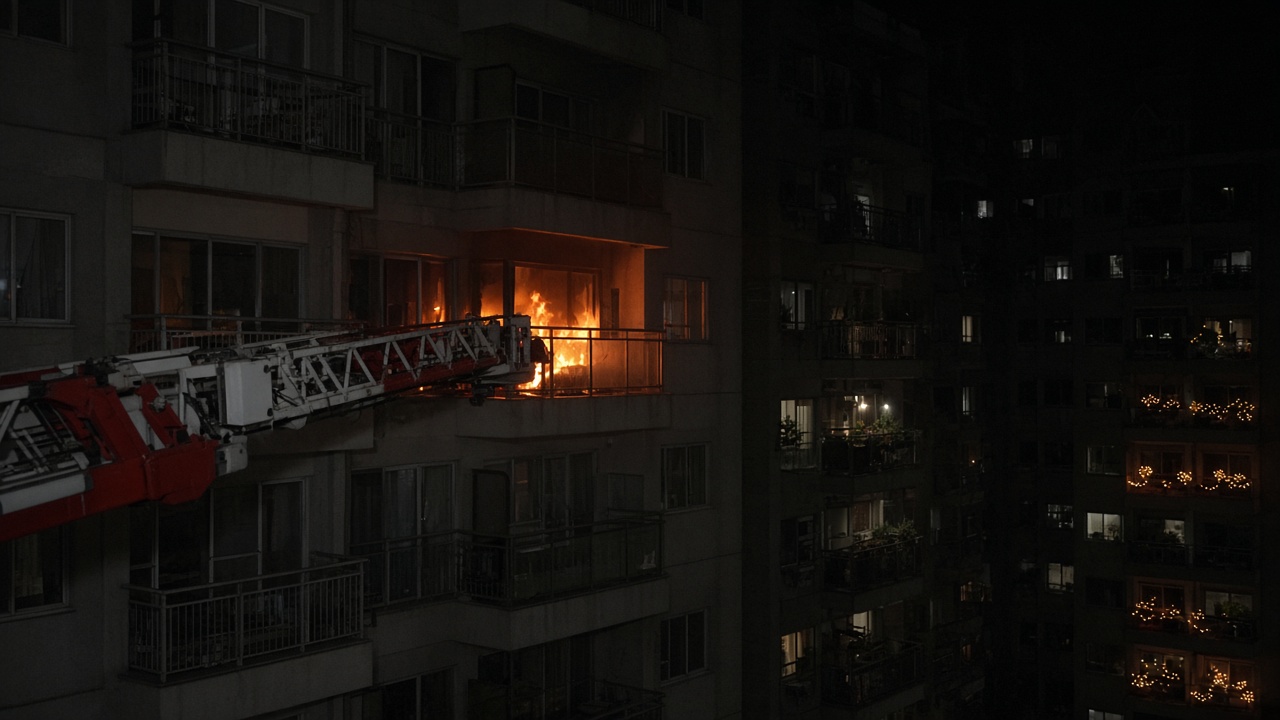
Fire tenders converged on a high-rise apartment complex in Ghaziabad late on Diwali night after a blaze broke out in a residential tower in the National Capital Region suburb, one of several fire-service calls authorities across northern India fielded as celebrations stretched past court-imposed firecracker curfews.
Early reports on Monday morning said crews were able to reach the building quickly and that no casualties were immediately reported, though officials had yet to publish a full damage assessment or confirm the precise floor where the fire started.
What responders faced on Diwali night
The Indian Express reported that the fire erupted in a multi-storey residential block in Ghaziabad, part of the densely built corridor east of Delhi where thousands of families light balconies and terraces during the festival. Firefighters were dispatched to control the flames after residents or security staff raised an alert, the news outlet said, citing information available by Monday afternoon.
Preliminary accounts attributed the ignition to a stray firecracker that struck a balcony enclosure, a pattern fire officials in the capital region warned about in the days leading up to Diwali. The Supreme Court had set a 10 p.m. deadline for bursting crackers in Delhi and surrounding areas, yet monitoring stations recorded elevated particulate levels through the night as many neighbourhoods continued celebrations.
Ghaziabad falls under Uttar Pradesh's disaster-response network, which coordinates with the Uttar Pradesh Fire and Emergency Services. A spokesperson for the state force had not released a formal casualty or injury tally by the time national outlets updated their live pages on Monday, and InfoHandle could not independently verify the building's name or the number of apartments evacuated.
Diwali pressure on urban fire departments
Delhi Fire Service separately logged hundreds of calls across the capital on Sunday and into Monday, including a dip of about 4.5 percent compared with the previous year's Diwali volume according to department statistics cited in national media. Even with that modest decline, crews remained on high alert as air quality in Delhi plunged into the severe category on Monday morning, complicating outdoor operations and public-health advisories.
Fire safety experts have long warned that enclosed balcony glazing, storage of cleaning solvents, and festival decorations can accelerate vertical fires in tower blocks when sparks enter through open doors or damaged screens. Ghaziabad's municipal planners have added high-rise inventory in recent years as commuters priced out of central Delhi seek larger flats, increasing the population exposed to rocket and fountain fireworks launched from narrow streets below.
What officials are expected to clarify
State and municipal investigators typically document ignition source, compliance with society fire-safety certificates, and whether residents followed building evacuation protocols. Uttar Pradesh police and fire officials are likely to interview witnesses about the timing of the explosion relative to the court-ordered firecracker window and whether the society had posted guards to stop rooftop use of banned pyrotechnics.
For families in the tower, the priority on Monday was securing temporary shelter and assessing structural integrity of the affected balcony stack. Until Uttar Pradesh authorities release an official incident report, the Ghaziabad episode will stand as a reminder that Diwali celebrations in the National Capital Region still test fire departments even when fatality-free outcomes allow disasters to slip below national political debates dominated by air pollution and election campaigning.