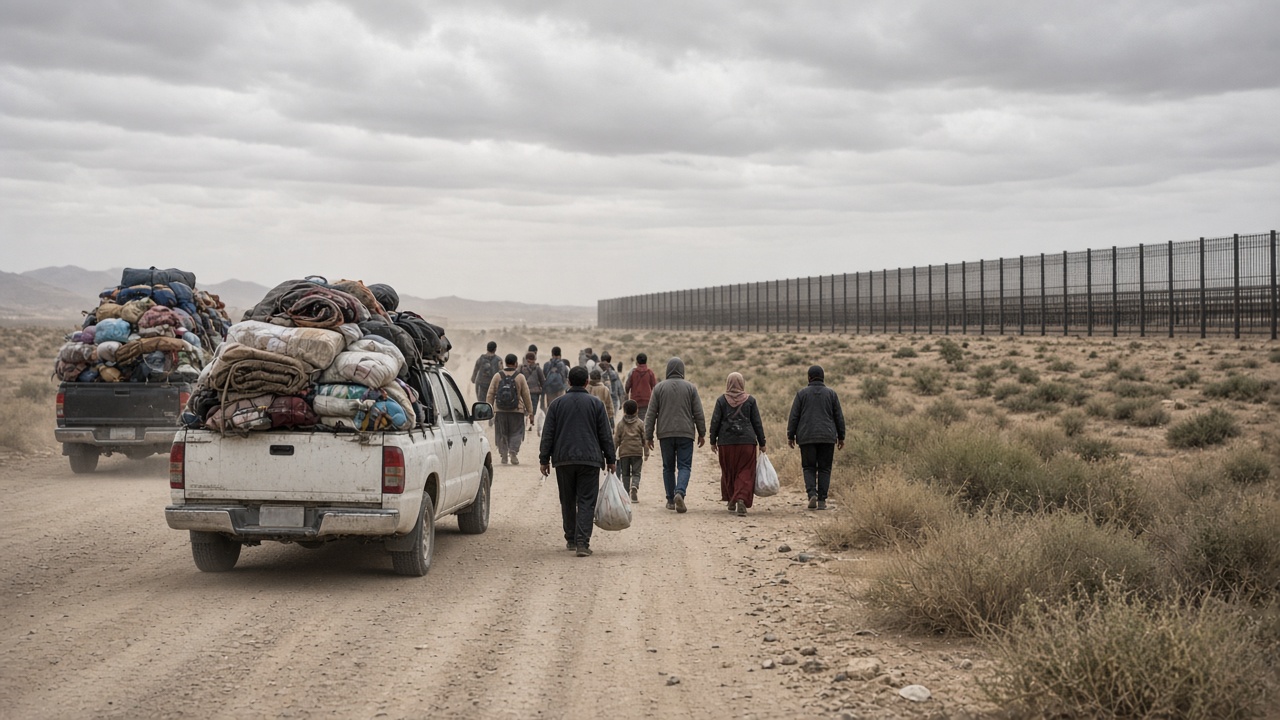
The International Organization for Migration estimated on Sunday that 2,510 people fled five villages in Sudan's Um Baru locality in North Darfur as security deteriorated, with most families crossing into Chad. The count lands amid repeated population movements along Sudan's western border and a parallel warning from IOM and UNHCR that shelter stocks for the wider displacement crisis are effectively exhausted.
IOM's Displacement Tracking Matrix identified the villages as Mazbat, Awriri, Lil, Turba and Um Haraz. The agency did not attribute the flight to a specific armed group in its public reporting, but described conditions in Um Baru as unstable and highly volatile. Anadolu Agency and regional outlets carrying the IOM figures said most affected households had left for Chad rather than other sites inside Darfur.
Third wave in weeks
The Sunday estimate is the third reported displacement pulse from Um Baru in less than four weeks. IOM previously counted 1,150 people leaving four villages between 29 and 31 October, on top of 895 people who fled three villages earlier in October. Darfur-focused outlets including Darfur24 said ground fighting and food stress linked to drought have compounded the insecurity, though agency bulletins have stopped short of tying each village departure to a single battle.
Displacement trackers have treated Um Baru as a pressure point since Sudan's war between the army and the Rapid Support Forces began in April 2023. Families along the Chad frontier have been displaced multiple times as control lines shift. The latest headcount does not change the national totals by itself, but it signals that cross-border movement is still accelerating in northwestern Darfur even as diplomats focus on other fronts.
Separate flight in South Kordofan
On the same reporting cycle IOM logged a smaller movement inside Sudan: 115 people left Al-Farshaya village in Dilling locality, South Kordofan, on Saturday. Unlike the Um Baru case, those families mostly relocated within the locality rather than crossing an international border. The agency gave no public breakdown of where they stayed overnight.
Shelter funding gap
The new figures arrived days after IOM and UNHCR warned that severe funding shortfalls could leave millions without emergency shelter and household kits. The joint statement put the number of people in Sudan who urgently need shelter at 15.4 million and said aid groups could reach only about one in ten of them with current resources. IOM said its own shelter warehouses were empty, meaning fresh arrivals in Chad may face reception systems already stretched by earlier Darfur waves.
Humanitarian officials have repeated that the war's displacement footprint now exceeds many refugee responses in scale. Sunday's Um Baru estimate is a field projection, not a census, and IOM may revise it as teams verify locations. For Chad, the immediate question is whether transit camps along the border can absorb another thousand-plus people without the tarpaulin, cooking kits and clinic capacity that UN agencies say they cannot currently supply at scale.
What happens next
IOM typically updates its matrix as local partners confirm destinations. Watchers along the Chad border will be looking for registration totals from UNHCR and Chadian authorities, which often lag IOM's first estimate by several days. Inside Sudan, aid groups will also track whether displaced families attempt return movements if fighting pauses, a pattern seen after earlier Um Baru waves in October.
Donor meetings on Sudan humanitarian funding are scheduled through the end of the year, but agency officials have said warehouse stockouts are immediate rather than theoretical. Until shelter pledges convert into delivered material, each new 2,000-person spike on the Darfur-Chad line stress-tests reception capacity that IOM and UNHCR have described as already failing to match need.