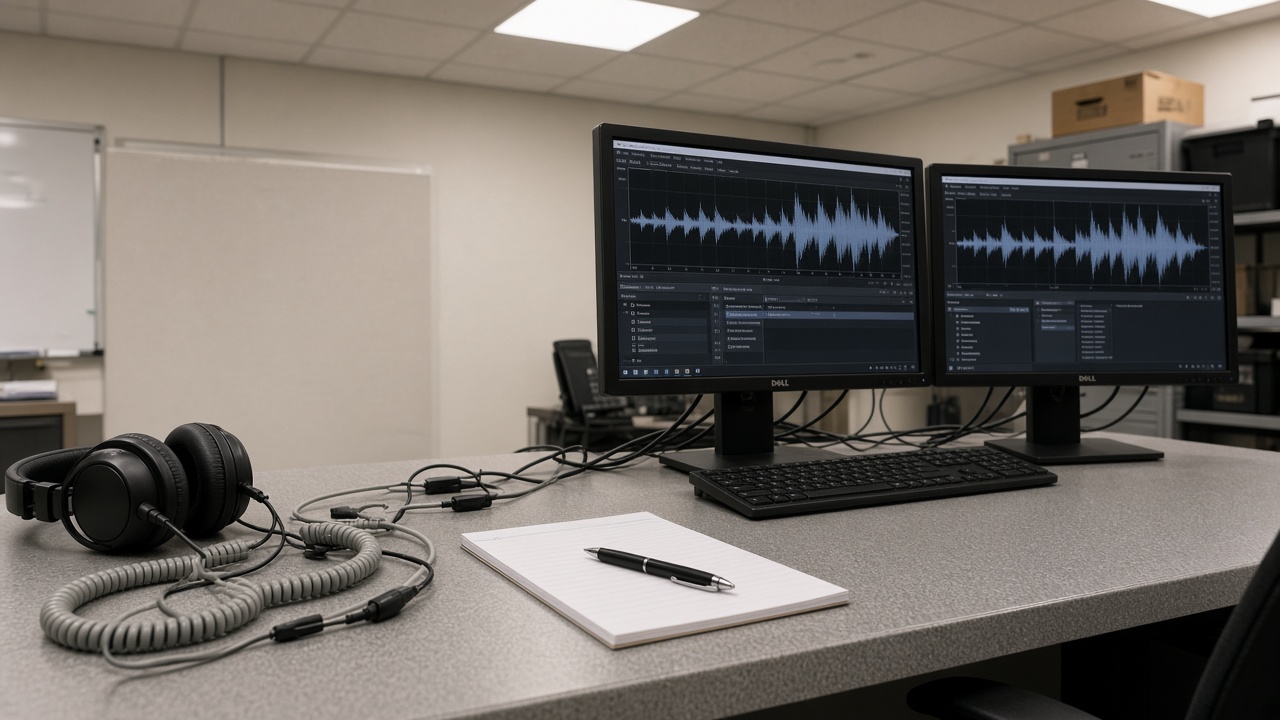
Prosecutors in Seoul ordered a multi-year study to detect partially edited synthetic voices, acknowledging that fraud rings increasingly splice a few AI-generated sentences into otherwise authentic recordings rather than replacing entire calls with deepfakes.
The Supreme Prosecutors’ Office Scientific Investigation Department aims to deliver an integrated detection toolkit by late 2027, according to Seoul Economic Daily reporting on the procurement. The project targets voice-conversion attacks that preserve a victim’s timbre while altering words, and “clip swaps” that change only payment amounts or wire instructions inside a longer file.
Why partial edits beat old detectors
Earlier forensic tools hunted fully synthetic files. Criminals adapted by keeping most of a genuine voice and altering high-value phrases—exactly the segments investigators need for wire-fraud cases. Prosecutors said conventional analyzers struggle when manipulations are short and embedded in noisy mobile recordings.
The commissioned work includes building Korean-language deepvoice datasets of at least 50 hours for voice conversion and another 50 hours for partial edits, using commercial synthesis services and open models cited in the tender. Investigators plan to pair detection scores with speaker-authentication checks in a single workflow so courts receive a unified narrative instead of separate expert reports.
Overlap with carrier and campus tools
Mobile carriers such as KT are deploying on-device scam classifiers that analyze live calls, while KAIST researchers expanded a tactics matrix linking calls to malicious apps and fraudulent transfers. Prosecutors focus on after-the-fact evidence suitable for trial, not real-time blocking, but the same underlying models—spotting unnatural prosody in a three-second clip—appear in both worlds.
East Security and other vendors warned ahead of recent holidays that family-voice scams exploit emotional trust, not technical illiteracy. Training materials now tell victims to hang up and dial known numbers, because even accurate detectors arrive after money moves.
What success would look like
If the 2027 toolkit reliably flags clip swaps, prosecutors could clear backlogs of romance scams and fake prosecutor calls that currently rely on manual listening. Failure would leave Korea dependent on overseas vendors for Korean-specific models, a gap national-security planners dislike when disinformation and financial crime converge.
The order does not change penalties or reimbursement rules for victims; it addresses whether science can keep pace with cheap synthesis tools. For households, the practical lesson remains unchanged: treat urgent voice instructions as unverified until confirmed on a trusted channel, even if prosecutors eventually gain better lab instruments.
Agency spokespeople have not published a public comment timeline for pilot deployments with regional prosecutors, and field teams caution that courtroom admissibility standards may require additional validation beyond prototype accuracy scores.