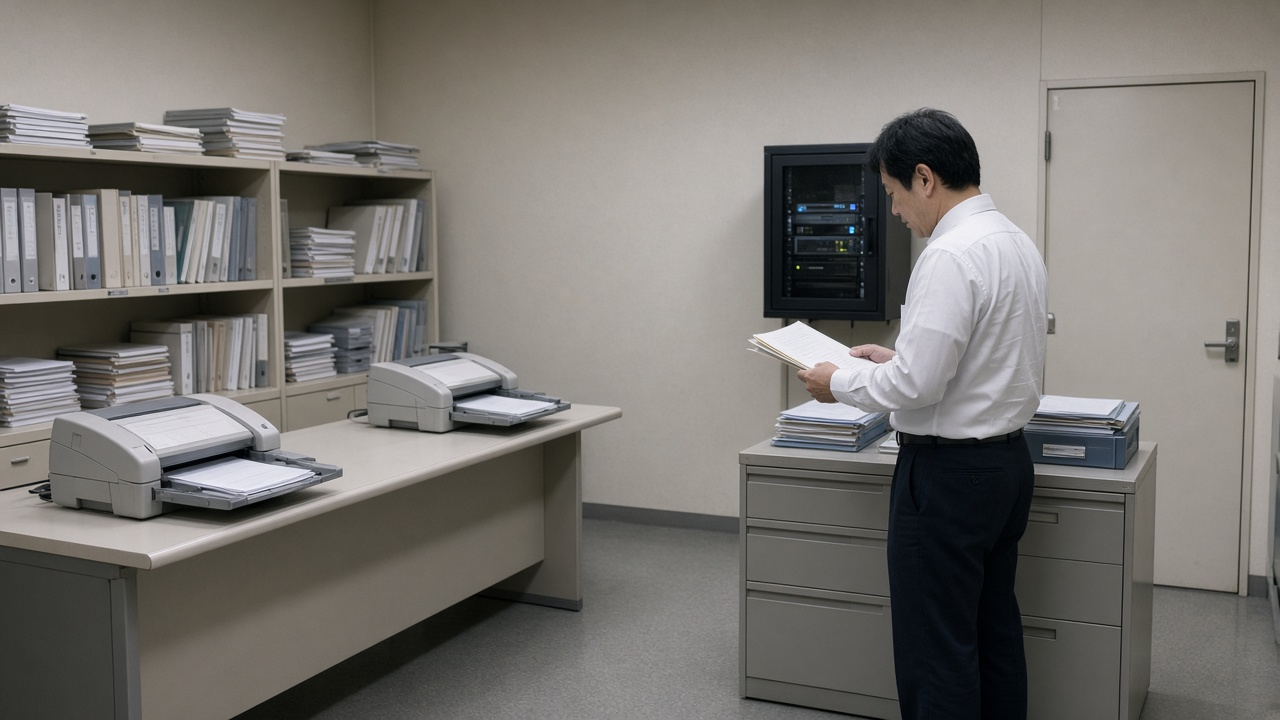
Tokyo startup Sakana AI began onboarding Tottori Prefecture onto a municipal-document API tier that lets town clerks summarize resident filings in Japanese without routing sensitive PDFs through overseas cloud regions, according to materials distributed to participating offices ahead of Monday's pilot launch.
The arrangement pairs Sakana's compact language models with on-premise inference boxes installed at a prefectural data center in western Honshu, a pattern local governments favor as generative tools spread faster than procurement rules can adapt.
Pilot scope
Four municipalities volunteered for the first four-week cycle, testing automatic summaries of permit applications, agricultural subsidy forms, and public-meeting transcripts. Clerks trigger summarization from a browser plugin that stamps audit logs for each request, a requirement Tottori's information-security office copied from national cybersecurity guidelines. Residents' personally identifiable numbers never leave the prefectural VLAN; Sakana engineers trained staff to redact national ID fields before uploads even though the models run locally.
Why Tottori
Tottori's population density is among Japan's lowest, leaving clerk benches understaffed during tourist seasons around the sand dunes and manga museums. Prefectural executives argued that summarization could shave minutes off repetitive reading tasks without hiring temporary typists. Sakana, founded by former Google researchers, has pitched smaller models that fit on single-GPU appliances—hardware costs the prefecture amortizes across multiple towns rather than charging each village separately.
Model behavior
The API returns bullet summaries and suggested routing labels—for example, flagging whether a form belongs with environmental health or construction divisions. Sakana documentation warns clerks that summaries are drafts requiring human approval before replies mail to residents. Evaluation metrics include time-to-first-response and correction rates, data Tottori promised to publish in aggregate after the pilot unless privacy officers object.
Policy alignment
The Digital Agency's local-government digital-transformation checklist encourages on-premise processing for resident data, giving Tottori cover to trial without a lengthy national tender. METI's broader AI guidelines stress transparency labels when automated tools touch citizen services; participating towns agreed to post storefront notices describing when summaries are machine-generated. National lawmakers debating an AI bill watch prefectural pilots for evidence that smaller models suffice outside Tokyo's data-center clusters.
Vendor field
Preferred Networks, NTT Data, and cloud hyperscalers court similar municipal contracts, often with larger models hosted in Tokyo regions. Sakana's pitch is locality plus energy efficiency: the appliance draws less power than multi-rack clusters, appealing to towns with tight utility budgets. Pricing for the API tier scales with document volume rather than seat count, a structure finance officials said fits seasonal spikes in farming paperwork.
Risks clerks cite
Union representatives asked for training on hallucinated citations before go-live. Sakana included a mandatory webinar on verifying statute references, and Tottori blocked automatic outbound email until supervisors click approve. Cybersecurity testers attempted prompt-injection attacks using fake ordinances embedded in uploaded PDFs; the vendor patched filtering rules over the weekend according to a prefectural memo seen by participating offices.
What success enables
If correction rates stay below agreed thresholds, Tottori may expand the API to disaster-response playbooks ahead of winter storms. Sakana could cite the pilot in enterprise sales to other prefectures seeking residency compliance without building their own models. For residents, the visible change is faster acknowledgment letters, not flashy chatbots—a mundane win local governments increasingly describe as the real promise of generative AI in Japan's countryside.
Power and cooling
Prefectural facilities staff sized backup generators to keep the inference appliance online for 72 hours during outages, a lesson from mountain towns that lost connectivity after summer landslides. Sakana engineers documented idle power draw under three kilowatts, low enough for towns debating rooftop solar credits.
Budget line
Tottori classified the pilot as operational expenditure rather than capital investment, letting the prefecture reallocate funds quickly without a full council vote.
Training week
Clerks completed a two-hour certification quiz before receiving plugin credentials, including exercises that flag when summaries omit mandatory legal disclaimers on subsidy forms.
Officials said they would publish a one-page summary for residents after the first month without posting raw model outputs online.