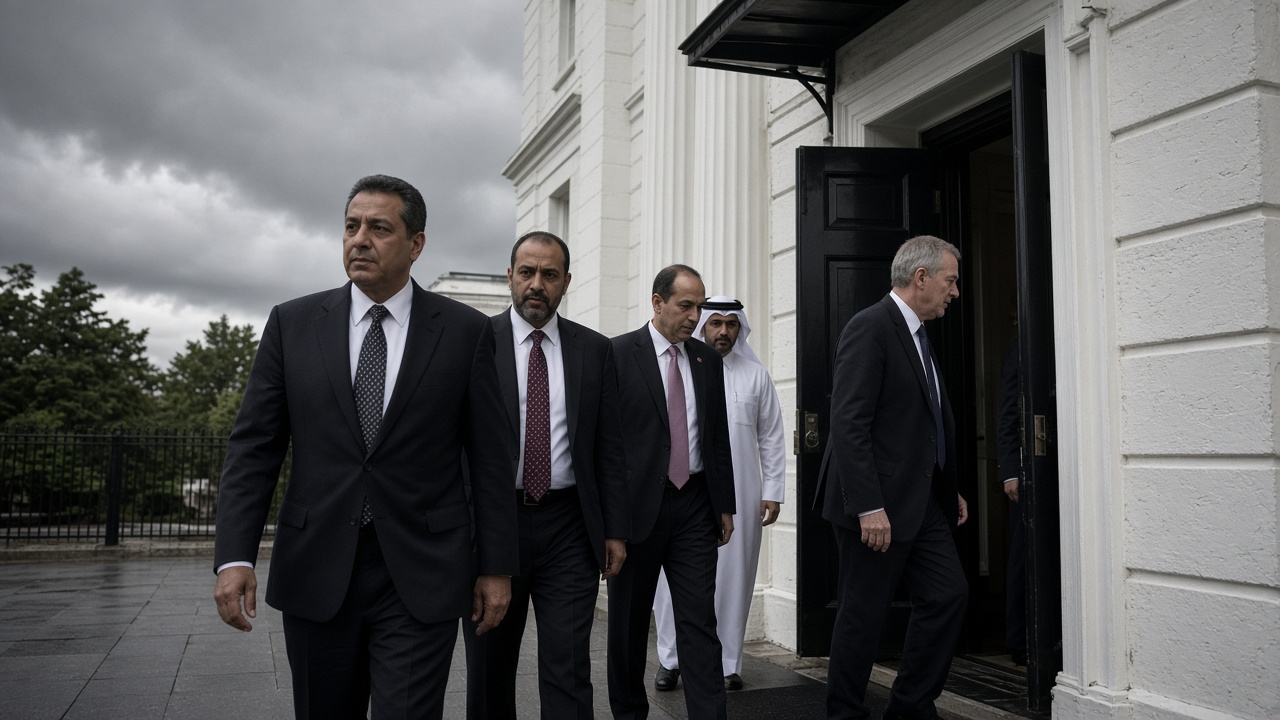
President Donald Trump said Sunday that a return to direct U.S. military strikes against Iran is “highly unlikely” if negotiations advance on Tehran’s nuclear program and maritime traffic through the Strait of Hormuz, even as his chief diplomat warned that the diplomatic track may already be stuck.
Two messages from Washington
In a phone interview with CNN, Trump argued that the United States had already “dealt a severe blow” to Iran and that further military action would probably not be needed. “It depends on whether or not they sign a very strong agreement,” he said, tying any pause in force to a nuclear accord and reopening of Hormuz shipping lanes that Gulf economies depend on.
Hours earlier, in a separate briefing to reporters, Secretary of State Marco Rubio struck a cooler note. Rubio suggested that reaching a diplomatic agreement with Iran may not be possible, accusing Tehran of making unrealistic demands and saying talks were not close to a breakthrough. The split tone matters for allies in the Gulf and for European capitals that have urged de-escalation since the latest round of strikes.
Trump’s comments landed one day before a White House meeting with Qatar’s prime minister, Mohammed bin Abdulrahman Al Thani, who has helped carry messages between Washington and Tehran. Doha has floated proposals aimed at narrowing gaps on enrichment limits and tanker insurance rules, according to diplomats briefed on the effort.
Politics at home and pressure abroad
Trump also linked last week’s U.S. midterm losses to public fatigue over the Iran conflict, telling CBS News’ 60 Minutes that he was not seeking further escalation. He cited gasoline prices, opposition to the war, and what he described as voter hostility toward Israel as factors in the Republican rout. He nonetheless repeated his claim that Israel “would not exist” without earlier U.S. strikes on Iranian nuclear sites—a framing Israeli officials have welcomed but which opposition lawmakers in Washington dispute.
Across the region, the messaging collided with fresh security incidents. Saudi authorities said they intercepted ballistic missiles launched by Yemen’s Houthi movement toward Riyadh, and falling debris damaged an administrative building linked to Saudi Aramco. Iranian provincial officials, meanwhile, said overnight U.S. strikes on Qeshm Island caused no damage to residential areas or vital infrastructure—a low-casualty account Tehran has used to argue that further U.S. action would be disproportionate.
What negotiators face this week
European Commission President Ursula von der Leyen ordered EU flags flown at half-mast Monday after a mass shooting in Krakow, Poland, a reminder that Washington is juggling multiple crises even as the Gulf file remains hot. Still, Treasury officials continue to monitor Hormuz insurance premiums, and energy traders are watching whether Qatar’s Monday Oval Office session produces written language Tehran could sign.
Trump left open the possibility of force if talks fail, but his Sunday emphasis on unlikelihood gives mediators a narrow opening. Rubio’s skepticism suggests any breakthrough would need to survive scrutiny inside the State Department and on Capitol Hill, where Democrats have threatened impeachment proceedings against cabinet members overseeing the Iran campaign. For now, the calendar belongs to diplomats—and to a president trying to convince both allies and voters that the heaviest fighting is behind them.