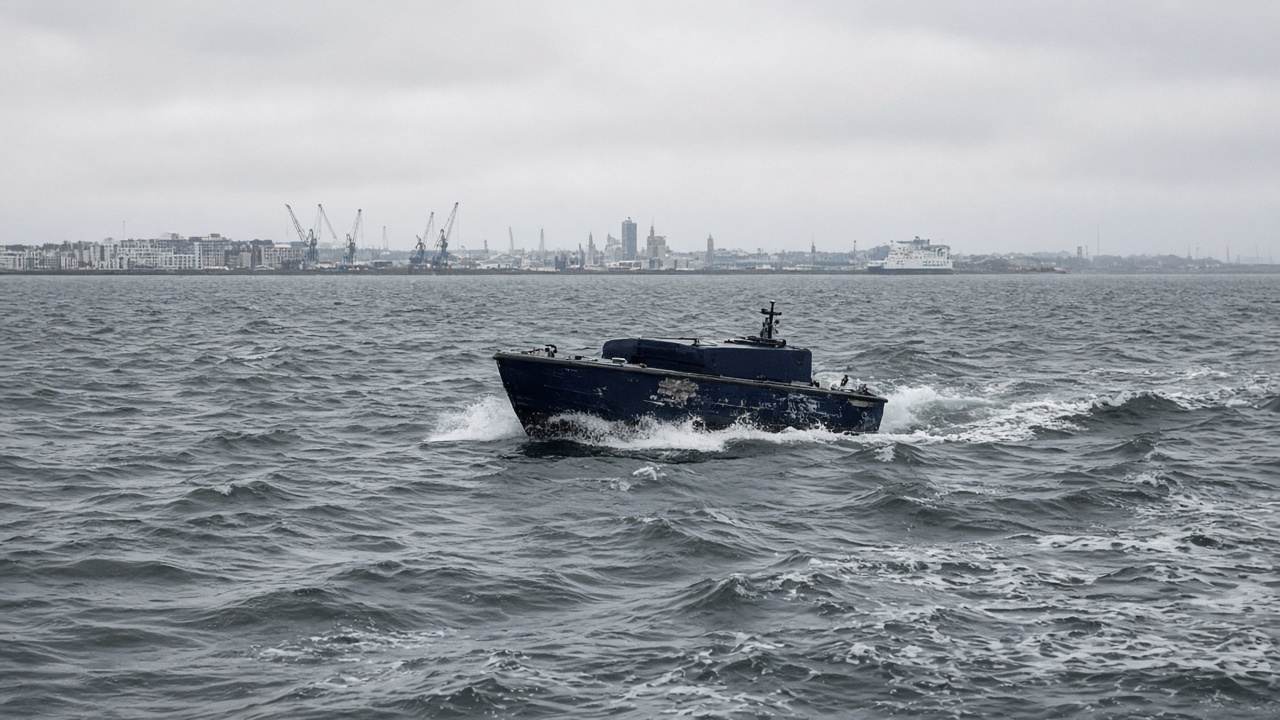
The Royal Navy stood up its first squadron dedicated to uncrewed surface boats on Thursday, basing about 180 sailors and specialists at Portsmouth Naval Base to run Rattler training craft and Kraken K3 scout vessels on front-line tasks. Defence Secretary Wes Streeting said the unit reflects how hybrid warfare is reshaping maritime power, not replacing crews but extending their reach.
What the squadron will fly
A navy spokesperson said the Rattler boats are designed for multiple mission types and have escorted warships in Scottish exercises while being piloted remotely from roughly 500 miles away. The Kraken K3 scout carries a stated range of about 600 nautical miles, extendable to 1,100 miles, and has been tested off England’s south coast in force protection, surveillance and reconnaissance roles.
Unlike experimental prototypes kept in research ports, the 1st Autonomous Squadron is organised like a traditional fleet unit, with watchkeepers, maintainers and command staff integrating drone boats into daily schedules.
Funding and fleet doctrine
The squadron is the visible tip of a four-year, £1.5 billion push toward what officials call a “hybrid navy.” Streeting, who has pressed for faster adoption of autonomous systems after lessons from the Red Sea and Ukraine’s drone campaigns, said uncrewed craft give commanders more options in congested choke points without risking sailors on routine scouting runs.
Fleet Commander Vice-Admiral Steve Moorhouse told reporters that “for generations, the Fleet has been built around ships, submarines, and aircraft, manned by sailors and Royal Marines. From today, an autonomous squadron takes its place alongside them.” He argued the shift is about lethality and resilience: more sensors at sea, harder targets for adversaries trying to blind British strike groups.
Politics and allies
The announcement lands as the Labour government faces Conservative criticism over overall defence spending, even as it highlights high-tech bets. NATO allies, including the United States and Norway, have accelerated similar programs, and Royal Navy officers said Portsmouth would host allied observers during upcoming trials.
Analysts caution that autonomous boats still depend on secure satellite links and crowded harbour traffic rules; incidents in civilian waterways remain a concern. For now, commanders describe the squadron as a bridge—training operators, stress-testing communications, and feeding lessons into the next frigate deployments.
Streeting is expected to visit Portsmouth this month to tour the squadron’s control rooms. If trials succeed, planners say Kraken scouts could accompany carrier strike groups on their next Indo-Pacific rotation, marking the first time uncrewed escorts sail with capital ships on an operational deployment.
Commercial harbour masters in Portsmouth have requested briefings on how the small craft will share channels with ferries and fishing fleets. Navy officials said pilot rules published this autumn will require human operators to retain override authority within three seconds of any close-quarters encounter.