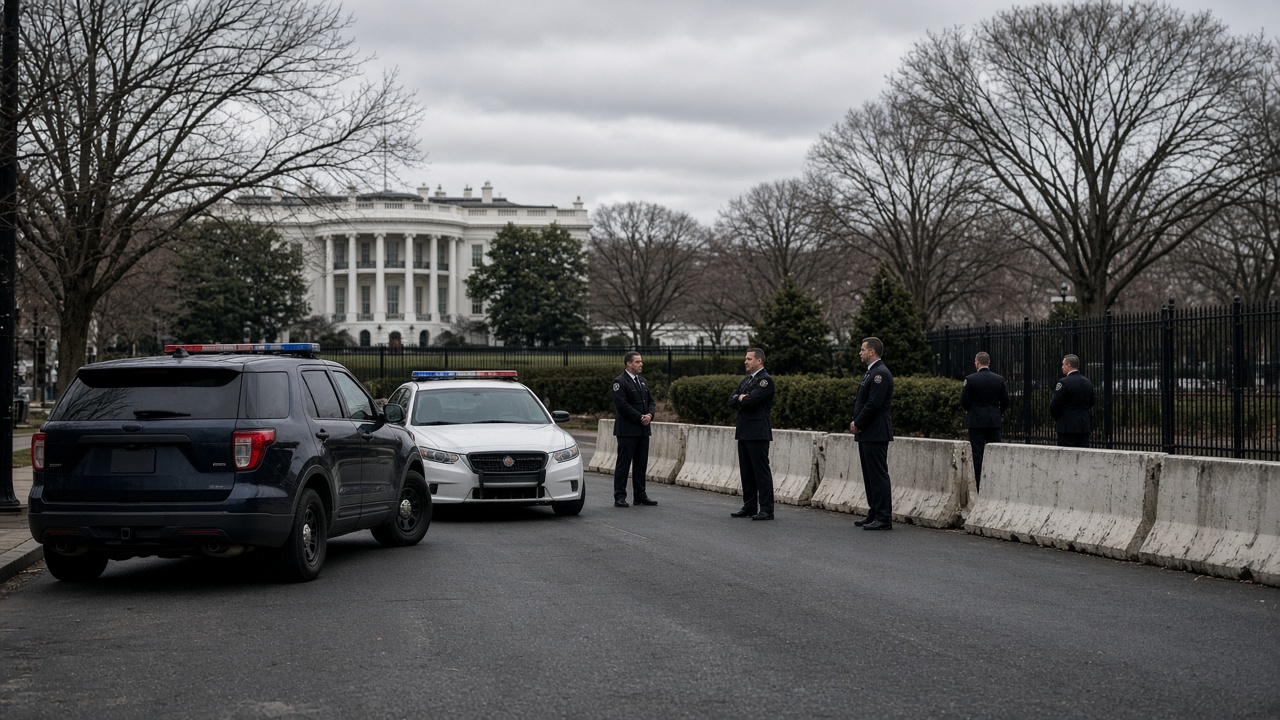
The U.S. Secret Service placed the White House compound under a temporary lockdown on Monday morning after a vehicle mounted the sidewalk along Lafayette Square and a second person jumped a security barricade nearby, prompting a sweep that lasted about half an hour.
Secret Service Police and National Guard personnel converged on the north side of Lafayette Park near 16th and H Streets NW just before 10 a.m. local time, according to statements summarized by The Washington Post and The New Indian Express. The agency said the driver was “combative with law enforcement” after crashing into an informational sign but was arrested quickly. Around the same time, a second individual cleared a barricade at the northwest corner of the park and was also arrested, the Secret Service said.
Perimeter response
Lafayette Square sits directly north of the White House fence line, separated by Pennsylvania Avenue and a lattice of security barriers that were reinforced after repeated fence-jumping attempts and vehicle incursions in past decades. A lockdown typically seals entrances, holds staff and visitors in place, and expands the officer footprint around the executive compound until supervisors clear the threat.
Monday’s episode did not involve gunfire, according to available agency accounts. Reuters reported that Trump was inside the residence during the incidents. An explosive-ordnance disposal team swept the vehicle as a precaution before the lockdown lifted, the Secret Service said. Qatar’s prime minister was still scheduled to meet Trump in the Oval Office later in the day as diplomacy over the Iran war continued.
What witnesses saw
Street closures rippled through downtown as police blocked lanes around the White House and tourists were steered away from the park. Network footage showed officers in tactical gear moving along Pennsylvania Avenue while bicycle racks and jersey barriers that ring the square remained in place.
The Secret Service did not release either person’s identity or any charges Monday morning, and officials did not say whether the two incidents were linked. Past episodes along the same stretch have ranged from confused motorists to deliberate protests; investigators usually review license-plate readers, park surveillance, and officer body cameras before deciding whether federal prosecutors take a case.
What happens next
Lockdowns of this type often lift within an hour once bomb technicians and uniformed officers confirm the vehicle poses no secondary threat. If prosecutors file charges, the driver would likely appear in D.C. Superior Court or federal court depending on whether the conduct is treated as a threat against protectees.
For a Secret Service stretched by campaign seasons, overseas summits, and recurrent threat streams, even a minor vehicle contact triggers a full protocol because the park sits inside the agency’s inner-most protective zone. Officials are expected to issue a fuller statement once interviews with the driver and a vehicle sweep are complete.