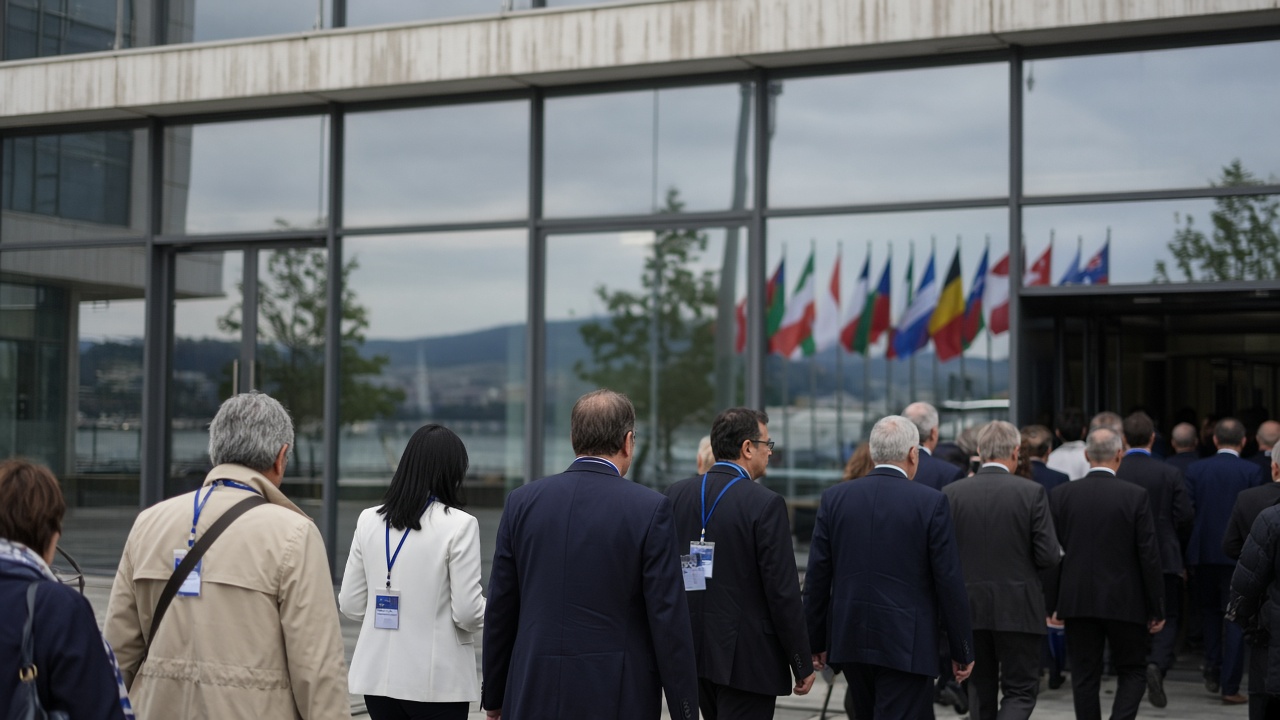
Negotiators opened the 31st UN Climate Change Conference in Antalya on Monday, shifting from another year of record heat and flood damage into two weeks of talks on emissions, adaptation and who pays for both. Türkiye holds the rotating presidency under Environment Minister Murat Kurum, while Australian Climate Change and Energy Minister Chris Bowen will lead the negotiating track through Nov. 20.
Implementation over fresh pledges
The conference slogan, “COP of the Future – COP of Implementation,” signals what many delegations want: fewer headline promises and more verified cuts, finance flows and grid upgrades. Monday’s opening plenary in the Anadolu hall marked the start of technical sessions before a leaders’ summit on Nov. 11–12, when presidents and prime ministers are expected to set the political ceiling for what ministers can agree later in the week.
UN Climate Change Executive Secretary Simon Stiell is scheduled to address the opening session with a speech stressing measurable delivery. The presidency’s action agenda clusters work around electrification, methane, zero-waste cities, resilient health systems and oceans—topics chosen to bridge energy, agriculture and urban policy rather than treat each in isolation.
Monday’s focus on food, water and health
The first thematic day centers on food security, agriculture and public health under climate stress. Side events scheduled at the Australia Pavilion include civil-society calls for accelerated fossil-fuel phaseouts from both host Türkiye and Bowen’s delegation. Outside the Blue Zone, a People’s Climate Summit and justice forums are slated to begin later in the conference, reflecting the familiar split between formal negotiating rooms and street-level advocacy.
Finance and fossil fuels still divide capitals
Heading into Antalya, diplomats remain split on two enduring fault lines: how much public money reaches vulnerable states for adaptation, and how fast major economies can move off coal, oil and gas. The UN Environment Programme’s 2026 Emissions Gap Report estimates that fully implemented national pledges would still yield roughly 2.6°C of warming this century, far above the Paris Agreement’s 1.5°C aspiration.
The same report puts developing countries’ adaptation needs near $305 billion annually by 2035, against roughly $28 billion to $32 billion in international public adaptation finance recorded in 2024. Those numbers land as energy markets remain volatile: the effective closure of the Strait of Hormuz during the Iran conflict has pushed oil and fertilizer costs higher, complicating any transition narrative that depends on cheap electrification.
What negotiators will watch this week
Early indications from the Turkish presidency include proposed 2035 benchmarks—such as raising electricity’s share of final energy use to 35 percent and tightening building efficiency—though nothing is agreed until gavels fall on Nov. 20. Observers will track whether ministers produce concrete timelines on methane, a credible adaptation finance roadmap, and language that keeps major emitters inside a single accountability frame.
With more than 70,000 accredited attendees registered and nearly 200 parties seated, Antalya becomes the first full COP since last year’s contentious Brazil meeting failed to produce a fossil-fuel roadmap. Stiell and Bowen have both framed the fortnight as a test of whether implementation can survive geopolitics as heated as the planet itself.