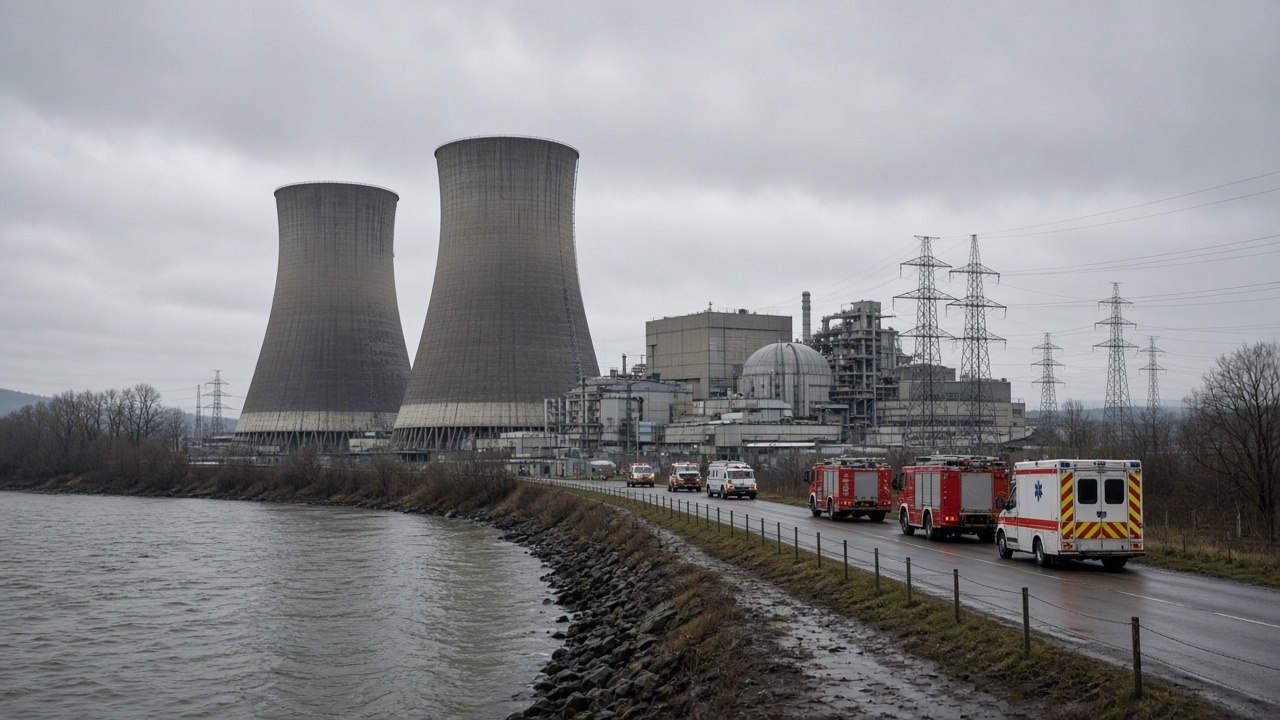
The International Atomic Energy Agency said on Monday that drone strikes killed one employee at the Russian-occupied Zaporizhzhia nuclear power plant and a second worker at the nearby Zaporizhzhia thermal power station, prompting Director General Rafael Grossi to demand an immediate end to attacks on staff who maintain cooling and safety systems at Europe's largest atomic site.
What the IAEA confirmed
In posts on X, the Vienna-based agency said it had been informed that plant personnel were hit in the latest incidents affecting the Enerhodar complex on the Dnipro River front line. Grossi called the killings "unacceptable" violations of nuclear safety pillars and said all strikes on nuclear workers must stop so staff can carry out their duties without "undue stress or fear."
The agency did not attribute either attack to Russia or Ukraine. Moscow and Kyiv have traded blame for years over incidents near the six-reactor site, which Russian forces seized in March 2022. All reactors have been shut down since then, but spent fuel and residual heat still require continuous cooling, external power or diesel generators, and steady staffing.
Rising toll on plant staff
Monday's fatalities followed other recent deaths and infrastructure hits around the same installation. The IAEA reported an employee killed in a drone strike in late October, identified in some accounts as a welder at a centralized repair workshop. On 8 November the plant lost its sole 330-kilovolt external power line for roughly ten hours, forcing reliance on emergency diesels before supply returned.
IAEA monitors have maintained a presence at the site since September 2022, issuing frequent updates on shelling risk, power cuts and staff welfare. Grossi's statement linked the latest deaths directly to the ability of technicians to keep passive safety margins intact while the war grinds on around Enerhodar.
Timing amid Abu Dhabi talks
The attacks landed as diplomats prepared for a new round of Ukraine–Russia discussions in Abu Dhabi, and as Ukrainian officials pressed allies on food corridors and energy security. Indian Prime Minister Narendra Modi spoke with President Volodymyr Zelenskyy on Monday about mediation options, according to statements from both governments, while External Affairs Minister S. Jaishankar held a separate call with Russia's Sergey Lavrov.
None of those conversations produced an immediate agreement on protecting nuclear installations, but Grossi's intervention raised the visibility of worker safety as a discrete negotiation issue. Neighbouring EU states have repeatedly warned that any loss of cooling at Zaporizhzhia could force wider evacuations and complicate grid management far beyond Ukraine's borders.
What operators face on the ground
Russian-installed managers at the plant blamed Ukrainian forces for earlier personnel deaths, including reports of drones striking vehicles on commuter routes into Enerhodar. Ukrainian officials have accused Russia of using the site as a shield and of tolerating strikes that endanger critical personnel. The IAEA has generally avoided assigning responsibility for individual incidents, focusing instead on verifiable safety conditions.
With six idle reactors, the site's immediate flashpoint is less reactor physics than logistics: keeping transformers, switchyards and diesel reserves intact while employees travel through an active combat zone. Each worker death removes experienced hands from that fragile routine and adds pressure on remaining shift teams.
Next steps for the watchdog
Grossi said the agency would continue reporting on staffing, power and security matters at Zaporizhzhia and at Ukraine's other nuclear plants. Ukrainian Energy Minister German Galushchenko has previously urged the IAEA board to treat attacks on energy workers as distinct from generic battlefield reporting, a framing Grossi echoed by naming personnel explicitly in Monday's condemnation.
Diplomats in Vienna said the board may revisit the issue at its next scheduled session unless a ceasefire covering plant approaches is negotiated beforehand. For now, the agency's public message was singular: attacks on the people who keep the plant from sliding into crisis must end before the next power cut or maintenance gap.