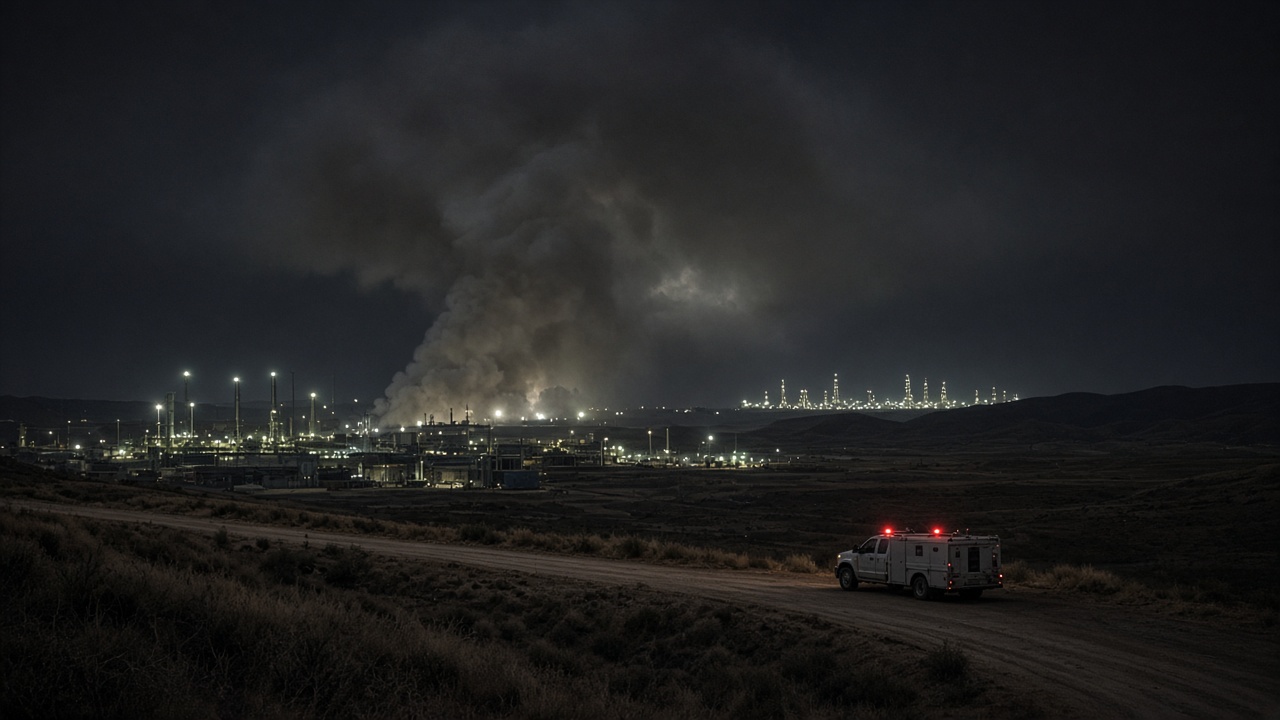
Gas production at Iraq's Khor Mor field remained halted on Monday while operators assessed damage from a suspected drone strike that set fire to a storage and loading area on Sunday night, knocking thousands of megawatts off the Kurdish region's electricity network within hours.
UAE-based Dana Gas, which runs the field with partners, said the blaze was extinguished without injuring staff but that output would stay offline until engineers could inspect the site. Kurdish officials said more than 70 percent of the autonomous region lost reliable power after gas flows to plants feeding Erbil, Sulaimaniyah, Duhok and surrounding cities dropped to zero.
What operators and officials reported
Dana Gas told markets on Monday that the Khor Mor facility was hit on the night of 8 November 2026. The company described the incident as a suspected drone attack, said the fire was doused, and noted it was coordinating with the Kurdistan Regional Government and federal authorities in Baghdad.
Spokespersons for the Kurdish electricity ministry told reporters the strike hit infrastructure tied to liquefied petroleum gas storage and truck loading. Rudaw, citing security sources, said smoke rose from the field after a single drone strike on an LPG storage tank. Iraqi Prime Minister Ali al-Zaidi's office ordered a joint committee with Kurdish authorities to investigate what it called a heinous attack and said preliminary information indicated no fatalities.
Security sources in Kirkuk and Salah al-Din provinces told Kurdish media the projectile may have been launched from the direction of Tuz Khurmatu, a disputed district south of Kirkuk, though investigators had not publicly identified a responsible party by midday Monday. Channels linked to pro-Iran Iraqi armed groups have claimed involvement in past strikes on energy sites, but Sunday's attack had not been formally claimed.
Scale of the power cut
Khor Mor is the main domestic gas source for Kurdish power plants and household cooking fuel. Ministry figures cited by the Iraqi News Agency and Al Jazeera put the generation loss at between 2,500 and 2,800 megawatts, roughly three quarters of the region's typical output when gas flows normally.
Omid Ahmed, a spokesperson for the Kurdish electricity ministry, said gas supply to plants in Erbil, Sulaimaniyah, Bazian, Chamchamal and Duhok was suspended. Officials pledged to keep hospitals and water treatment plants supplied by shifting to hydroelectric units and plants that can burn alternative fuels, but residential schedules were expected to tighten until gas deliveries resume. Dana Gas gave no timetable for restarting compression and processing trains.
Pattern of attacks on critical gas
The strike ended a roughly four-month pause in direct hits on Khor Mor after a string of incidents during and after the regional escalation tied to the United States and Israel's war with Iran earlier in 2026. Kurdish officials have counted more than a dozen prior attacks on the field in recent years, including lethal strikes on workers.
Because the facility underpins both generation and bottled gas distribution, even short outages ripple across daily life in northern Iraq. Erbil has repeatedly asked Baghdad for stronger protection of energy infrastructure since the U.S.-led coalition mission in Iraq formally ended its combat role at the end of September, leaving regional leaders anxious about drone threats that have also targeted Saudi oil sites and Gulf shipping lanes during the wider Middle East crisis.
Iraqi federal and Kurdish leaders said they would share investigative findings once forensic teams finish work at the loading area. Until production restarts, diplomats monitoring humanitarian conditions in disputed territories will be watching whether prolonged blackouts compound winter fuel shortages for families who depend on grid power and subsidized gas cylinders.