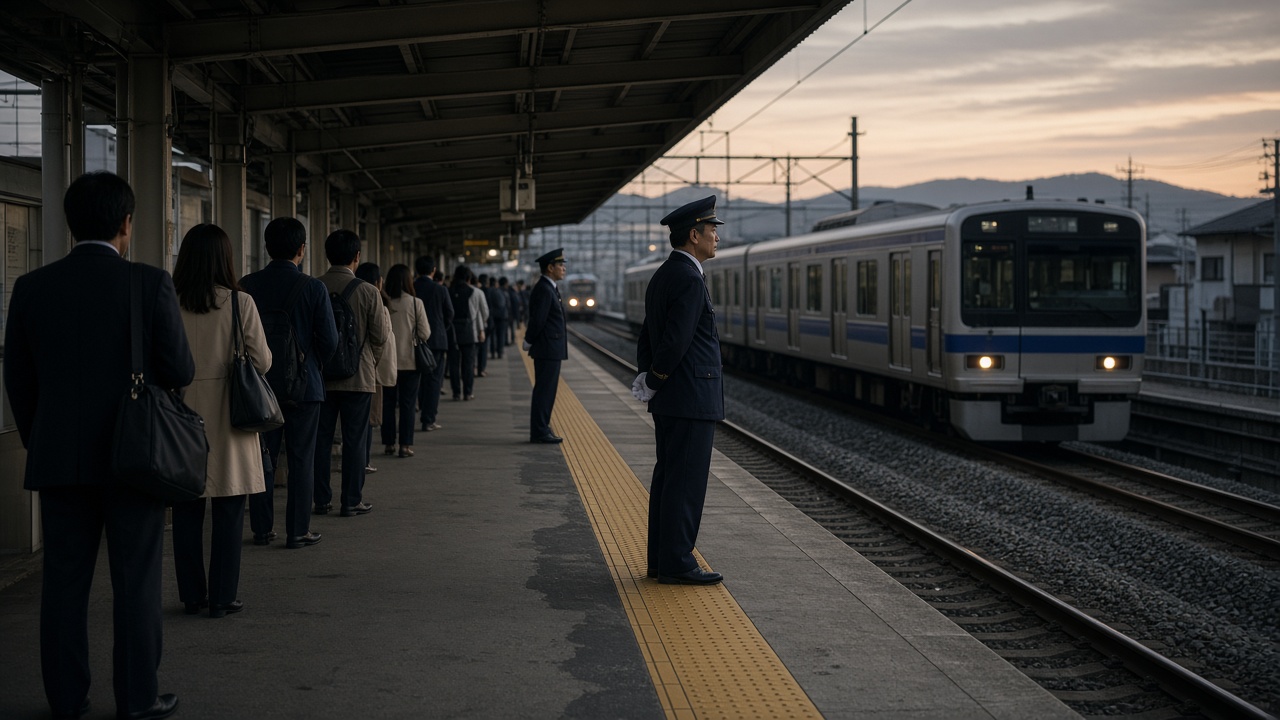
West Japan Railway Company restored Tokaido Line service through Ibaraki Station at about 9:45 a.m. on Tuesday after a man entered the tracks and was struck by a northbound Special Rapid train, an incident that suspended operations between Maibara and Himeji and affected roughly 140,000 riders during the morning commute.
Sequence of the incident
According to JR West and Osaka Prefectural Police, the crash occurred around 8:05 a.m. as a Special Rapid bound for Yasu from Nettetsu struck a person on the rails at Ibaraki Station in Ibaraki City. Officers said the man was found dead at the scene and are working to confirm his identity and how he reached the tracks.
Tokaido Line and Sanyo Line trains in both directions between Maibara and Himeji halted while emergency crews secured the site. JR West announced resumption at 9:45 a.m., about an hour and forty minutes after the suspension began, though residual delays persisted on connecting rapid and local services into Osaka and Kyoto.
Scale of disruption
JR West estimated that about 140,000 passengers faced cancellations, detours or severely crowded substitutes during the outage—a heavy hit on a corridor that funnels Osaka commuters toward Kyoto and Shiga Prefecture employers. Station staff directed travelers to buses and parallel private railways where possible, but social media posts from riders described platform crowds stretching through concourses.
Special Rapid trains, which skip many suburban stops, carry a large share of peak capacity on the Kyoto–Osaka segment. Losing even one slot during the 8 o'clock window ripples through crew diagrams and rolling-stock positioning for the rest of the morning.
Police inquiry
Ibaraki Police Station has opened an investigation into the circumstances leading to the track intrusion. Early statements did not specify whether the case would be treated as an accident, trespass or intentional act; identifying next of kin remained the immediate priority.
Japan's rail operators report hundreds of track intrusions annually, many tied to mental health crises or navigation errors at crowded terminals. Each fatality triggers formal reviews of platform barriers, staff training and surveillance coverage, though full platform doors remain economically prohibitive on many legacy stations outside Tokyo's core.
Operator response
JR West issued rolling updates on its official disruption feed, apologising for the inconvenience and warning that "transportation may still be crowded" after service returned. Crews inspected the involved trainset for damage before returning it to revenue service.
The company did not immediately publish a minute-by-minute timeline beyond the 8:05 contact and 9:45 restart. Passenger-rights groups often press for faster disclosure when fatalities close trunk lines, especially when alternative routing across the Hanshin industrial belt is limited.
Regional context
Ibaraki Station sits on the busy Kyoto–Osaka axis used by students, factory workers and university hospital staff. Tuesday's outage coincided with clear weather, ruling out storm-related complications and focusing attention on human factors and platform design.
Local governments in Osaka Prefecture have funded suicide-prevention signage and hotline QR codes at major stations, but Tuesday's event will likely renew debate over whether mid-sized stops deserve the same barrier investments as terminal hubs.
What riders should expect
JR West advised passengers travelling toward Kyoto or Himeji to monitor real-time delay indicators through the afternoon in case knock-on adjustments affect evening peaks. Police said they would release further information once identification and witness interviews conclude.
For now, the corridor is running again, but the morning death leaves investigators, commuters and safety officials with the same recurrent question: how a person reached live rails on one of Japan's highest-traffic main lines without triggering an earlier intervention.