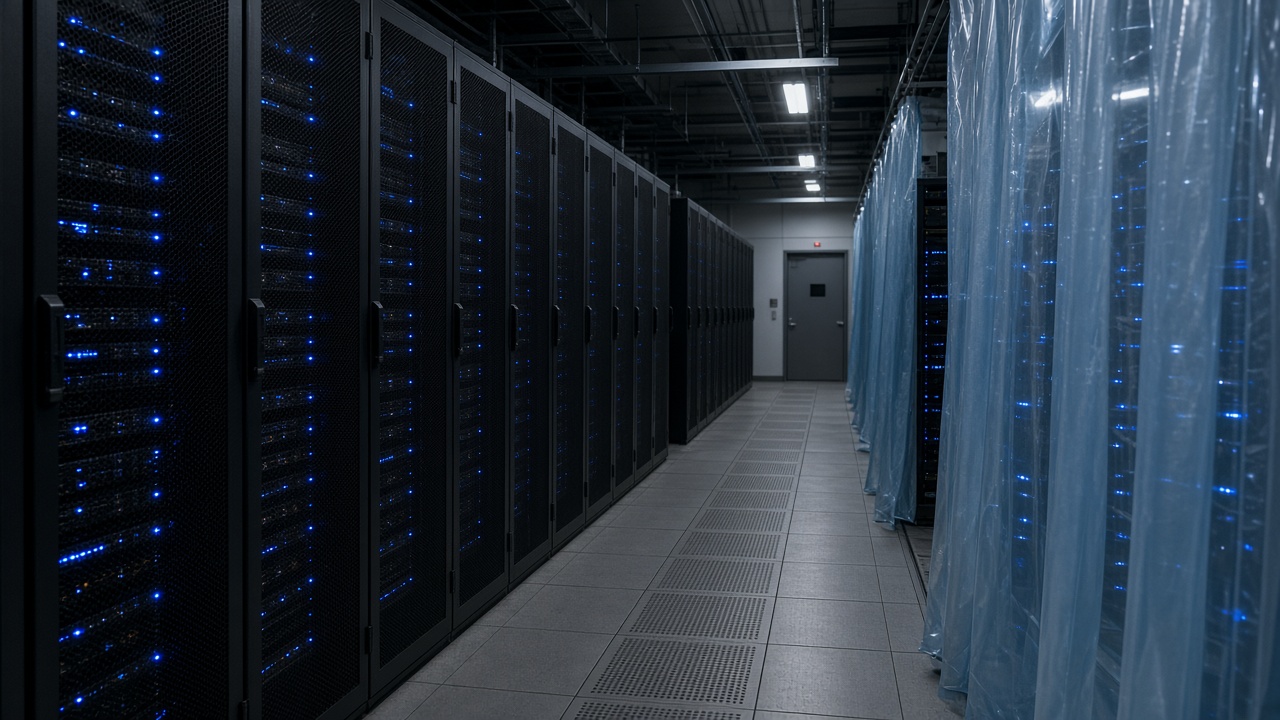
South Korea's Ministry of Science and ICT asked lawmakers to fund 4.46 trillion won of AI transition work next year, part of a government-wide push that would more than triple AI-related spending compared with this year's base budget.
The MSIT figure sits inside a broader 10.1 trillion-won "AI grand transition" envelope spanning ministries. Science and ICT would administer about half of that total, including procurement of 15,000 additional graphics processors, expansion of a national AI computing center, and network links between large and midsize data halls so public agencies can rent idle capacity.
What the money buys
Budget documents outline seven manufacturing-oriented "physical AI" pilots—robotics, autonomous components and similar lines—plus public-sector automation templates ministries are expected to copy. Researchers receive higher R&D ceilings, with total ministry spending proposed at 23.7 trillion won, up more than 20 percent year on year.
Officials tie the build-out to demographic pressure. Deputy Prime Minister Ku Koon-hyeol has described AI infrastructure as the "only breakthrough" against slowing potential growth. Critics inside think tanks such as KDI warn that matching U.S. or Chinese compute scale immediately carries fiscal and power-grid risks, and urge phased procurement tied to utilization metrics.
Industry linkage
Domestic chipmakers want packaging and HBM orders from the same GPU fleet the government is buying. Startups lobbying for reserved compute hours say access to GPUs matters as much as tax credits. MSIT plans a shared scheduling layer so universities and small firms can book cycles on centrally purchased accelerators instead of building private clusters that sit idle.
Tax policy moves in parallel. This year's reform bill labels generative and agentic AI, plus low-power AI compute, as national strategic technologies eligible for investment credits. That nudges conglomerates to align private GPU purchases with public timelines.
Assembly scrutiny
Opposition lawmakers have questioned whether every AI line item belongs in the base budget or should wait for a supplemental bill after export-control outcomes clarify chip supply. MSIT ministers counter that delayed orders would push delivery into 2027, missing the administration's first-term window.
Committee staff expect heated debate over operating costs—electricity subsidies, staffing for the national center, and cybersecurity for shared tenants. None of that diminishes the core number: 4.46 trillion won requested for AI transition inside MSIT alone, with GPU procurement as the most visible line on the spreadsheet.
Local governments are already lobbying for edge nodes outside the capital so AI training for public safety and transport does not depend on a single Seoul campus. MSIT officials said regional nodes would piggyback on existing government cloud contracts rather than duplicate procurement, but provincial lawmakers want dedicated budget lines in writing before they support the wider bill.