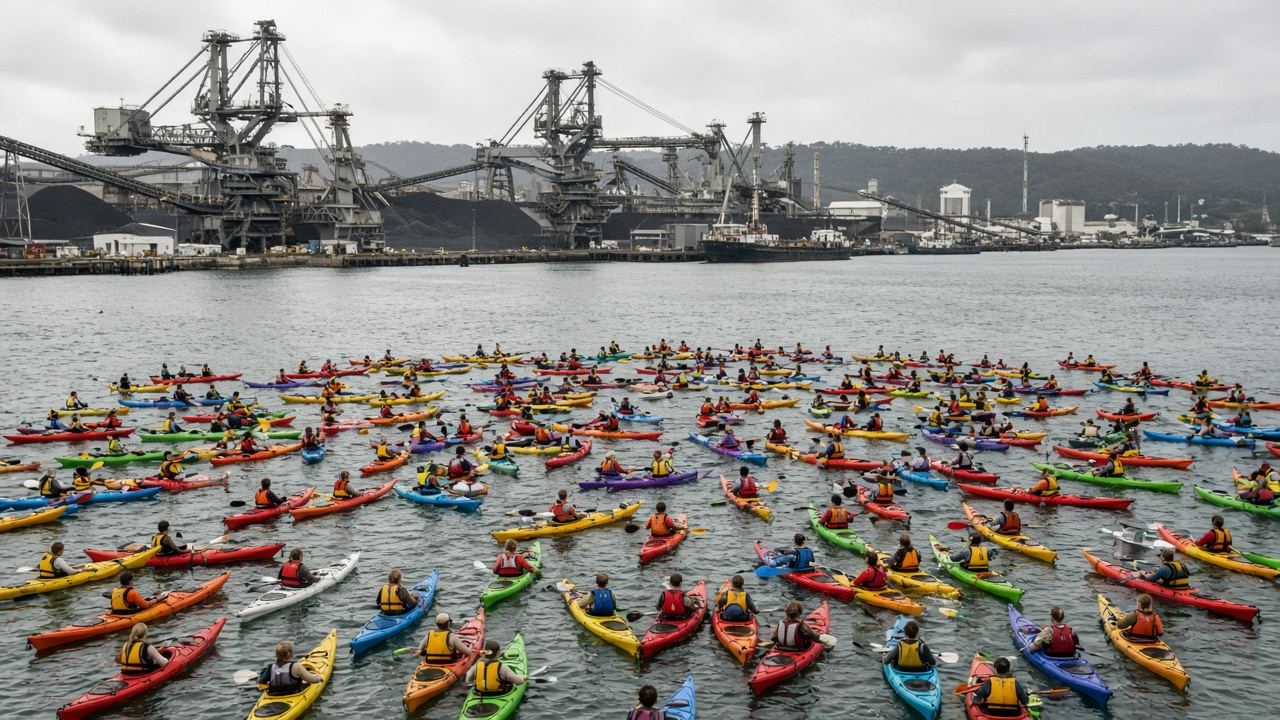
The Port of Newcastle idled coal shipments for four hours on Saturday as more than 600 kayakers slipped past police lines and filled the harbour channel, the climax of a climate protest that NSW authorities tried and failed to stop in court the day before.
What the harbour shut down
Organisers with the Rising Tide group registered more than 900 paddlers for the “Paddle for the Planet” demonstration, and roughly 600 launched from Horseshoe Beach before fanning out toward working coal berths. The port operator agreed to hold all shipping movements between 10am and 2pm, clearing the channel so kayaks could cross without mixing with bulk carriers, Rising Tide spokespeople told reporters on the shore.
A court-imposed cap limited the flotilla to 785 vessels, and stewards on inflatable ribs kept stragglers inside the safety box. By the time the last paddlers returned to shore, police confirmed that no arrests were made and no emergency services incidents were logged.
How the protest cleared legal hurdles
Newcastle City Council voted earlier in the week to block Rising Tide from using council land for assembly points, citing insurance gaps. NSW Police then sought an injunction on safety grounds, arguing the harbour lacked rescue assets for a crowd that large.
On Friday a judge dismissed the police application, finding the paddle-out served a public-interest debate about fossil-fuel exports. Protesters framed the ruling as a green light to pressure Australia’s largest coal port without occupations on train lines or loader stacks, tactics that previously triggered trespass prosecutions.
Why Newcastle became the target
Newcastle ships tens of millions of tonnes of thermal coal annually, and Rising Tide has spent a year arguing that every loaded hull locks in demand for power plants across Asia. Port officials emphasised that Saturday’s pause was negotiated rather than imposed, allowing maintenance crews to finish berth inspections while tugs stood down.
Onshore supporters lined Horseshoe Beach with banners calling for export caps tied to climate legislation before Parliament. Several speakers pointed to flood damage along the Hunter River this spring, saying insurance premiums in low-lying suburbs already reflect warming-driven extremes.
What organisers plan next
Rising Tide told the crowd it will stage a larger on-land blockade in February 2027, after assessing how Saturday’s turnout affects insurer appetite for future harbour permits. The port said it would resume normal coal loadings Saturday night and did not expect a backlog beyond one delayed Panamax departure.
NSW Police said it would review marine rescue deployments before any future court filings, while the state government reiterated that coal royalties remain central to the budget even as renewable share rises on the grid. For paddlers who drove from Sydney and the Northern Rivers, the immediate prize was visible idle loaders and television helicopters circling a harbour that usually runs around the clock.